
I love Easter. Not least because my birthday is at Easter, but also the weather is finally beginning to pick up and the sun reintroduces itself to us, it’s Eurovision time, and the football season is reaching its apex. What a joy it was to see my local team, York City, win promotion to the football league in the most dramatic way possible!
Mainly though, it is because so many of my personal annual highlights seem to converge on this time. Obviously, there’s the General Assembly of the European Geoscience Union (aka EGU), which I have been attending for over 15 years now and whose staging oscillates between late March and mid-May. Since we started the Geoscience Games Day in 2018 it has become something very special to me and I’d be devastated not to have it as a fixture in my diary. In the last three years, I’ve added the Play for the Planet meeting to my Easter scheduling.
Play for the Planet 2026
Play for the Planet is a network organised by the University of York (known locally as just Uni of) through their York Environmental Sustainability Institute (YESI), focused on the use of games to work towards more sustainable futures. They host an annual meeting in York each year in April and it has grown massively since is started in 2024. I have had the pleasure of attending and presenting at each of the meetings, and getting to sample the brilliant games people bring along. I have a huge amount of gratitude to the team for what they have set up.
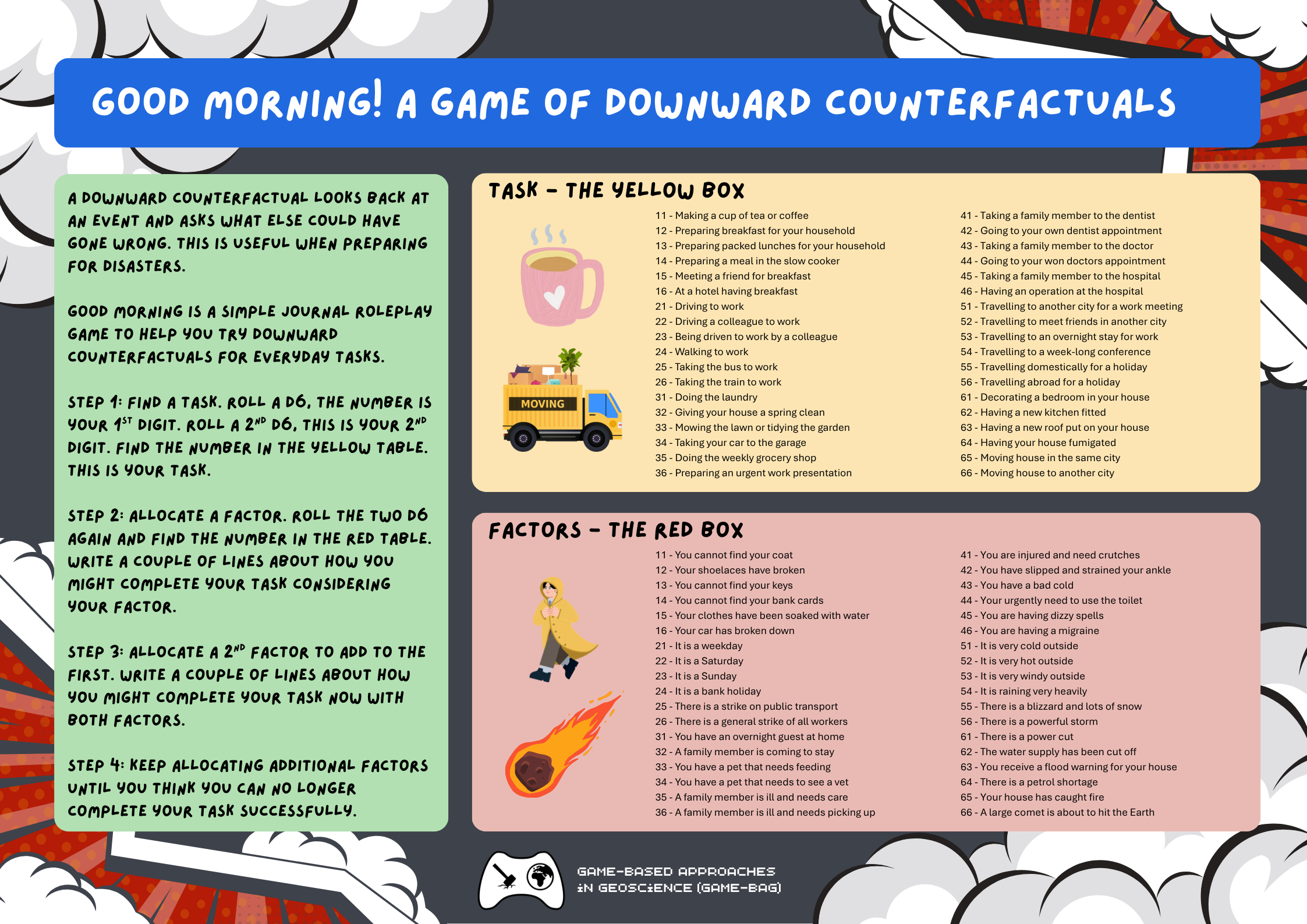
On the surface, I presented about my game Good Morning!, which I developed quite a while ago but have recently adopted it as a way to help my Environmental Hazards students get their heads around downward counterfactual thinking. In reality though, I really presented on my experiences as a neurodivergent gamer. I am self-diagnosed ADHD and I find playing games with other people difficult, including:
- Having to maintain focus on the game
- Finding conversation difficult as I’m hyper-focussed on the game
- Cognitive demand of having to keep track of the game and conversations
- Getting impatient waiting my turn
- Worrying I’m not taking the game seriously enough – making too many jokes
- Worrying I’m being too competitive (I don’t like losing)
- Worrying I’ll make an obviously wrong move and look stupid
- Worrying I’ll get bored and have to commit to playing the whole game
- Not being able to get up and move around
Ultimately, even if I am enjoying a game I will also be feeling anxious and trapped, so the end of a game also comes a sense of relief that it is over. The last thing I want to do is play it again – remember, this is even though I probably had a lot of fun, I’m just drained… This is a problem for me, as the vast majority of games are multi-player, and many games with an environmental or sustainability theme are co-operative.
I figure I can’t be the only person to feel this way about games, so I have been exploring solo-play games, particularly micro- and journaling style roleplay games. Good Morning! was my first, but hopefully not the last.
EGU 2026
EGU was actually really hard for me this year. I felt ill (I think because of food intolerances) and I had a hotel room without an opening window so I did not sleep well in the airless, stifling warmth of it. I ended up having to manage my energy levels well meaning I did not make the most of it as I would have hoped.
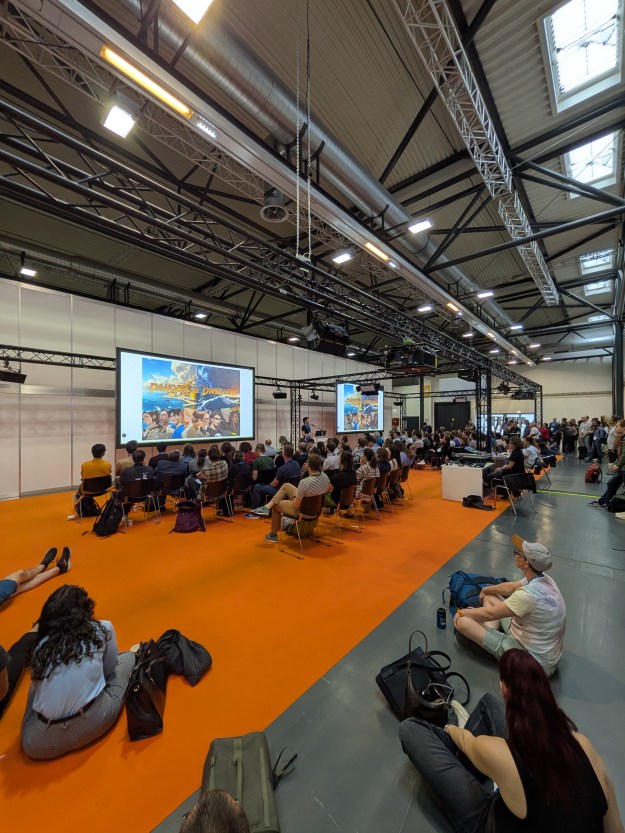
We had another brilliant and successful Geoscience Games Day at EGU. Presentations this year were via a PICO session, a format I think works very well for games. Each presenter has the chance to present for two minutes (a lightning talk) with just two slides, before they then present an interactive presentation (the viewer gets to change the slide and the author guides and answers questions). I think this would be my default choice for the session if those presenting virtually were better embedded into the session – for some reason, their interactive presentations were not displayed on the screens…
This was well attended, like it is every year, with people having to stand or sit around the edge of the space to view the presentations. Thank you to François Dulac of the Climate Tick-Tock team who counted attendance at 207!
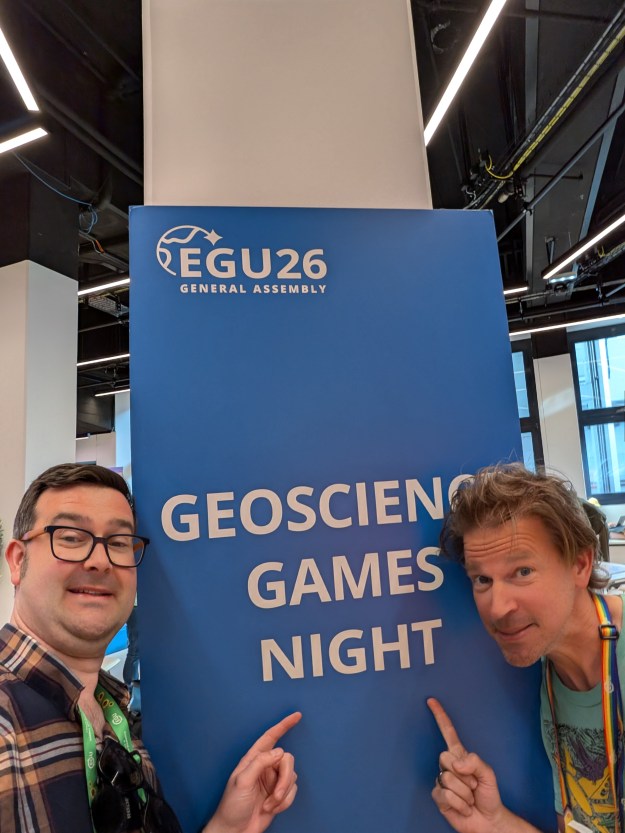
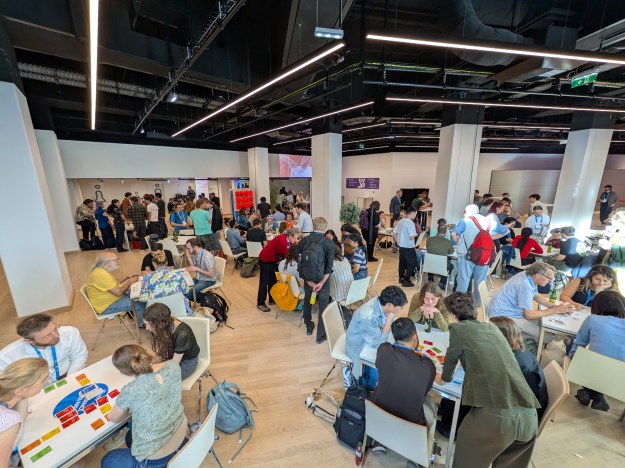
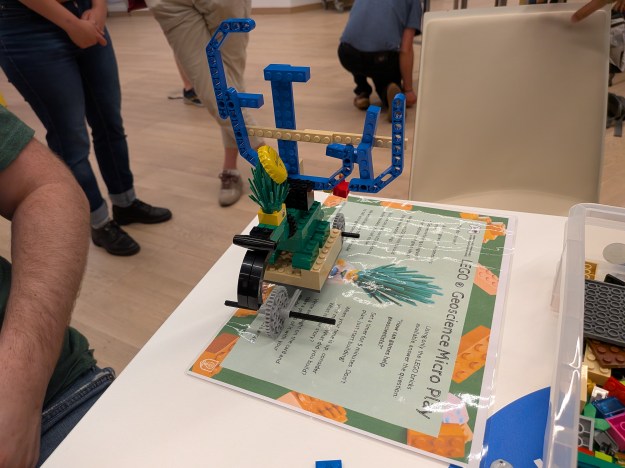
The Geoscience Games Night that followed immediately after the session was also a success. We don’t have a head count but I’d estimate in the order of 200-300 attended also. It was nice to be able to bring my own games this year, including Adventures in Model Land, Good Morning!, and my geoscience-themed LEGO® Micro Play.
Both of my presentations at the conference fell on the Friday afternoon of the conference and I think both went well (any landing you walk away from is good, right?). The first was a talk about the work we’ve done establishing a neurodivergent network within the EGU – with 20,000 people attending the conference, it is likely 3,000-4,000 will be neurodivergent in some form, yet there was no group to represent their voice and needs. Now there is and it is good.
After, I presented Adventures in Model Land in a hard-core modelling session. This was a risk, as I could have been laughed out of the poster hall, but actually it was well received with much enthusiasm. I left feeling encouraged, which was a much needed pick-me-up after the difficult few days in Vienna.
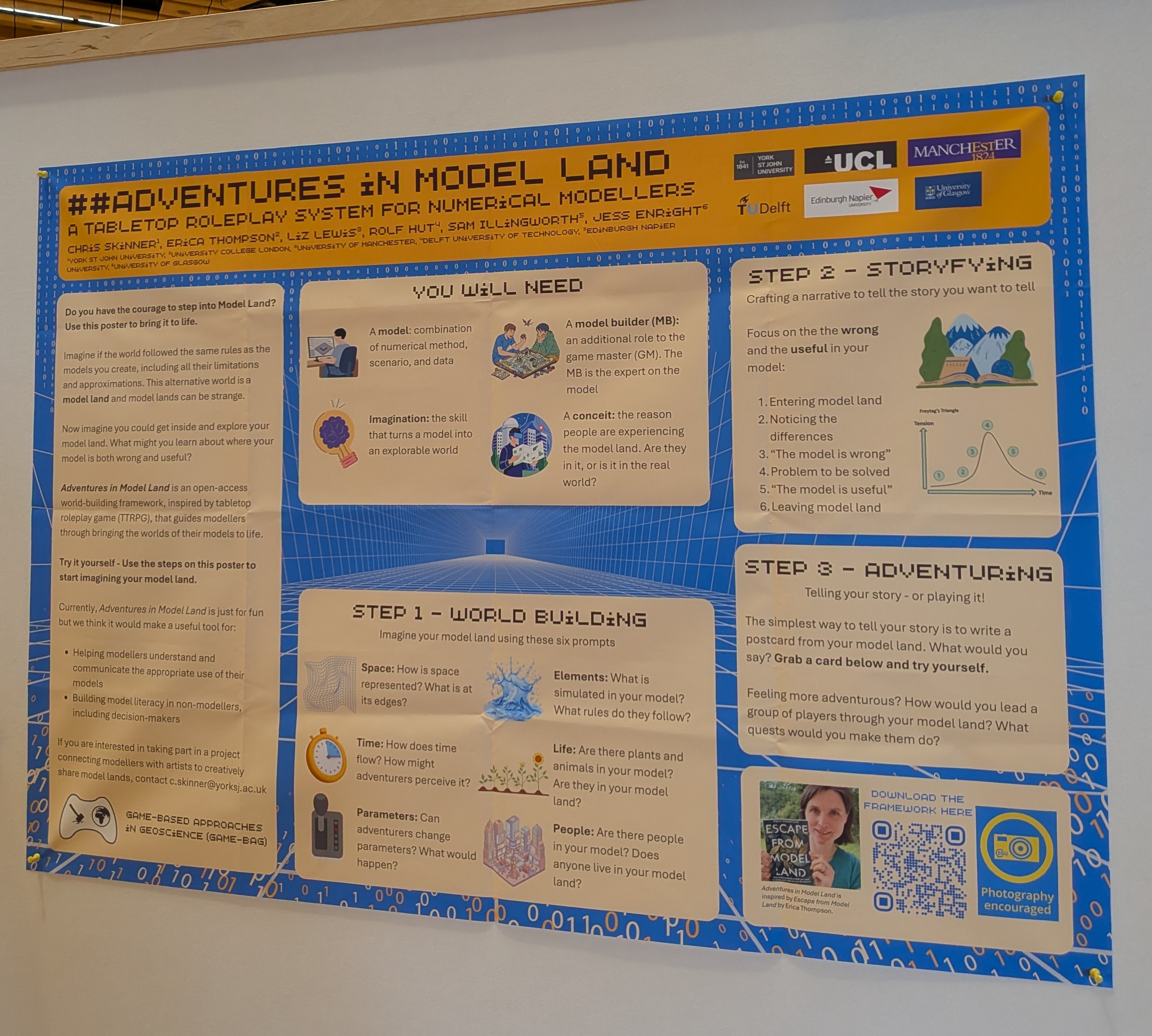
EGU 27 will be the tenth Geoscience Games Day, all being well. At the moment, I don’t know where my funding to attend will come from but I am working on it!
Teaching
My teaching is winding down for the semester now, and by late May will be over. It definitely feels like that time of year where the teachers roll out the big telly and show you documentaries about Sheffield’s out of town shopping centre, Meadowhall (apparently it was supposed to be Godzilla but they got the wrong tape). In the last few weeks, we’ve been away in Edinburgh with the 2nd Years and I used the opportunity to capture 360 footage for virtual field trips and YouTube. Being in Vienna, I too used the opportunity to capture 360 footage and planning a video tour of the four Danubes. I will get to use these videos in my teaching, using a pseudo-social story approach to help them prepare for being out in the field.
Keynote for International Seminar on Extreme Weather Events and Climate Change: Responses for Adaptation, University of A Coruña
I was very excited to be invited to talk at this meeting by my former-PEGASUS project partner, Dr Fredy Santiago Monge Rodriguez. My presentation, titled ‘The role of imagination in planning for and mitigating natural hazards’ explored the use of games as imagination infrastructure in disaster risk reduction (DRR). This was the perfect chance for me to collate my thoughts, reflecting on what I learned at EGU too, before I sit down in the summer and map out my future research plans. More on this soon.
GeoSkinner YouTube
My YouTube channel has been very quiet of late. In fact, one viewer actually left a comment asking if I was still alive. With summer approaching, I hope to have a week or so where I can make some videos, so expect a small flurry before months of radio silence again!
That’s all for this month, stay dry out there.
Oh, you want my Eurovision predictions for the UK entry do you? I like it, it’s fun, it’s catchy, and the live performance and staging is great. It reminds me a bit of Who the hell is Edgar, Austria’s entry in 2023 by Taya & Selena. It finished 15th with 120 points, with only 16 from the public. I’d expect something similar. Not nul points but also not the left-hand side of the leaderboard.
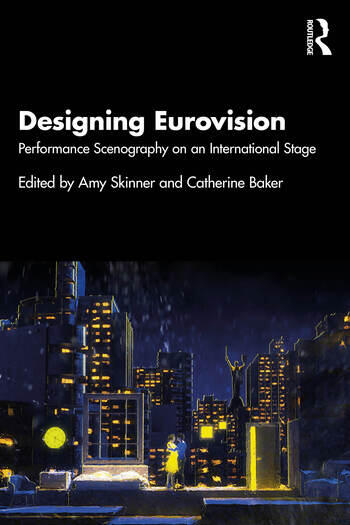
Oh oh, by the way, my awesome wife Amy just happens to have a book out now about the stage design of Eurovision – check it out!
Views expressed in this newsletter are mine and do not represent those of my employer. Content and links are provided for informational purposes and do not constitute endorsements. I am not responsible for the content of external sites, which may have changed since this newsletter was produced.

