I’ve just finished presenting a webinar for the UNRISK CDT about my work with games. It was months ago when James McKay and Erica Thompson from the CDT invited me to talk, before I had even applied for my current job. So, figuring out what I was going to say was tough. Back then, I was freelance, GeoSkinner, just messing around with games because it interested me and kept me creative. Now, as an academic again, I have an opportunity to be more serious and focussed about it and do some ‘proper’ research. My presentation sat at this transition point – a collection of ideas waiting to be forged into something meaningful.
Transition, then, has been the theme of my last month, my first as a Lecturer of Geography at York St John University. Obviously, there’s been the usual transition to a new workplace: the obligatory fire safety and slips, trips, and falls training; navigating a different travel booking system; and, learning the unwritten rules of how the new place works. For example, where my old team predominantly communicated using chat in MS Teams, my new team rarely uses it and favours emails. It sounds small, but it’s been an adjustment.
But it hasn’t just been a change of job and employer, it has been a shift in sector and career. What I did not expect was how strong a sense of freedom I would feel, it has taken me by surprise. There were understandable and reasonable limits to what I could do within my previous role, which was why I maintained my interests independently. I hadn’t appreciated how difficult it was to partition my professional life in this way, until I no longer had to. If I want to explore the pedagogical value of building with LEGO bricks it is now valuable professional practice and a potential research avenue that I am encouraged to pursue, rather than something I will try and fit around work and life. Honestly, it feels like I’ve been holding my breath and now I can breathe out finally.
Another big transition has been the change in pace of the work. My old role was strategic and deadlines were defined by quarters and financial years a distance away. As an ADHDer, my concept of time is now and not-now, so strategic planning has never been my strength. I often describe my brain as like an old petrol-powered lawnmower where you keep pulling the cord to get it going but it just keeps sputtering out. It was hard to get going and without the excellent project managers I worked alongside I would have struggled big time. But, in my new role, I’ve had no option but to hit the ground running – there’s marking and moderation to do, students applying for jobs to help, and the start of teaching is looming large. I’m actually finding this change of pace refreshing, more suited to my neurotype and, as well as enjoying this, I’m finding it easy to make use of those liminal times between tasks and meetings.
This then brings me back to that transition at the start of this newsletter. This transition, shaping my interests into a cohesive programme of research, is one I am yet to crack but is something I really want to get right. Whilst I am immensely proud of what I achieved as a Research Fellow at the Energy and Environment Institute, I have always felt regret at not achieving what I would have like to and what I know I am capable of. Looking back, I can see how I was constantly battling the ADHD in my mind, even though I didn’t realise it then. This time around, the expectations and the culture are different and, crucially, I know myself much, much better.
Game-Based Approaches in Geoscience (Game-BAG)
My first project I plan to develop is Game-BAG (I love a dodgy acronym). It will bring together several strands of my work into one place with common objectives. This includes Games for Geoscience, Adventures in Model Land, and my work with the LEGO® SERIOUS PLAY® methodology. Planning is still work in progress but I’d particularly like to look at:
How game-based approaches are used to support education and training in geosciences (using EGU’s broad definition)
How game-based approaches can support the understanding and development of numerical models with modellers and technical experts
How game-based approaches can build model literacy in non-modellers, particularly decision-makers
Games for Geoscience
Games for Geoscience will be back for EGU 26. We got 15 brilliant abstracts and we’re still waiting to hear what format the session will be. More news about the session and the Geoscience Games Night will be available soon – make sure you check the website for updates. As with last year, I also hope to bring blogs and game profiles from those featured in the session.
GeoSkinner YouTube
Testament to how long it has been since I have provided a proper update, there is a ‘new’ video on the GeoSkinner YouTube channel that is already 5 months old… I played Terra Firma, an indie videogame that is essentially a playable landscape evolution model, the type of geomorphology model that much of my previous research made use of. Actually, it’s been so long the Dev has released Terra Firma 2 since…
I have no plans for any new videos to come soon but some ideas I’d like to explore. Going forward, my videos will probably be more closer related to my research especially Game-BAG – yet more transitions to come!
Project Prospero
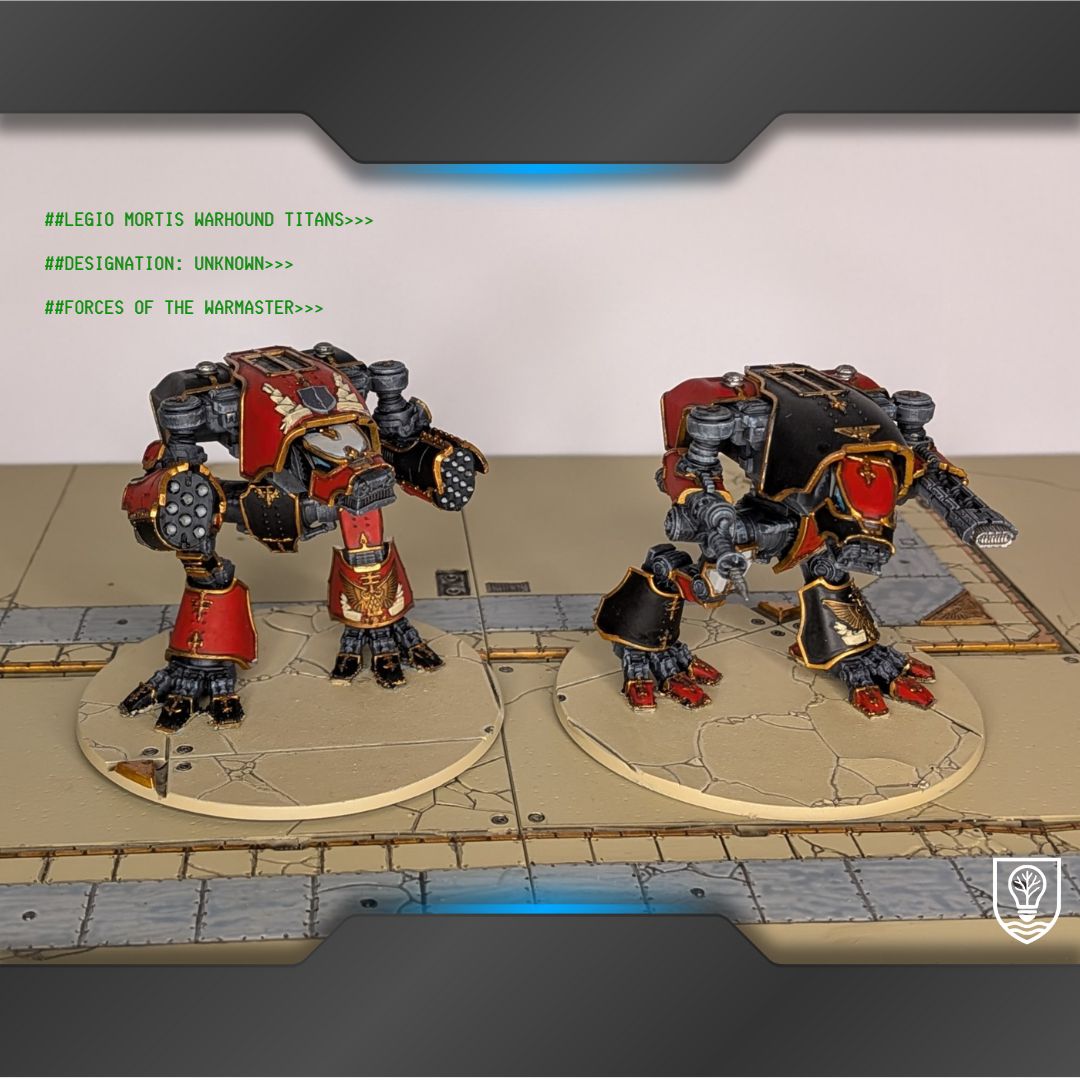
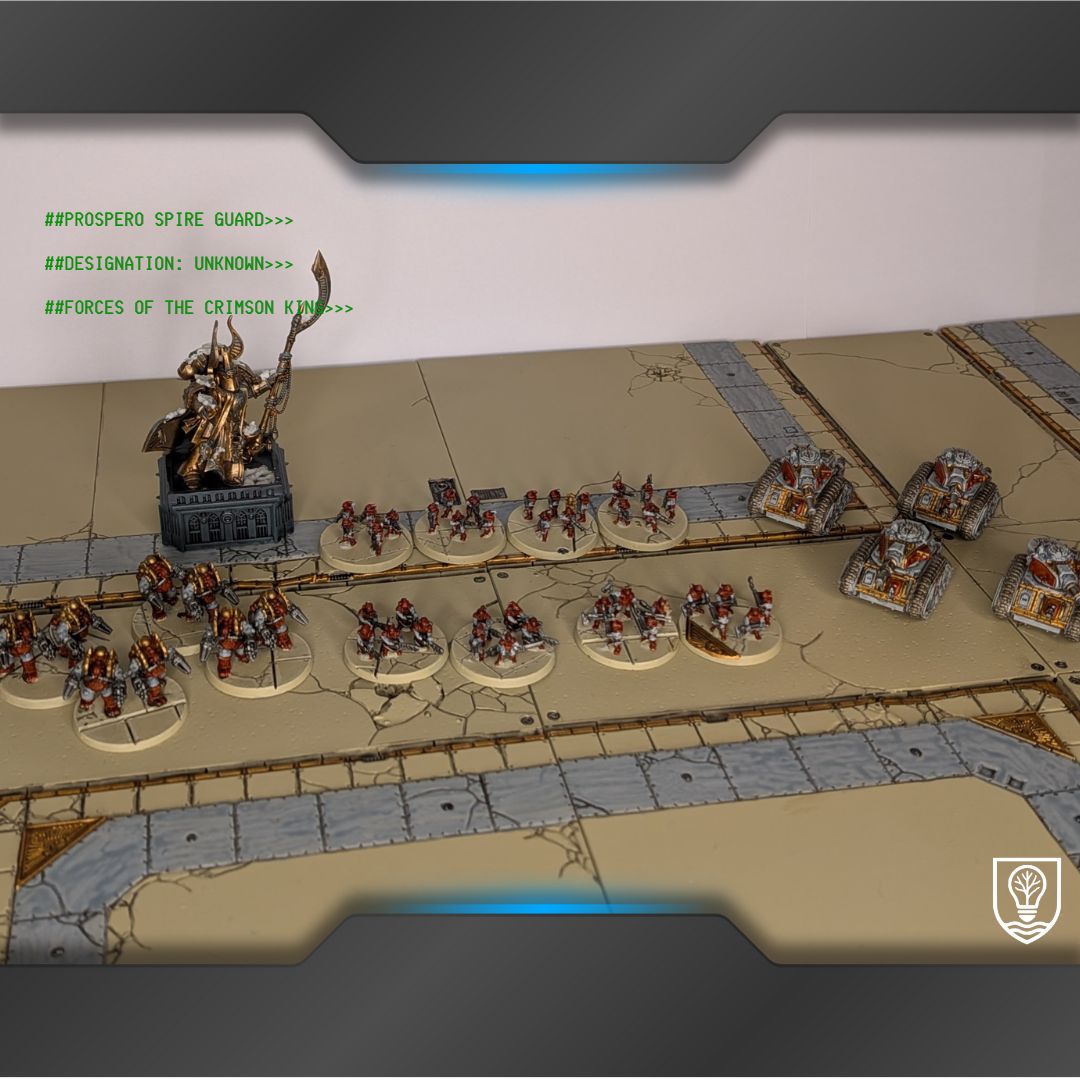
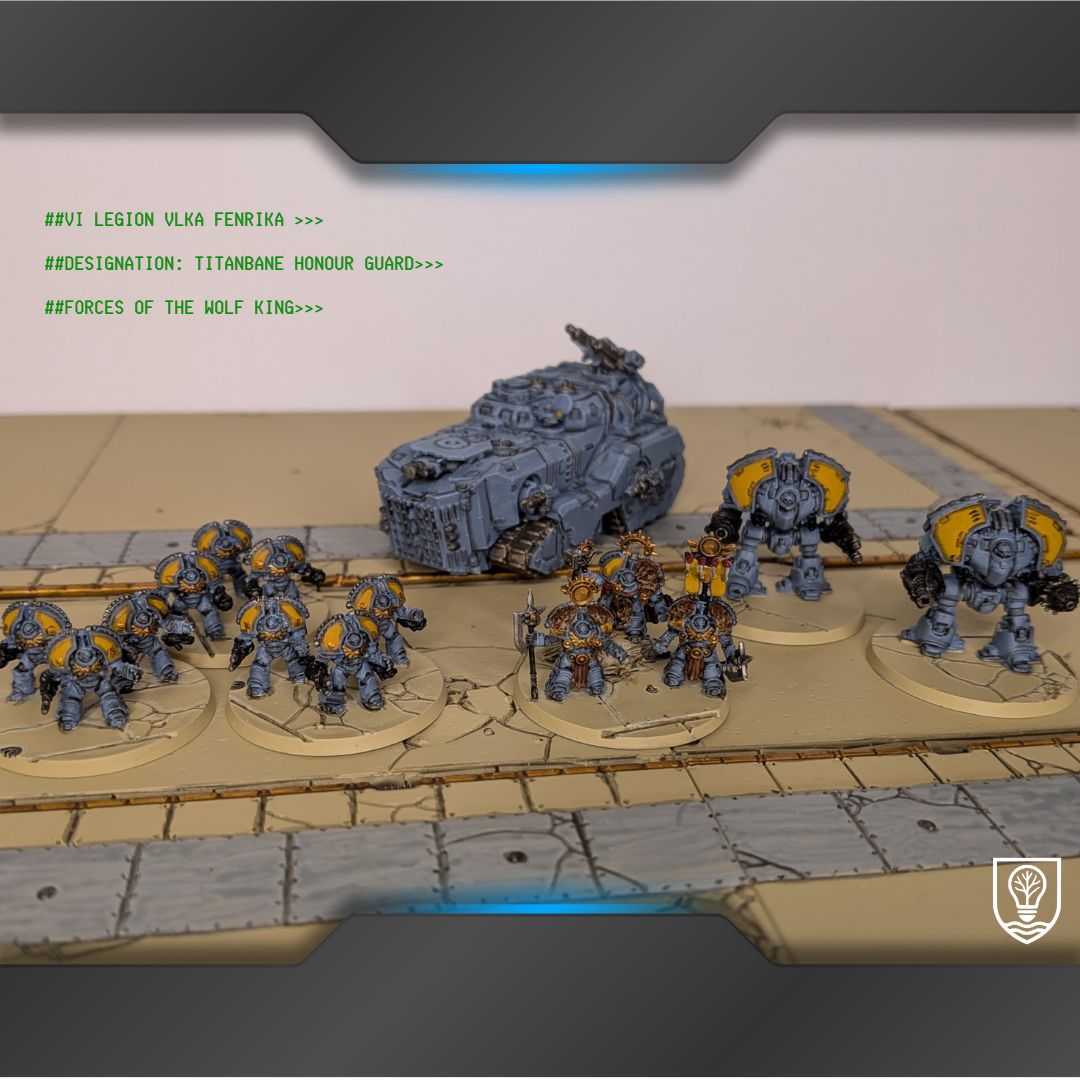
I’ve been on a hobby spree the last couple of months and progressed my Warhammer project, themed on the Burning of Prospero. Too much to update here, but visit my hobby site to see the latest.
Views expressed in this newsletter are mine and do not represent those of my employer. Content and links are provided for informational purposes and do not constitute endorsements. I am not responsible for the content of external sites, which may have changed since this newsletter was produced.
Subscribe to get the latest newsletter sent directly to your inbox:
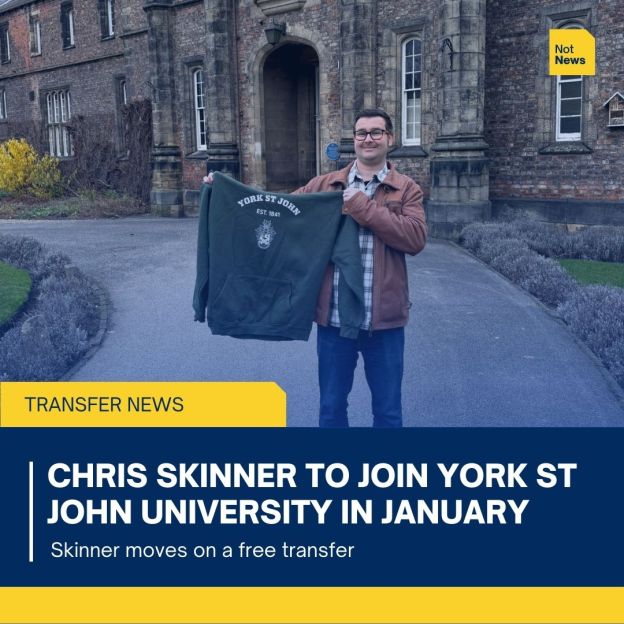
I am extraordinarily excited to tell you that I will be joining York St John University (YSJ) in the new year as a Lecturer of Geography! To be honest, it is my dream job.
When I left transport planning to start a PhD way back in 2009, my goal was to be a lecturer. It is the only job I have ever really wanted. When the role I now have was advertised, I threw everything I had at it – whether or not I was to be successful, I wanted to “leave nothing on the pitch”.
In part 1 of this blog, I looked back at what I had achieved at the EA, in this part I want to look forward to things I am most excited about.
Teaching
My new role will be predominantly teaching. I am anticipating doing a lot of it and being very busy. Honestly, I am looking forward to this. I’ve had the opportunity recently to develop and deliver a new module on river management for the third-year geographers at YSJ. The module mixed lectures, workshops, and field visits, and I made a lot of use of games throughout. It was practical, focussing on real-world applications, and I brought in those working in the sector to speak to the students. I just found it awesomely rewarding and when I am working with the students it just feels like that is where I am supposed to be.
It has become apparent to me in the last few years that my passion is for education – it how I have chosen to spend my free time. I want to teach. I want to learn how to do it better. I want to get very good at it. I want to explore new ways of doing it and write about it. What an opportunity this is to do that!
Research and being creative
As an EA employee you are a public servant. You have a very clear job role, fulfilling an important function but with little scope to work outside of your job description. There were only a few opportunities in my day job to keep up my creative practice and maintain my science communication skills. For example, I was faced with a choice of either dropping out of organising the Games for Geoscience session or staying involved but in my own free time and at my own cost. It was also important that my own personal work was entirely and clearly separate from my day job and created no conflicts of interest. Hence, I developed the GeoSkinner brand to give my creative practice a distinct home. Still, I always felt guilty about this, like I was being unfaithful to my job.
In my new role, this creative work is encouraged and can be part of my day job (although the concept of a ‘day’ job in academia can be a little woolly). I am really looking forward to bringing together the different strands of my work into one. Obviously, I need to get settled in, and manage my time, but here are some of things you might see me working on in the coming years:
NERC Embrace-Enviro: This project has been funded by NERC and is led by my colleagues at YSJ. It is working with migrant and refugee communities to help them access science training, experience, and careers. I will be part of the team delivering science communication training in early 2026.
Games for Geoscience: We are approaching ten years of the Games for Geoscience session at the European Geoscience Union General Assembly, including the Geoscience Games Night. My ambition is for it to transcend the session and develop into a community with year-round activity.
Adventures in Model Land: Inspired by tabletop roleplay games (TTRPG), Adventures in Model Land is an open-source framework to help modellers design explorable worlds based on numerical models. Recently, I took part in a Maths on the Move podcast about the project, you can listen here. I hope to bring some new energy to this project.
Play Your PhD: My imagination workshops, inspired by LEGO SERIOUS PLAY, are aimed at helping PhD students develop their imaginations as a useful skill. I’m really keen to develop an entire gamified programme of workshops equipping early career researchers with playful skills.
Hydrology Tea-Break: The majority of people who work with hydrology would not actually call themselves a hydrologist. Hydrology Tea-Break would use science communication as CPD aimed at those needing to follow multi-disciplinary T-shaped careers.
Models as Imagination Infrastructure: Imagination Infrastructures are things that help us think of and picture positive futures and change. Models can help us imagine the future but are often inaccessible and tend to focus on understanding impacts of disasters and worst-case scenarios. I’d like to explore the capacity of models to help us imagine alternative, more hopeful, futures. Games are a potential medium to help make such models more accessible.
I hope to provide regular updates on my work through this blog so please do subscribe using the box below – I’ll aim for monthly updates but this might fluctuate when I get busy!
If you’re interested in working together, either on one of the projects above or something else entirely, please do get in touch, I’d love to chat (c dot skinner at yorksj dot ac dot uk).
Views expressed in this newsletter are mine and do not represent those of my employer. Content and links are provided for informational purposes and do not constitute endorsements. I am not responsible for the content of external sites, which may have changed since this newsletter was produced
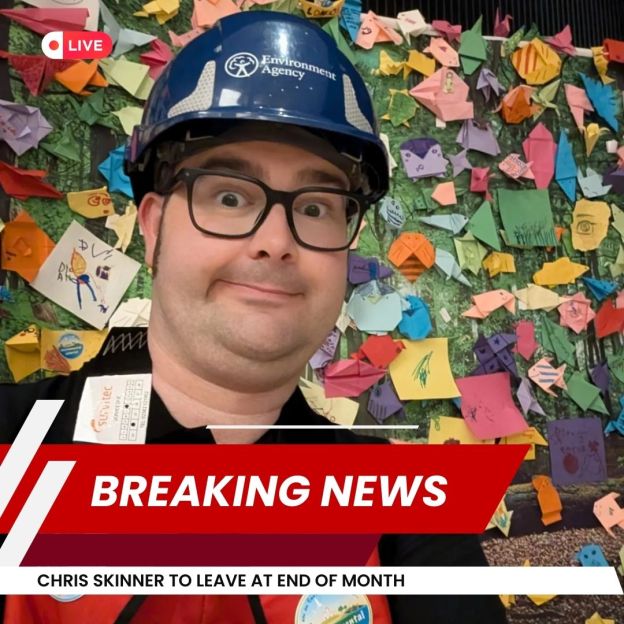
I have news. I have a new job! So, it is with great sadness that at the end of December I will be leaving the Environment Agency (EA) after nearly five brilliant years.
Even though my new job is an extremely exciting opportunity – more on this in part 2 – I am sad to leave the EA as it is an important organisation that I am extremely fond of. Everybody I have met here has been supportive and 110% committed to their job and the mission of the business. Not least my wonderful team that I will miss massively. I will always be proud to have been a part of it.
I’m leaving the role of Senior Technical Adviser in Hydrology, part of the team delivering Flood Hydrology Improvements Programming (FHIP). Me and my fellow FHIPsters work at the science-policy-practice interface, which is the space where the latest science and research is translated into the everyday processes we use to make decisions – in our case, these are decisions to reduce and manage the risks of flooding. The FHIP is linked to the UK’s Flood Hydrology Roadmap, a community co-created plan to improve flood hydrology over a 25-year period to 2046(ish).
My job is to be the technical lead on projects in the programme alongside a project manager and a team of subject matter experts. I also act as a subject matter expert for projects led by my colleagues. These projects are either delivered in house by me and the team, or we commission them out to experts in consultancies. In the case of the latter, my role is to provide technical steer and review to ensure the product being delivered is what we need. Due to the broad remit of the FHIP, the nature of these projects varies a lot.
Reflecting on my 4.75 years at the EA and in the FHIP, I’ve been thinking about what my highlights, or the things I’m most proud of, are. Here are just some:
Open Methods in Operational Flood Hydrology report
Joining fresh from academia in 2021, wet behind the ears and full of naïve verve to disrupt the sector, I gladly took the lead on a project to look at the feasibility and benefits of applying open science principals to methods used in flood hydrology decision-making. The scientific literature loudly, and rightly, extols the virtues of open science, including in hydrology, supported by international organisations including UNESCO. Surely, this was a no brainer for the operational, decision-maker realm?
This project was one of those commissioned to a consultancy, and I really valued the collaborative relationship we built with them in its delivery. I learnt quickly that the evidence supporting open methods in research does not translate directly into the operational realm. Although there are many potential benefits, there were also some potential risks, but also a whole lot of questions that would need to be answered on the way.
Most of these questions still need to be addressed by the hydrological community. The purpose of the report was to facilitate this conversation by providing a vision and an evidence base to start from. The creative approach taken by the team reflected this and was a joy to be a part of – see the great video by artists and project partners Somewhere/Nowhere above.
One of the actions required by the UK’s Flood Hydrology Roadmap was to create a baseline of skills across the hydrology community. This was one of the actions taken on by the FHIP and one of the areas where the FHIP directly contributed to the delivery of the Roadmap. I was the technical lead and it was also a project where the delivery was in-house.
Working with the EA’s Market Research team, I designed a survey to evaluate the skills and satisfaction of the users of hydrology in the UK. I advertised it far and wide, doing webinars, posting on mailing lists, finding local authority special interest groups, and writing articles for magazines about roads. It was worth it as it attracted 286 responses, a return I was very pleased with.
I really enjoyed this project – partly because I got to be hands-on and deliver it myself, but mainly because I discovered a passion for skills and understanding what people need to develop. The project also revealed some important things about the users of hydrology, not least how the diversity of the hydrology work force is not representative of the UK population as a whole.
Environment Agency Summer Activities @ The Science Museum
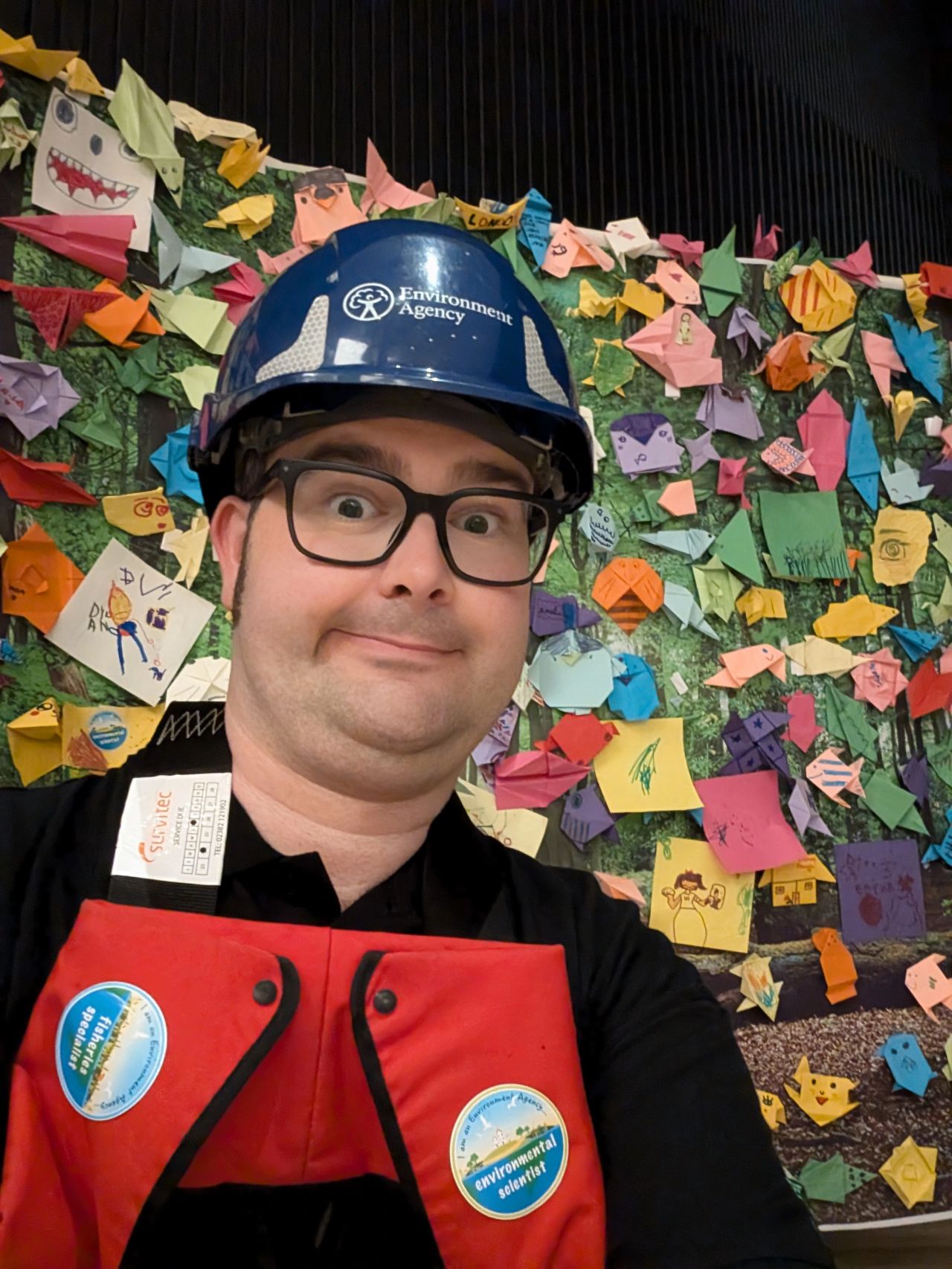
I rarely got to fully stretch my science communication and creative interests and skills in my role in FHIP. However, the EA provides its employees lots of development opportunities and I had the chance to hone some leadership skills by being a joint project manager for the EA’s Summer Activities at the Science Museum.
Starting in 2022, the EA have led a month of STEM learning activities at the Science Museum (yes, the huge one in Kensington). Each year it has grown in size and prominence, and in 2024 the activities were moved from a space at the back to Technicians: The David Sainsbury Gallery, overlooking the main entrance lobby. We increased from three to four weeks and had space to run four separate zones.
This was a truly challenging – somewhat bruising – task that threatened to implode on a number of occasions. However, I am so proud of what we achieved – training 120 volunteers, successfully delivering four separate activity zones for four weeks over the busy summer holidays, and facilitating conversations with 80,000 members of the public (as estimated by the Science Museum). Working with Dr Laura Hobbs of the Science Communication Unit at University of West England, our evaluation showed that the volunteers gained valuable skills and confidence from the experience (paper coming soon hopefully).
The organising team won the EA’s internally prodigious One Team Award at the Environment Agency Awards, and it was thoroughly deserved by everybody involved. Sadly, there was no trophy.
Personal Development
I have learned a tonne during my time on the FHIP: Lots about operational hydrology; plenty about decision-making and the ‘art of the possible’; and more than I ever wanted to know about charity governance. I also learned a lot about myself, including the realisation about three years ago that I am ADHD.
The EA is a truly supportive organisation – it says it looks after its people and in my experience, it means it. I had colleagues who felt empowered to talk openly about their experiences and challenges with their own neurotypes, and it was from hearing these that made me question my own experiences. The EA gave me the space and support to go on this journey – including accommodations, ADHD-specific coaching, and line managers who treated it with curiosity and care. It has helped me enormously. I don’t know if I would have discovered this about myself anywhere else and I doubt my experiences would have been as positive.
Part of me will always be #TeamEA and I hope to continue many of the relationships I have built there and beyond in my new role. To learn more about that, and the future of GeoSkinner, you’ll have to wait for part 2 – make sure you subscribe so you don’t miss it.
Views expressed in this newsletter are mine and do not represent those of my employer. Content and links are provided for informational purposes and do not constitute endorsements. I am not responsible for the content of external sites, which may have changed since this newsletter was produced.
Science thinking different: Imagination as a skill – Numerical models – Game-based approaches.
Hello, and welcome to June’s edition of the Imagination Engines. In this newsletter, I share my latest news and the interesting things I have found about the use of imagination in STEM. Below you will find:
News of my first long-form YouTube video in over a year.
Inspiring Interactions with environmental engineer and action designer, Katie Patrick.
My review of The Science of Storytelling by Will Storr.
Playing the game 13 Beavers.
I just want to make a quick plea for you share and repost my content and the content of my fellow geoscience creators. I produce this newsletter in my spare time and for free and need help getting it out there. Many creators are finding engagement difficult at the moment, especially those of us who have chosen to abandon problematic platforms like Twitter and Substack. I now rely on BlueSky and LinkedIn to share my work and this brave new world is driven by reposting.
Whilst I appreciate every like or reaction I get on social media, it is shares and reposts that help people find content. I implore you to hit that report button as often as you do the like button – unlike other platforms, BlueSky does not post content you have liked to others.
I want to do my part and have created a list of geoscience creators on BlueSky. I regularly check this feed and repost any new content I see posted. Please help the geoscience creator community by using the list to do the same – if you’d like adding to the list, just send me a message. By supporting each other, we can beat the algorithms!
You can also subscribe to this newsletter and have it emailed to you each month – that way, whatever the future of social media, we can find each other:
Revamping My YouTube Journey: New Long-Form Video Released
This month I have released a new video on my YouTube channel! Ok, this should not be surprising but what is different here is that it is a long-form video (i.e., not a Short/Reel). My last long-form video was posted way back in April 2024 and that was just me recording a presentation I did – my last, proper, long-form video was about AI and Time posted in March 2024.
The reasons for this >year-long gap are multi-facetted. A big reason was just the craziness and big life changes that happened through 2024, as was the amount of headspace I needed to organise a month-long event with 120 volunteers at the Science Museum. But it was also a choice.
My main objective with the YouTube channel is to enjoy it and learn from it. I love making videos. With every video I make, I try something new, push myself a little further, and hopefully you can notice a gradual improvement if you go through my back catalogue. However, there were somethings I was not happy with and was finding much harder to improve:
Visual Appeal: I wanted my videos to look visually more appealing and interesting. I can only use small, temporary spaces to film so it is difficult to create an interesting and consistent background. Since moving, I don’t even have my trusty blue wall anymore.
Visual Style: I tried to make ‘crappy powerpoints’ a feature but they really are just crappy. I’ve experimented with a couple of branding styles too and I think they are too playful for my channel style. Together, they made me look very amateur and I want to project that I know what I am talking about.
Sound Quality: The sound quality on my videos has been awful and good sound quality is apparently important for YouTube. I had a Rode microphone that sat on top of my camera but the sound was too echoey and it picked up too much background noise.
In the last year I have been investing in more kit and experimenting through my short-form videos (like the SDG series). This has included using a greenscreen and increasing the use of background footage (a mix of my own and creative commons clips from Pexels), using 360 camera footage from my new Insta360 X4, and upgrading to Rode Wireless microphones. The final piece in this puzzle has been finally sitting down and learning Canva and moving on from PowerPoint (I now get the hype!). With all this, I finally felt happy enough to create something long-form once again.
So, please do check out my new video Using Games for Geoscience. It cover my thoughts on why we should and how we can use games in the geosciences, drawing on my over ten years of experience working in this area. I’ve put a lot of work into the video (and had to film it four times due to technical glitches…) so I’m hoping it will go down well. I get no love from the algorithm, so any boost you can give by sharing and Liking the video and subscribing to the channel is massively helpful.
I can see my channel pivoting towards geoscience gaming content from now on. I’m finally at a point where I feel my production quality is high enough to invite others to contribute, so hopefully you’ll be hearing from some of my favourite people in the geoscience community soon.
Inspiring Interactions – Katie Patrick
I can’t remember how I came about Katie’s book, How to Save the World, in 2019 but it almost seemed too good to be true. A research-led practical guide to create environmental change, combining gaming, behavioural psychology, design, and storytelling! It just meshed so perfectly with the work I was doing at the time with my science communication exhibit project, Earth Arcade. With the book, Katie combined all of these disciplines into something that is incredibly accessible, enjoyable, and also beautiful. It has been a key influence and reference guide for my work since.
From katiepatrick.com/about-katie
Katie Patrick is an environmental engineer and action designer passionate about seeing positive environmental action. Her work focusses on empowering people to be leaders in their own communities, turning grassroot movements into societal shifts. Her key tools are science and creativity – she takes the latest peer-reviewed research in behavioural psychology, gamification, and marketing and translates and transforms it into something that is accessible, applicable, and aesthetically pleasing. She has a rare and incredible talent.
Her clients include the United Nations Environment Programme, NASA Jet Propulsion Laboratory, and the European Commission, among many others. She regularly posts tips and guides on social media, in podcasts, and through webinars. Last year she launched Hello World Labs to equip sustainability leaders with the skills to transform their community engagement, with lots of free events, a newsletter packed with tips, and opportunities for 1-to-1 mentoring and to join the School of Climate Action Design.
Katie’s work does not explicitly cover my professional realm of flood risk but much of her work can be easily applied to the practice of community engagement for flood resilience. For example, it could be used alongside the Environment Agency’s ‘Applying behavioural insights to property flood resilience‘ report to better help protect people from flooding.
I asked Katie a few short questions about what imagination means to her:
Why is imagination important to the work you do?
Environmental sustainability needs a vision, a goal, and destination we can work towards. It needs to be a practical engineering solution AND it needs to be an exciting wonderful movement we can believe in.
How do you keep your imagination sharp?
I like to meditate on an energy question and just idea flow through me. I think making a meditation about a question is key to putting the mind in a state to answer that question.
What are you currently working on you would like to shout about?
The school of climate action design! I am building a community and 6 week coaching program to teach action design and environmental psychology.
The Science of Storytelling by Will Storr
This is not a new book, having been published in 2019, so I am probably not the first person to tell you this book is great, but… this book is great! The author, Will Storr, takes a scientific approach to storytelling. By this, I mean he has extensively researched what the research literature is telling us about what makes a good, compelling story, drawing on diverse fields but especially psychology. It started as a successful course for aspiring writers but thankfully Storr has made all this learning more easily accessible through The Science of Storytelling.
Its origins as a course are evident throughout the book. It is clear, it is engaging, it is packed with examples that illustrate the points, and it is exceptionally practical and useful. I initially listened to the audiobook, read by Storr himself, and found it entertaining in a way I have not found any other non-fiction book – his knowledge, his passion, and his belief in the message he’s communicating comes through in abundance and just makes you want to keep listening. I especially enjoyed his renditions of the many quotes from literary works throughout.
The true testament to the practicality of The Science of Storytelling is that once I had finished the audiobook I went straight out and bought a physical copy. My intention is to re-read it and make a whole load of notes. Of particular use is the Appendix, titled ‘The Sacred Flaw’, which is a step-by-step method for writing a novel – an ambition I have harboured since my early teens.
What I did not expect was for this book to help me improve my understanding of the nature of models. Talking about understanding characters and their motivations, Storr draws on the Theory of the Mind, which is our ability to understand how people perceive the world in different ways. Storr describes how we all create our own models of reality, which are not truth but controlled hallucinations. The best stories emerge from characters being faced with the wrongness of their model – the lie of it – and are forced to change as its usefulness has diminished. For a clear and extreme example of this happening to a character, think of the Truman Show. How can we ever build a perfect model of reality when even our own perceptions and understanding of that real world are themselves an imperfect model?
The Science of Storytelling is essential reading if you write fiction or harbour any ambition to write fiction. However, even if you do not write fiction but are involved in any form of science communication, I implore you to read this book. You will not regret it and it will help you craft compelling narratives and stories to engage and enthuse people with science and research. It sits well within a growing body of work that draws on fields like psychology and behavioural insights to make communication and storytelling more effective, such as How to Save the World by Katie Patrick.
Finally, if you are modeller read this book. It will help you appreciate the cognitive biases we all have and how these shape our perceptions of reality. In all good stories change happens, the resolution is achieved, when someone is able to escape from their own personal model land. This is a useful metaphor for escaping from our numerical model lands too.
13 Beavers – A Game We Played
I love a computer game called Timberborn. It’s a city builder game where you manage a colony of anthropomorphised beavers as they build a colony in the ruins of humanity, presumably now extinct. It is gentle, lovely, has a great sense of humour, and is highly addictive.
This is probably why Amy chose the board game 13 Beavers by Format Games as a silly Christmas gift for me. It’s a nice little game aimed at kids but we still had fun. The game has its own lore that tells of 13 legendary beavers who made it to beaver paradise*. These 13 beavers, each with its own theme such as a ninja, a robot, and a cowbeaver, form the artwork of the cards in the game – numbered 1 to 13, you move by correctly guessing whether the next card is higher or lower than the last.
The very simple game play is supplemented by some fun additions, including a magnetic fishing rod and fish that can either give you a bonus or set you back. There is also the opportunity to take a huge shortcut via the ‘tempting tunnel’ if you are able to correctly guess the exact value of the next card – something Amy did the first time we played, crossing the finishing line whilst I was still rooted to the start.
13 Beavers was lots of fun to play – it is funny, fast, and often frustrating (in a good way), whilst also being quite charming. It comes with a colourful board, a deck of attractive cards with the beaver artwork, a magnetic fishing rod and fish, and wooden beaver and dam playing counters. It’s recommended for ages 7+ and for 2-6 players. If you’re looking for a fun game for the family that doesn’t take too long or lead to arguments, this would fit the bill.
The reintroduction of beavers to UK landscapes is a hot topic these days. Beavers can bring great benefits as they create areas of wetland in wooded areas, which in turn increases biodiversity. Areas with beavers have greater resilience to forest fires and by allowing water to pond behind their dams they have potential to contribute to flood risk management too. 13 Beavers is not intended as an educational game but could make a fun hook for younger audiences as part of engagement work involving beaver reintroductions, facilitating conversations.
I am Chris Skinner, a science communicator, STEM professional, and ADHDer. I am on a mission empowering people to unlock their full potential by transforming imagination into a powerful, actionable skill. This newsletter tracks my journey. I would like you to join me, so please subscribe. This newsletter is free and I do not offer a paid tier. If you would like to say thank you and/or help me in my mission please buy me a coffee using the link below. I’m currently saving for a better PC to edit videos on and travel to run the Geoscience Games Day at EGU 2026.
Click to support me.
Views expressed in this newsletter are mine and do not represent those of my employer. Content and links are provided for informational purposes and do not constitute endorsements. I am not responsible for the content of external sites, which may have changed since this newsletter was produced.
This post was originally published on Substack. That platform does not align with my values so I have re-published it here as it was.If you has subscribed to my Substack please move your subscription to here.
Happy new year! A personally turbulent 2024 is out of the way and honestly, I am very much looking forward to a more settled 2025. With all that happened last year, not least our move to York, I did not make as much progress on my personal goals as I would have liked. Things like this newsletter and the FloodSkinner YouTube channel were neglected as I focussed on just getting through, and prioritising the day job.
Now settled into our new home, in a new city, and it being a new year, it is naturally a time to look forward. If last year taught me anything, it is how important it is to focus on what is important to you and to carve out time for that. Being ADHD, my focus can be easily pulled away and I can find myself committing to things that were exciting at the time but become a distraction down the line. Long-term planning is also something that does not come naturally to me.
So, 2025 is going to be a year where I try and turn this around. I want to be more purposeful, more strategic, and to lay the foundations for where I actually want to get to. I have done a lot of self-reflection, searching for my, what Simon Sinek would call, ‘why’ – what is important to me, what do I enjoy, who do I want to be. In short, I’ve been considering my ‘mission’ that will keep me on track:
“Empowering people to unlock their full potential by transforming imagination into a powerful, actionable skill.”
In this first quarter of 2025, I will be using this mission to develop a business plan that I will publish in April. It will lay out the ways I intend to achieve this mission and the services I can provide. It will also help me to determine which projects I can commit to and which I must regrettably turn down.
I am very excited to have developed this mission and am looking forward to moving forward into 2025 with renewed purpose. I hope you will join me by subscribing to the newsletter.
You will have noticed from my mission that I consider imagination to not be something some people have and others are born lacking. It is not something that artists, poets, and storytellers are blessed with whilst the rest of us philistines have not been bestowed our fair share. Instead, we all have an imagination, or as Albert Read would call an imagination muscle, that can be exercised and strengthened.
In fact, my belief is back up by research. A 2022 paper by Dr Andrea Blomkvist, a researcher in philosophy of cognitive science at the Centre for the Study of Perceptual Experience, University of Glasgow, showed empirical evidence that our imaginations demonstrate the hallmarks of two key qualities of a skill:
1. It can be improved through practice.
2. It can be controlled.
A key piece of evidence given by Blomkvist for imagination being improved by practice comes from mental rotation tasks. People are shown a test object and a number of images that could correspond to the test object having been rotated. They are asked to mentally rotate, i.e. to visualise, the test object and answer which of the images is correct. As participants practiced the visualising, they got better and faster at completing the task.
We control our imaginations by constraining them to reality. An example used by Blomkvist is imagining moving a bedframe up a staircase. To imagine this usefully, you have to imagine the bed and the staircase as the right sizes and also not being able to change shape or size or even vanish altogether. Our imaginations can visualise them doing those things but we can control it to help us achieve our goal. In exercises with children of different ages where they were asked to plan for imagined events, it was found that older children were better able to constrain their imaginations to reality.
There is much in this paper about imagining that reminds me of modelling and dealing with assumptions and uncertainty. Imagination is described as always involving simulation. When we simulate, either numerically or imaginably, we make assumptions, we have biases, and we miss potentially important information. Modellers can develop their imaginations to better understand the limits of their outputs and better communicate where they, and are not, useful.
Accountability.
It has been a couple of years now since I realised I was ADHD and it has been a journey of self-discovery. To be honest, it has been really hard to get over that grieving process many people in my position report as having – this is the mourning of the person you imagine you could have been had you known earlier. What more might have I achieved if I understand how my brain works, knew how to work with it, and had the support I needed rather than accepting the lie that I just lazy?
As I mentioned above, I struggle with making and sticking to long-term plans. This is a punch in the stomach for me as one of my ambitions since I was young was to write a book, very much a long-term project. I have many discarded plans and projects where I started a book project and either lost interested, lost confidence, or simply outright forgot about it. It has been an ambition that thus far has alluded me and I think it will continue to do so unless I find ways to work with my ADHD brain.
My mission above for ‘FloodSkinner’, and the business plan, will also be a long-term project and I know I have to work with my brain in order to be successful. On my ADHD journey, I have found Jessica McCabe and her ‘How to ADHD’ YouTube channel extremely useful, and with perfect timing she recently posted a video about how to use accountability to achieve long-term goals.
This newsletter will be part of my accountability system. I am committing, to myself and to you, to continue to produce this newsletter each month. I will include updates on progress and pieces of research relevant to my imagination mission – a few years down the line, maybe there will be enough there to form the core of my long longed-after book.
I have committed to publishing my business plan in April – this is also to keep me accountable. In that business plan I will also include a number of performance indicators, metrics to help me measure progress against my mission. Each year in April, to coincide with the end of the financial year, I will publish an annual report that will report that progress – I hope that publicly committing to this, being open about my intentions and progress, plus my love of a metric, will help me stay focussed and achieve my long-term ambitions.
FloodSkinner YouTube Channel.
My YouTube channel has been going for a couple of years now. If you needed any evidence of my ADHD, then the identity crisis of this channel surely provides this. In those two years, I have changed the name a few times – it started as FloodSkinner’s Model Life, then it was Floodology, then Practical Scicomm, before I gave up on a singular focus and just renamed it FloodSkinner.
The aim of the channel was always to be something I enjoyed, a chance to learn new skills, and to be a repository for the content I make. This has meant that when life gets stressful, it is one of the first things that gets neglected. My last long-form video was uploaded over 8 months ago now and it makes me sad I have not been able to make more.
The good news, I am planning a new short series of long-form videos. Planned as a 3-part series, it will document my experiences of the SeriousGeoGames and Earth Arcade projects I worked on at the University of Hull. I will be stretching my script writing and video making skills to inject more variety and more humour into the videos, as I explore the history of these projects and the learning I can pass on to you.
But, it has not been totally devoid of content. I have managed to sporadically post short form videos, as Shorts on YouTube and as Reels on Instagram. These have included a short series from last years European Geoscience Union General Assembly, a piece on the Foss flood barrier in York, and most recently three more entries in my Distracted Geography series on the Sustainable Development Goals.
To make sure you do not miss the new videos you can subscribe to the channel.
The annual Games for Geoscience session is coming up this easter at the European Geoscience Union General Assembly. We are still accepting abstracts until midday January 15th, so if you have worked with games for anything relating to geoscience, natural hazards, or the environment come and share it with us! I have written a post on the Games for Geoscience website that contains all the details you need.
Last month we soft-launched Adventures in Model Land. This is a framework inspired by tabletop roleplay games (TTRPG) where we encourage numerical modellers to build imagined worlds that follow the same rules as their models. This exercise is firstly a fun thing to do and share but will also help them think more creatively about the limits and assumptions in their models. From my example short story about a CAESAR-Lisflood model land you can see how alien these worlds can be. We are looking for people to give the framework a try and to report on their created model lands. Find out more on the Adventures in Model Land page on my website.
Gaming Environments contains all the news I have found relating to the nexus of gaming and the environment. This news is also published on the Games for Geoscience website each month and can be found here.
The deadline to submit your abstracts for the 2025 Games for Geoscience session is rapidly approaching. You have until midday January 15th – find out all the details in our blog here.
Research led by Dr Francesca de Rosa of the Centre for Advanced Preparedness and Threat Response Simulation considers Transdisciplinarity in Serious Gaming Design for Improved Crisis Preparedness. It discusses the development and piloting of a Command, Control, Coordination and Communication (C3C) game and can be read in the InternationalJournal of Serious Gameshere.
Christmas may have been and gone but it also now just less than a year away! So, this great article by Dr Linda Dunlop and Prasad Sandbhor, University of York, on how to have difficult climate conversations is still timely and relevant. They discuss the unique power of games to breakdown barriers and create a safe space for conversations, recommending five games perfect for raising the topic of climate action. Read it on The Conversationhere.
More from Environmental Sustainability at York now, with the return of the Playing for the Planet conference on April 25th at the University of York. The meeting aims to “link research and practice in environmental gaming”. If you’d like to give a Research Blast presentation, you have until 12pm GMT January 17th to submit an abstract. Find out more and book tickets here.
Speaker and game award submissions for the world’s premier games for social good meeting, Games for Change Festival 2025, are now open. The festival will be held in New York and online in the summer (date TBC) with the deadline for speaker submissions on January 24th – submit here. You can also submit games for the showcase and awards, including Best in Environmental Impact, here.
Take Action Global and Games for Change have teamed up to create the Climate Action Day Virtual Arcade. The arcade features ten independent videogames created by school students, to be played by other students, and to share environmental messages and promote positive actions. View the game listings and find all the links here.
About this Newsletter
I am Chris Skinner, a science communicator, STEM professional, and ADHDer. I am on a mission empowering people to unlock their full potential by transforming imagination into a powerful, actionable skill. This newsletter tracks my journey. I would like you to join me, so please subscribe. The newsletter also includes a copy of Gaming Environments, the monthly news relating to the nexus of gaming and the environment that I collate for the Games for Geoscience website. This newsletter is free and I do not offer a paid tier. If you would like to say thank you and/or help me in my mission please buy me a coffee using the link below.
Views expressed in this newsletter are mine and do not represent those of my employer. Content and links are provided for informational purposes and do not constitute endorsements. I am not responsible for the content of external sites, which may have changed since this newsletter was produced.



 GeoSkinner