Category Archives: Uncategorized

Logo - The Imagination Engine in a golden ring on a blue background.

The Imagination Engine – January 2025

This post was originally published on Substack. That platform does not align with my values so I have re-published it here as it was. If you has subscribed to my Substack please move your subscription to here.

Happy new year! A personally turbulent 2024 is out of the way and honestly, I am very much looking forward to a more settled 2025. With all that happened last year, not least our move to York, I did not make as much progress on my personal goals as I would have liked. Things like this newsletter and the FloodSkinner YouTube channel were neglected as I focussed on just getting through, and prioritising the day job.

Now settled into our new home, in a new city, and it being a new year, it is naturally a time to look forward. If last year taught me anything, it is how important it is to focus on what is important to you and to carve out time for that. Being ADHD, my focus can be easily pulled away and I can find myself committing to things that were exciting at the time but become a distraction down the line. Long-term planning is also something that does not come naturally to me.

So, 2025 is going to be a year where I try and turn this around. I want to be more purposeful, more strategic, and to lay the foundations for where I actually want to get to. I have done a lot of self-reflection, searching for my, what Simon Sinek would call, ‘why’ – what is important to me, what do I enjoy, who do I want to be. In short, I’ve been considering my ‘mission’ that will keep me on track:

Empowering people to unlock their full potential by transforming imagination into a powerful, actionable skill.”

In this first quarter of 2025, I will be using this mission to develop a business plan that I will publish in April. It will lay out the ways I intend to achieve this mission and the services I can provide. It will also help me to determine which projects I can commit to and which I must regrettably turn down.

I am very excited to have developed this mission and am looking forward to moving forward into 2025 with renewed purpose. I hope you will join me by subscribing to the newsletter.

Chris (aka FloodSkinner).

All my links

Buy Chris a coffee


Imagination as a Skill.

You will have noticed from my mission that I consider imagination to not be something some people have and others are born lacking. It is not something that artists, poets, and storytellers are blessed with whilst the rest of us philistines have not been bestowed our fair share. Instead, we all have an imagination, or as Albert Read would call an imagination muscle, that can be exercised and strengthened.

In fact, my belief is back up by research. A 2022 paper by Dr Andrea Blomkvist, a researcher in philosophy of cognitive science at the Centre for the Study of Perceptual Experience, University of Glasgow, showed empirical evidence that our imaginations demonstrate the hallmarks of two key qualities of a skill:

1. It can be improved through practice.

2. It can be controlled.

A key piece of evidence given by Blomkvist for imagination being improved by practice comes from mental rotation tasks. People are shown a test object and a number of images that could correspond to the test object having been rotated. They are asked to mentally rotate, i.e. to visualise, the test object and answer which of the images is correct. As participants practiced the visualising, they got better and faster at completing the task.

We control our imaginations by constraining them to reality. An example used by Blomkvist is imagining moving a bedframe up a staircase. To imagine this usefully, you have to imagine the bed and the staircase as the right sizes and also not being able to change shape or size or even vanish altogether. Our imaginations can visualise them doing those things but we can control it to help us achieve our goal. In exercises with children of different ages where they were asked to plan for imagined events, it was found that older children were better able to constrain their imaginations to reality.

There is much in this paper about imagining that reminds me of modelling and dealing with assumptions and uncertainty. Imagination is described as always involving simulation. When we simulate, either numerically or imaginably, we make assumptions, we have biases, and we miss potentially important information. Modellers can develop their imaginations to better understand the limits of their outputs and better communicate where they, and are not, useful.


Accountability.

It has been a couple of years now since I realised I was ADHD and it has been a journey of self-discovery. To be honest, it has been really hard to get over that grieving process many people in my position report as having – this is the mourning of the person you imagine you could have been had you known earlier. What more might have I achieved if I understand how my brain works, knew how to work with it, and had the support I needed rather than accepting the lie that I just lazy?

As I mentioned above, I struggle with making and sticking to long-term plans. This is a punch in the stomach for me as one of my ambitions since I was young was to write a book, very much a long-term project. I have many discarded plans and projects where I started a book project and either lost interested, lost confidence, or simply outright forgot about it. It has been an ambition that thus far has alluded me and I think it will continue to do so unless I find ways to work with my ADHD brain.

My mission above for ‘FloodSkinner’, and the business plan, will also be a long-term project and I know I have to work with my brain in order to be successful. On my ADHD journey, I have found Jessica McCabe and her ‘How to ADHD’ YouTube channel extremely useful, and with perfect timing she recently posted a video about how to use accountability to achieve long-term goals.

This newsletter will be part of my accountability system. I am committing, to myself and to you, to continue to produce this newsletter each month. I will include updates on progress and pieces of research relevant to my imagination mission – a few years down the line, maybe there will be enough there to form the core of my long longed-after book.

I have committed to publishing my business plan in April – this is also to keep me accountable. In that business plan I will also include a number of performance indicators, metrics to help me measure progress against my mission. Each year in April, to coincide with the end of the financial year, I will publish an annual report that will report that progress – I hope that publicly committing to this, being open about my intentions and progress, plus my love of a metric, will help me stay focussed and achieve my long-term ambitions.


FloodSkinner YouTube Channel.

My YouTube channel has been going for a couple of years now. If you needed any evidence of my ADHD, then the identity crisis of this channel surely provides this. In those two years, I have changed the name a few times – it started as FloodSkinner’s Model Life, then it was Floodology, then Practical Scicomm, before I gave up on a singular focus and just renamed it FloodSkinner.

The aim of the channel was always to be something I enjoyed, a chance to learn new skills, and to be a repository for the content I make. This has meant that when life gets stressful, it is one of the first things that gets neglected. My last long-form video was uploaded over 8 months ago now and it makes me sad I have not been able to make more.

The good news, I am planning a new short series of long-form videos. Planned as a 3-part series, it will document my experiences of the SeriousGeoGames and Earth Arcade projects I worked on at the University of Hull. I will be stretching my script writing and video making skills to inject more variety and more humour into the videos, as I explore the history of these projects and the learning I can pass on to you.

But, it has not been totally devoid of content. I have managed to sporadically post short form videos, as Shorts on YouTube and as Reels on Instagram. These have included a short series from last years European Geoscience Union General Assembly, a piece on the Foss flood barrier in York, and most recently three more entries in my Distracted Geography series on the Sustainable Development Goals.

To make sure you do not miss the new videos you can subscribe to the channel.

FloodSkinner YouTube


Project Progress.

The annual Games for Geoscience session is coming up this easter at the European Geoscience Union General Assembly. We are still accepting abstracts until midday January 15th, so if you have worked with games for anything relating to geoscience, natural hazards, or the environment come and share it with us! I have written a post on the Games for Geoscience website that contains all the details you need.

Games for Geoscience 2025

Last month we soft-launched Adventures in Model Land. This is a framework inspired by tabletop roleplay games (TTRPG) where we encourage numerical modellers to build imagined worlds that follow the same rules as their models. This exercise is firstly a fun thing to do and share but will also help them think more creatively about the limits and assumptions in their models. From my example short story about a CAESAR-Lisflood model land you can see how alien these worlds can be. We are looking for people to give the framework a try and to report on their created model lands. Find out more on the Adventures in Model Land page on my website.

Adventures in Model Land


Gaming Environments

Gaming Environments contains all the news I have found relating to the nexus of gaming and the environment. This news is also published on the Games for Geoscience website each month and can be found here.

The deadline to submit your abstracts for the 2025 Games for Geoscience session is rapidly approaching. You have until midday January 15th – find out all the details in our blog here.

Research led by Dr Francesca de Rosa of the Centre for Advanced Preparedness and Threat Response Simulation considers Transdisciplinarity in Serious Gaming Design for Improved Crisis Preparedness. It discusses the development and piloting of a Command, Control, Coordination and Communication (C3C) game and can be read in the International Journal of Serious Games here.

Christmas may have been and gone but it also now just less than a year away! So, this great article by Dr Linda Dunlop and Prasad Sandbhor, University of York, on how to have difficult climate conversations is still timely and relevant. They discuss the unique power of games to breakdown barriers and create a safe space for conversations, recommending five games perfect for raising the topic of climate action. Read it on The Conversation here.

More from Environmental Sustainability at York now, with the return of the Playing for the Planet conference on April 25th at the University of York. The meeting aims to “link research and practice in environmental gaming”. If you’d like to give a Research Blast presentation, you have until 12pm GMT January 17th to submit an abstract. Find out more and book tickets here.

Speaker and game award submissions for the world’s premier games for social good meeting, Games for Change Festival 2025, are now open. The festival will be held in New York and online in the summer (date TBC) with the deadline for speaker submissions on January 24th – submit here. You can also submit games for the showcase and awards, including Best in Environmental Impact, here.

Take Action Global and Games for Change have teamed up to create the Climate Action Day Virtual Arcade. The arcade features ten independent videogames created by school students, to be played by other students, and to share environmental messages and promote positive actions. View the game listings and find all the links here.


About this Newsletter

I am Chris Skinner, a science communicator, STEM professional, and ADHDer. I am on a mission empowering people to unlock their full potential by transforming imagination into a powerful, actionable skill. This newsletter tracks my journey. I would like you to join me, so please subscribe. The newsletter also includes a copy of Gaming Environments, the monthly news relating to the nexus of gaming and the environment that I collate for the Games for Geoscience website. This newsletter is free and I do not offer a paid tier. If you would like to say thank you and/or help me in my mission please buy me a coffee using the link below.

Buy Chris a Coffee

Views expressed in this newsletter are mine and do not represent those of my employer. Content and links are provided for informational purposes and do not constitute endorsements. I am not responsible for the content of external sites, which may have changed since this newsletter was produced.
All my links

Logo - The Imagination Engine in a golden ring on a blue background.

The Imagination Engine – December 2024

This post was originally posted on Substack. That platform does not align with my values so I have copied it here instead. If you have subscribed to my Substack, please move your subscription to here.

Welcome to the December 2024 FloodSkinner newsletter.

As I look back and reflect on the last year, the one big thing it has taught me is that life can come at your fast. Personally, our family has experienced extreme lows and extreme highs over the last year, even within a day or two of each other. For both good and bad, our lives have been turned upside down.

Significantly, my wife landed her dream job and with it we made a move to beautiful York. We have always dreamed of living in an historic European city, somewhere like the cities we love, Prague and Ljubljana, and I think we have found the closest we’ll get in the UK. I would not have imagined this time last year that we would be here but I love it.

It has been a busy year professionally too. Some of my highlights are:

As part of my role at the Environment Agency:

  • Published our report on the potential and pathways for open methods in operational flood hydrology, produced by JBA Consulting. Read it here.
  • Published reports covering a major survey of UK hydrologists I led. Read them here.
  • Completed my three-year term as a trustee for the British Hydrological Society and co-chair of the Communications and Publications committee.
  • Co-led the Environment Agency’s summer activities at the Science Museum. We led a team of over 120 volunteers who engaged over 80,000 visitors over four weeks. I won a local recognition award, and the team won the EA’s One Team award, for this project.

As FloodSkinner:

  • Travelled to Vienna to convene the Games for Geoscience and Geoscience Games Night sessions at the European Geoscience Union General Assembly. I also contributed to the Elevate your Pitch short course.
  • Presented an invited seminar on the history of SeriousGeoGames for the University of West England’s Science Communication Unit.
  • Presented on Games and Models at the University of York’s Play for the Planet meeting. See my home recording of it below.
  • Developed the Play your PhD workshop, inspired by Lego™ SeriousPlay™, and delivered it to the first cohort of students on the Flood Centre of Doctoral Training, University of Southampton. Find out more about my workshops and how to hire me here.

Being such a busy year, I admittedly have struggled to find the headspace to do some of the voluntary scicomm stuff I love, including making videos for my YouTube channel and delivering this newsletters monthly. You may have noticed it has changed a few times too as I have strived to find the most useful and interesting format.

I am still committed to bringing you the latest news, events, opportunities, and cool stuff from where games and the environment meet. However, I found most of the items on Twitter and as that platform is no longer an enjoyable space to be, I have deleted my accounts. I cannot find the same volume of information via BlueSky or LinkedIn just yet.

At the same time, I am beginning to spin up a few projects that I’d like to share. Consequently, the newsletter will become more of a hybrid of my own news and the Gaming Environments items. This will be distributed via Substack once again, with a shortened Gaming Environments newsletter shared on the Games for Geoscience newsletter.

Chris (aka FloodSkinner)

Adventures in Model Land

I am very, very excited to launch Adventures in Model Land! We use computer models to help us make decisions about the real-world. Models however can never perfectly recreate the real-world, having to make simplifications and compromises to operate and be useful. In this way, they create their own model lands. Erica Thompson’s brilliant book, Escape from Model Land, shows us how we must leave and understand these model lands to make good decisions about the real-world. But what if we could bring these worlds to life, explore them more deeply, and even undertake quests within them?

Adventures in Model Land is inspired by tabletop roleplay games (TTRPGs) to help those who work with computer models breathe life into the model lands they use. Level One, released December 1st, guides you through the world building process. We are looking for volunteers to test this framework by creating and sharing model lands for their own. Check out the draft framework here and contact me if you’d like to help.

In the future, we will launch Level Two to help you create quests for players that take place inside your model land, and Level Three, a guide to hacking existing games to play be the rules of your model land.

Finally, if you are attending the European Geoscience Union’s General Assembly in 2025, you can take part in the Into Model Land short course, based on Level One of the framework. Find out more here.

Adventures in Model Land has been developed by Chris Skinner, Erica Thompson, Liz Lewis, Rolf Hut, and Sam Illingworth.

Adventures in Model Land

New Paper

Work led by Katie Parsons, and co-authored by myself and Alison Lloyd Williams, has recently been published in Geographical Research – Using 360 immersive storytelling to engage communities with flood risk.

This interdisciplinary work brings together my previous work with VR, 360 animation, and immersive storytelling with SeriousGeoGames, Alison’s work using creative interventions to help flood-affected children and young people share their stories, with Katie’s expertise with flood education.

The paper details the work to create the Help Callum and Help Sali immersive flood stories, the co-production of teaching materials with children, young people, and teachers, and the evaluation of their efficacy as a resource. You can read it open access here.


Gaming Environments

Gaming Environments is the newsletter of Games for Geoscience. It brings you the latest news, events, opportunities, and cool stuff from where games meet geoscience and environmental research and action.

Visit Games for Geoscience

News

QUARTETnary by The Silly Scientist is an educational game about geological time. After it was successfully backed in a KickStarter earlier this year, it is now available on general sale. Get your copy here.

The winners of the first ever Playing for the Planet Awards have been announced. The Playing for the Planet alliance aims to help the gaming industry engage with environmental issues and the awards congratulate those who have made a significant contribution. Read about the winners on PocketGamer.biz here.

Issue 18 of Consilience, the journal that explores the spaces where the sciences and the arts meet, is available to read now here. The theme is ‘Consciousness’.

UNESCO and 8one Foundation have published a report on gender dynamics in games and gaming, globally. The Gender Equality Quest in Video Games is available to read now here.

Recent research by the University of Bolton, through the Game Realising Effective and Affective Transformation (GREAT) showed the effectiveness of engaging gamers with climate issues within games. They used in-game QR codes to engage gamers with climate-related surveys and compare clicks with traditional clickable adverts, finding in-game codes drove greater engagement. Read more here.

Events

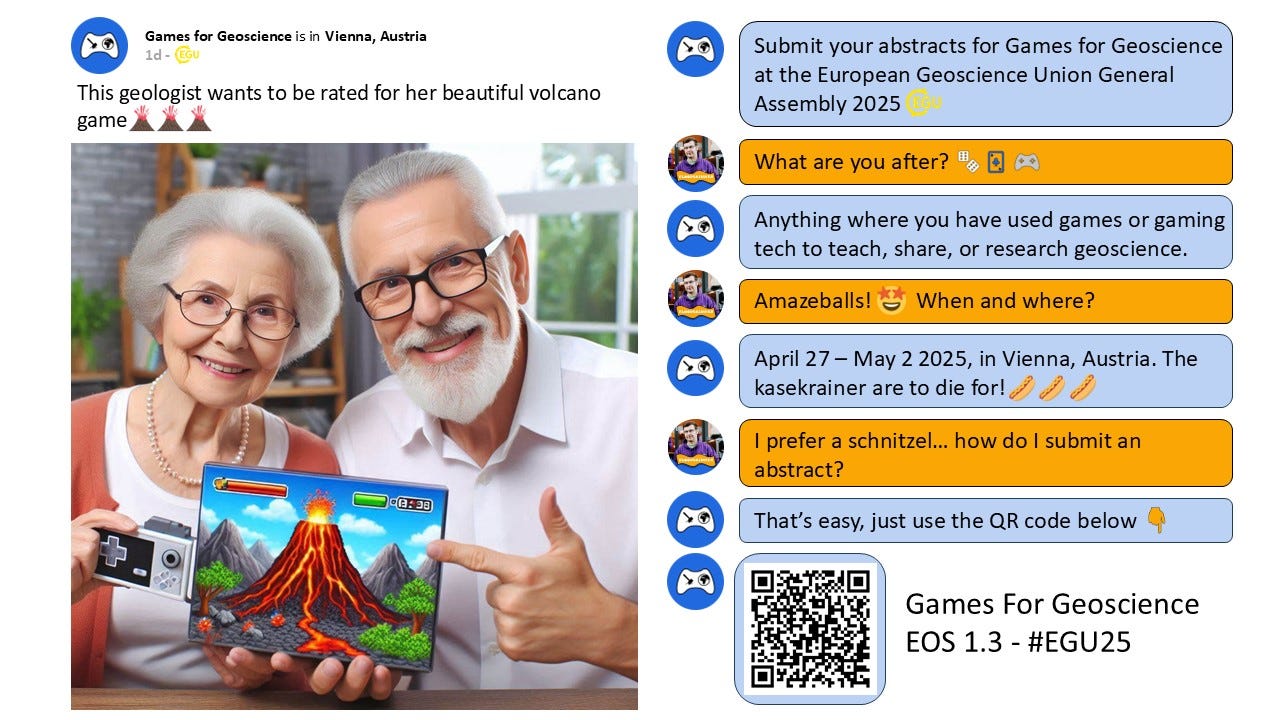
The call for abstracts for the 2025 General Assembly of the European Geoscience Union is now open. The deadline for abstracts is January 15th 2025, 13:00 CET. You can find more details and browse the sessions here.

The Games for Geoscience session is amongst the programme. If you use games for communicating, sharing, teaching, or researching within a broad theme of geoscience, please do tell us about it. We also welcome work using gaming tech, including virtual and alternative realties (ie, VR and XR). You can submit an abstract here.

Advert for the Games for Geoscience Session. Details in post.

Opportunities

Do you write sole-play TTRPG? Want your game featured in a new bundle? You can submit them to the Solo but Not Alone bundle here. Submissions close on December 22nd 2024. The bundle will be released on January 9th 2025 for $10, with funds going to Take This, the gaming charity supporting people’s mental health.

Cool Stuff

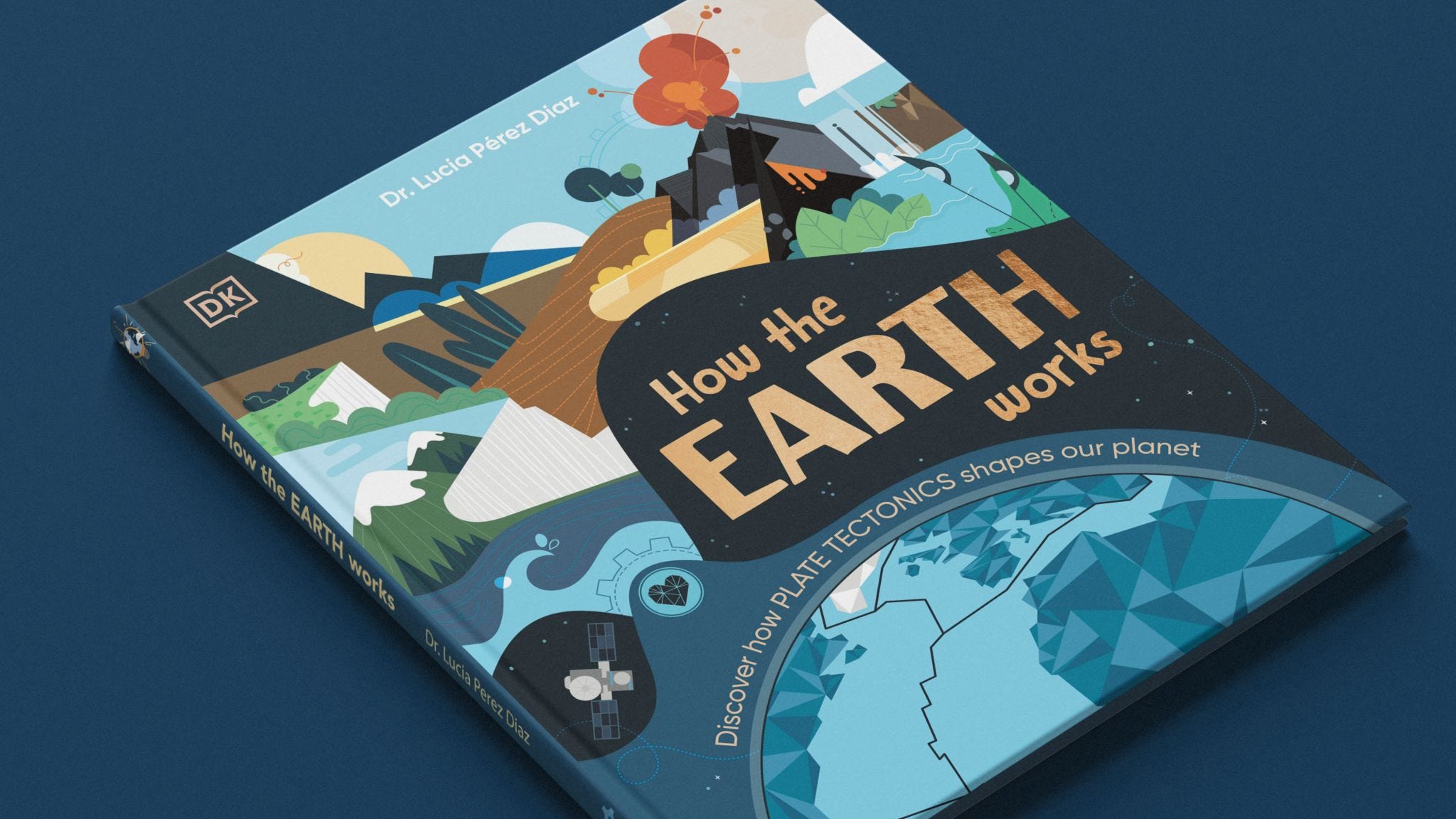
Awesome science artist, Dr Lucia Perez-Diaz is releasing her first science book aimed at children. And it looks gorgeous! How the Earth Works is published by DK Books, and “takes inquisitive 7-9 year olds on a journey of discovery into the inner workings of our planet. You can pre-order it here.

An image of the book How the Earth Works.

About this Newsletter

This is the personal newsletter of Chris Skinner, a science communicator and author under the name FloodSkinner. It includes the Gaming Environments newsletter that is also published on the Games for Geoscience website. It shares News, Events, Opportunities, and Cool Stuff from where games meet geoscience and environmental research and action. It is free and there is no paid tier. If you want to say thank you to Chris, you can ‘buy him a coffee’ using the link below.

Buy Chris a Coffee

Views expressed in this newsletter are mine and do not represent those of my employer. Content and links are provided for informational purposes and do not constitute endorsements. I am not responsible for the content of external sites, which may have changed since this newsletter was produced.
Finishing things makes me feel crap - my experience with ADHD

Finishing things makes me feel crap – My experience with ADHD.

//Views in this post are my own and not indicative of those of my employer or the Science Museum Group.

I am sharing these thoughts with you over my lunch break. I feel tired, broken, and on the verge of tears – focussing on my work has been more of a struggle than it usually is. When I consider my situation objectively, I should feel the opposite way entirely.

For the last few months, pretty much all of 2024 until now, I have been working on a large project at work. In my day job, I am a Senior Hydrologist at the Environment Agency, England’s environmental regulator. The project was to organise the Agency’s activities at the Science Museum that was running for its third year. This year it had moved to a more prominent location, up on the David Sainsbury Technicians Gallery, and could expand. I volunteered to join a project manager team with a couple of others to lead and oversee the project.

Yesterday, August 5th, that work culminated in the activity launching at the Museum. It will run for the month, featuring four separate activity areas and crewed by over 120 amazing volunteers from across the Environment Agency. We have developed the activities, obtained kit, designed our space, and trained the volunteers – it has been a considerable effort by everyone organising. I could not be in the space to set up yesterday, but I was sent a trickle of images by others in our organising team.

It looks great. The volunteers looked happy, confident, and enthusiastic. By all accounts, that first day talking to visitors at the Museum and demonstrating our activities to them was a success. We had done it and the hard work had paid off. We had done a good job – I had done a good job.

Yes, although I am proud of what we have achieved, and what I have achieved as part of it, I feel no joy in it. Logic, and possibly society, tells me I should be like an Olympian winning a gold medal. Smiling, jumping excitedly, waving to the crowd, kissing and biting my medal and overwhelmed by what I have just done. But no – drained, disconnected, and a little depressed is what I am left with.

I know this feeling. I had only a few months ago when I published the report for the UK Hydrology Skills and Satisfaction Survey, another large project I led. There was no joy in finishing that too, just the emptiness. I know this feeling well, it only lasts a day or two, but it does make me sad.

I am self-diagnosed ADHD and have been for a couple of years. It has been a revealing and difficult journey of discovery and understanding about who I am and why I am the way I am. ADHD is characterised by a low production of dopamine – the reward chemical that makes you feel good when you do the right things and reinforces that behaviour – in your brain. Consequently, ADHDers seek the often less good things that give you a quick, easy dopamine bursts. For example, starting new projects does this but when the novelty wears off, not so much. This is first reason why ADHDers, including myself, can be bad at finishing things.

The flipside of the ADHD struggle to focus is hyperfocus. Often unhelpfully described as a ‘superpower’, hyperfocus kicks in when we have something that really takes our interest or there is big pressure to complete it. When I’m in hyperfocus it is best feeling in the world – I love working hard and I love getting stuff done, especially if it is a writing task (I think I’m the only person ever to enjoy writing their thesis). I can achieve an order of magnitude more than others when in hyperfocus and produce quality work in a short space of time. But it is exhausting, and when I’m done I am often tired and migraines kick in. Sometimes, as projects approach their end and deadlines loom, I hyperfocus a lot. When it is over, then comes the crash. I think that avoiding this feeling is the second reason ADHDers are bad at finishing projects.

For the third reason, think of the difference between Type 1 and Type 2 fun. Type 1 are activities that are often short, exciting, and give you instant feedback. Type 2 fun activities require hard work where the process itself is not enjoyable but the pay off at the end is worth it. An example of Type 2 fun would be running a marathon. Type 1 fun appeals to me as it provides me that instant dopamine kick. I get nothing from Type 2 fun, firstly my timeblindness does not help me picture the end goal, and secondly, for whatever reason I don’t get that pay off at the end. There is no sense of achievement for me so I have never learned how to achieve Type 2 fun.

To translate this to a work environment, I love Type 1 work, tasks that are instant, achieved quickly, give me something to firefight or a problem to solve quickly. I struggle with Type 2 work – projects where the end is so long away, I can’t picture it and I also know I won’t get a pay off once it has completed. This has seen me in the past avoid initiating longer-term projects or struggling to really plan them (for example fellowship applications when I was still in academia). I have, and still do, lack confidence in my ability to lead things. Knowing this has helped me immensely in shifting my mindset from thinking I was just lazy and too disorganised to ever achieve what I wanted, to believing I can achieve and lead larger projects if I have the right support in place. For example, in my job I work alongside a project manager who is skilled in all the things I struggle with – they are like magic and let me focus on what I am good at.

My struggles to complete things, or more accurately my avoidance of the flatness I feel when finishing things, also influences my down time. I love games but actually enjoy playing very few of them. The ones I love and spend many hours playing are city-builder and simulation games – Timberborn, Cities:Skylines, Football Manager – a common thread here is that you can’t complete these games, they are open ended, you just keep going, building, and refreshing. I don’t have the motivation to complete or finish games, so these types of games just do not appeal to me.

I’m still on my journey, learning about myself. I am trying to push myself and lead larger projects including the things I want to do. For example, the only thing I ever wanted to do when I was younger was write a book – I am determined I will achieve this and now I know why it has been such a struggle. It does make me sad knowing that even if I was an athlete and won an Olympic Gold the height of my emotions would be “Well, this will look good on the CV”, but I am learning to get that sense of accomplishment in other ways.

Thank you for reading his, it has been cathartic writing it and you have helped lift me out of my doldrums! On to the next project…

Chris

Why Doom messages matter for climate action

Why Doom Messages Matter in Climate Action

Spoiler alert: This blog contains spoilers for the following films and programmes – Don’t Look Up, The War Game, Threads, The Day After, and a single episode of BBC’s Panorama from 1980. If you want to watch any of these and for them to be a surprise then stop reading now.

Trigger warning: This blog contains discussions of climate change and nuclear war. The consequences of both are dire and can justifiably cause anxiety. Nuclear weapons and nuclear war are indescribably horrendous and you might not want to have another thing to worry about at the moment.

The echo-chamber of my Twitter feed was buzzing over the holiday period for the Netflix film, Don’t Look Up. The film, described by those involved as a satire, follows a pair of scientists after they discover a comet heading for Earth. They try, and fail, to convince the world to take them seriously. They come up against a media that is obsessed with celebrity and politicians that are only bothered about their next election, even when the fate of human civilisation is at stake. Through apathy, selfishness, misinformation, and distraction the world (well, the US) misses all its opportunities to act and the comet hits the Earth and presumably wipes out all humans on it. It’s a comedy but not a feel good one.

Trailer for Don’t Look Up

Although the plot is about society’s response, or lack of, to a very real threat in the form of a comet, the film is really a deliberate allegory for our lack of a serious response to climate change. Some of the criticism I have seen of the film (there’s been a lot along with a lot of praise) is that it is a message of doom – it ends in failure and suggests that we do not have a capacity as a species to take hold of the solutions that are in reach. The reason for this criticism is a belief that to restrict climate change we need the majority of the public to take meaningful actions and for that they need hope. Messages of doom have been shown that they can raise awareness but actually make it less likely that people will do anything about it (Link).

A counter-argument to this is often that it should not be up to individual members of the public to bear the burden of climate action. Some go further and claim that campaigns and tools based around the concept of an individual’s ‘carbon footprint’ are actually a distraction campaign, placing the focus and blame on the individual consumer and not on the fossil fuel companies profiting from their pollution, and the politicians who enable, subsidise, and fail to curb them. They would argue that messages of doom actually focus attention on those who are most to blame and also have the ability to solve it. They would say they are speaking truth to power.

Doom-laden communications during the Cold War

Now, let me take you back to the last century (millennium even) and the era of the Cold War. My earliest memory of it was Timmy Mallett giving away fragments of the freshly demolished Berlin Wall as prizes on his morning kids TV show. I did most of my growing up in the post-Cold War world where the spectre of global thermonuclear war seemed to be something, thankfully, consigned to the past. I think it is difficult for people of my generation and those younger to really appreciate what it was like to live during this time and the very real fear of nuclear war.

With my interest in how risks are communicated, I have become fascinated in the information provided to the public about nuclear war and comparing them to messaging on climate change or flood risk. Below is a summary of some of the films I have been watching – before you continue, I would refer you back to the trigger warning at the start of this blog and consider if you wish to continue.

I started a few months ago with The War Game. Not to be confused with War Games (one of my favourite films), this 1966 black & white film is a dramatised documentary that tried to describe the likely aftermath of nuclear war on the British public. It was initially decided to be too horrific to be screened by the BBC and was only first shown on TV in 1985 (Link). It portrays the panic before the nuclear exchange and the near complete breakdown of society after, where law is enforced by firing squad and food becomes the only currency of value. It has been a few months since I watched this one but the bit that stayed with the most were the interviews with children a few years after the an attack – they are asked what they wanted to be when they were older. They universally replied “I don’t want to be anything”. It was simply the death of hope and the loss of the future.

A clip from The War Game showing the moment of nuclear attack

The second film I watched was a drama called The Day After. Made in 1983 and set in Kansas, it follows people going about their day to day lives (including a hospital doctor and a young couple getting ready to be married) as an international incident develops and is communicated via newspaper headlines and snatched messages from breaking news broadcasts. It famously does not reveal who launched first but does show the launches of US ‘Minuteman’ Intercontinental Ballistic Missiles (ICBMs) from sites around Kansas. After the first launches there’s a poignant shot of a white horse bolting – there was no way of putting them back now – and the crowd at a College football game watching them launch – “It will take thirty minutes for them to reach Russia,” “That means it will be thirty minutes before theirs reach here”. The aftermath shown is similar to The War Game, dealing with themes of societal break down, struggle for food, and radiation sickness. The doctor struggles to deal with the sick, including the overwhelming number of burn victims in a hospital where all electrical equipment has been rendered useless by an Electromagentic Pulse (EMP).

Trailer for The Day After

Threads is the film that impacted me the most and left me feeling nuclear anxiety. Made in 1986, it is set in Sheffield and follows a similar pattern to The Day After. We follow people just living their lives as the relations between NATO and the Soviet Union deteriorate in the background – none of the characters are involved in the situation, they have no agency in it, and many show little interest until they are forced to.  The nuclear exchange begins with the detonation of a large yield warhead over the North Sea, the resulting EMP knocking out electronics and communications across Europe. Military targets outside of Sheffield are then hit before a direct attack on the city itself targeting the steel works. Most people are unprepared but some have hastily constructed shelters and manage to survive the blast, sitting in their ruined homes under upturned doors and binbags of dirt until the radioactive fallout has ended and radiation levels have lowered to an immediately survivable level.  The title of the film refers to the ‘threads’ of community that hold society together and which rapidly unravel after the attack. The second half of the film shows this, much like in the other two films, yet goes further by showing the potential effects of nuclear winter, something we only really began to understand in the mid-1980s.

Trailer for Threads

The firestorms that would follow a large nuclear exchange would force huge quantities of dust and soot from destroyed cities into the atmosphere. This would block out the light and heat from the Sun, an effect that some modelling has shown could last for over a decade and dramatically lower global average temperatures and rainfall (Link). Even a much smaller exchange between India and Pakistan could have profound impacts on global climate and could entirely deplete the Ozone layer globally, exposing the planet to harmful ultraviolet rays (Link). In Threads this is shown by people having to work the land by hand (all machinery either destroyed by the EMP or lacking fuel) with faces and bodies wrapped in rags to shield from the sun. Harvests are poor, if any at all.

What is universal about all three films is that are utterly devoid of any form of hope. They are as doom-laden as they could possibly be – even if you were to survive, the aftermath is so horrific you’d be pressed to consider yourself lucky.

The final film I watched had a different take. It was an episode of the Panorama programme from 1980, featuring an exceptionally young looking Jeremy Paxman, that was critical of the UK’s plans to prepare for a nuclear attack. Its opening argument was that at that time the nation was so unprepared that more than 70% of the population would die, yet with a credible national plan and some personal resilience actions more than 70% could survive – it highlighted the dramatic mis-match between the nation’s spending on nuclear weapons and the funds it provided preparing the civil defence in case it happened. However, plans to prepare members of the public at the time consisted of distributing the “Protect and Survive” pamphlet to households and even then it was unlikely these could even be printed in time. The same Protect and Survive messaging would also have been distributed via radio and TV. The messages provided information on the dangers from nuclear attack, the alert signals that would be used, and how to prepare a fallout shelter for your household.

Original recording of the 1980 episode of Panorama – If the bomb drops

However, as explored in the three dramatised films and where the Panorama episode is particularly critical, any attempt to prepare yourself was entirely futile if there was not a Government plan to ensure those ‘threads’ of society were maintained in the aftermath. In the 1980s there was a plan of sorts, with the country being divided into sections with each run from a nuclear bunker staffed by the equivalent of a local resilience forum, with the head of the local council having supreme command. As shown in Threads, when the situation arises individuals might prefer to stay with their families rather than being stuck in a bunker totally oblivious to their fate. In the programme, Eric Alley from the Institute of Civil Defence was rather scathing of the nation’s preparedness – “At the moment we’re back to the British system of ad hockery, of hoping for the best… we can’t muddle through how we have muddled through in the past”.

Threads itself was inspired by the Panorama episode, featuring in it snippets from the Protect and Survive videos and shows people following some of the personal resilience actions like the homemade fallout shelters. It was being critical of the Government’s plans to deal with the aftermath of a nuclear attack but also critical of the very notion of telling people they could survive it or even that surviving it would be preferable to perishing in the initial blast. It was considered that promoting the idea that the UK could survive a nuclear war (the closest you can get to winning one) – providing hope in this grimmest of situations – was actually dangerous and might encourage Government to pursue that course of action. It prompted anti-nuclear protestors to produce the “Protest and Survive” pamphlet as a response – better to convince governments to get rid of these weapons altogether than trying to survive on tins of beans, surrounded by bags of dirt, whilst radioactive dust rains down around the ruins of your home.

Perils of doom-laden messages for climate change

Despite it clearly being preferable that we do what we can to stop it altogether, climate change is not as immediate or binary as a nuclear war would be, but it could be just as terminal. Individuals do have genuine agency in reducing the impacts of climate change and we need those messages of hope to inspire these. Yet, over-emphasis on individual actions risks leading governments into complacency and inaction – the impact of those individual changes will be relatively small compared to what could be achieved through strong and collaborative action by the world’s governments. To inspire this action we may need the messages of doom from films like Don’t Look up – it was rumoured that US President Reagan claimed The Day After had an influence on him signing the Intermediate-Range Nuclear Forces Treaty with Soviet leader Gorbachev after all (Link).

The big difference though is that climate change is not just introducing new hazards into the world, it is making existing ones worse. An example close to home for me is tidal flooding in Hull. This is a very real threat to the city, sadly demonstrated by the 2013 storm surge. It is crucial that people living in areas at risk are made aware of the risks they face but also feel empowered to take actions that would help them. Sea level rises of up to 1.2m by the end of the century will increase this risk a lot. Doom-laden messages are used about Hull claiming that this will plunge the city “underwater”, to make people aware of climate change to inspire them to put pressure of authorities to tackle it but this is problematic for two reasons. First, it is an exaggeration of predicted impacts and whether using hope or doom, you should always be honest. Second, by causing fear of future flooding it disengages people from present dangers, increasing their risks. You can read more in my old blog post here.

To summarise, there is a place and also a real need for the doom-laden messages to help us address climate change but they are a double-edged sword that must be wielded carefully and sparingly. Unlike nuclear war, individuals can make a real difference to limit the impacts. Also, a groundswell of grassroots action has the potential to lead companies and governments into positive changes. The majority of messaging should be hopeful, focusing on the solutions that already exist, whilst acknowledging that the burden of action should not lay with individuals.

Climate change, as Joshua discovers about Global Thermonuclear War in War Games, is “a strange game. The only winning move is not to play”.

Additional comments:

I am writing this whilst watching news reports of a Russian military build-up on the borders of Ukraine, with the Bulletin of Atomic Scientists keeping the Doomsday Clock at 100 seconds to midnight, the closest it has ever been. In recent years Russia has been rapidly modernising its nuclear arsenal including the development of hypersonic missiles that are able to evade modern missile defence systems. Russia has also been rumoured to have adopted an “escalate to de-escalate” approach that theorises that they could ‘win’ a small scale nuclear exchange and force their opponent to the negotiating table (Link).

Russia isn’t the only nation modernising its nuclear arsenals. The UK is refreshing the Trident nuclear deterrent but increasing the number of warheads at the same time (Link). It is considering adding scenarios to the reasons to justify a retaliation using nuclear weapons, including a wide-spread cyber-attack on the country (Link).

The risk of nuclear war is much lower than in the Cold War. The risk of nuclear war is not even considered as part of the UK’s National Risk Register, but then again neither is climate change…

Needless to say, these views are entirely my own and are not intended to represent the views of my employer.

Environmental themes at the Prague Quadrennial

Environmental Themes at the Prague Quadrennial

I realised this week that is has been two years to the day since Amy and I set out on our adventure by train to Prague. It is one my favourite experiences and I can’t quite believe it was whole two years ago now. The memory is even more prominent in my mind because the thought of such a journey right now, still in the midst of the pandemic, seems so alien now. Below, I revisit a blog post I wrote, originally for the SeriousGeoGames website, about it.

The Prague Quadrennial of Scenography and Design is a conference for theatre makers, unsurprisingly held in Prague every four years. It’s a huge event over 11 days where 15,000 people attend. My wife, Amy, is a Lecturer in Theatre and Performance and was chairing a panel at the conference, so I decided to tag along – I did so four years ago and found it inspiring, check out my previous blog from then.

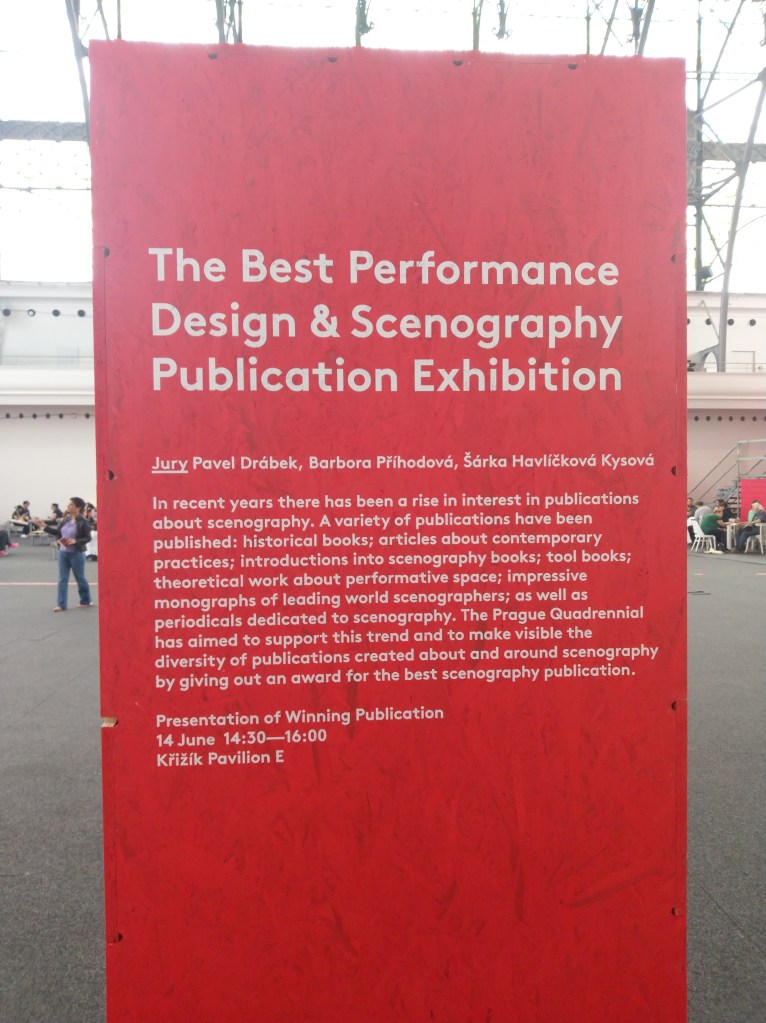
Amy’s first book – Meyerhold and the Cubists – was long-listed by the conference

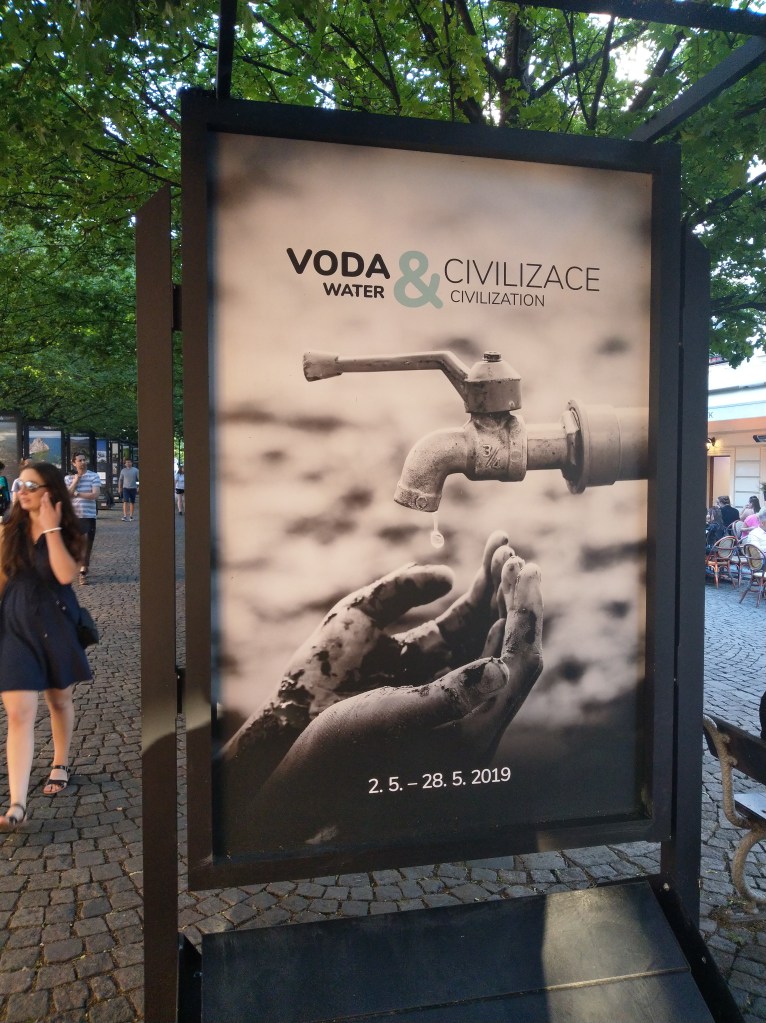
Information boards in central Prague showcasing water’s importance to society

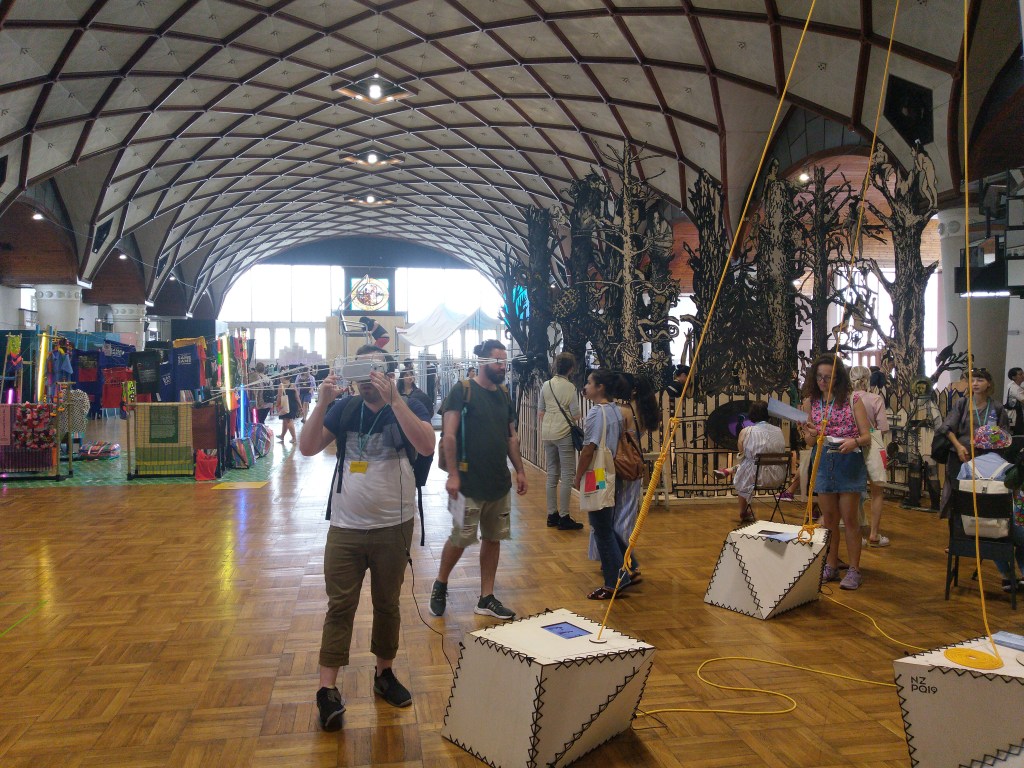
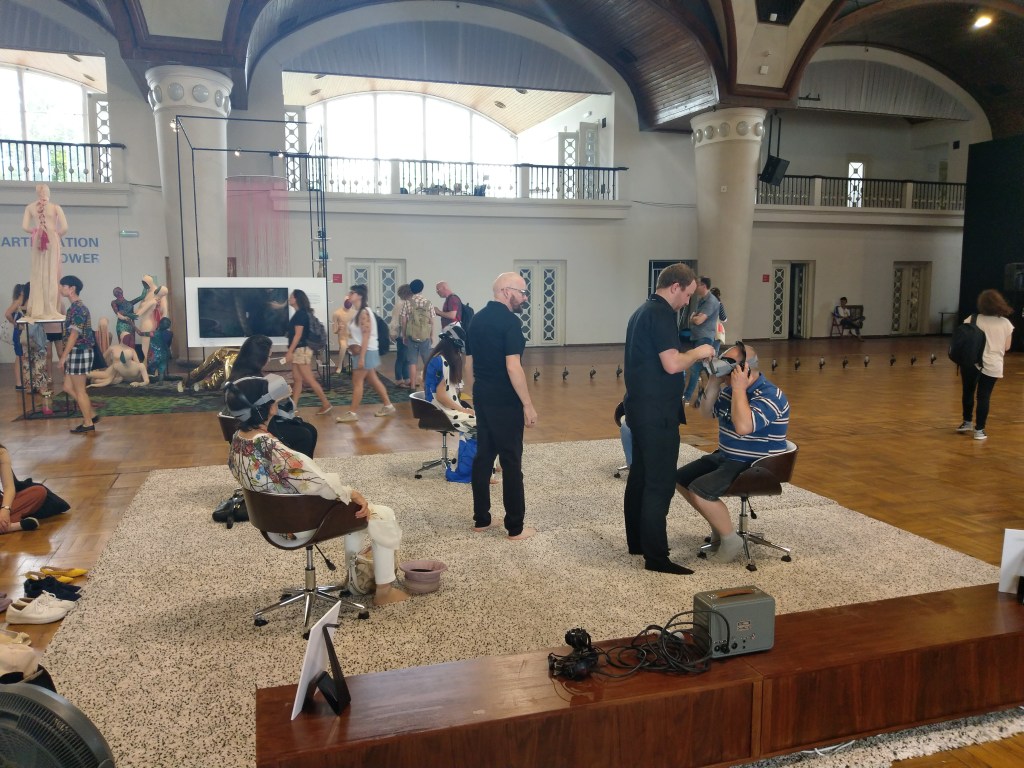
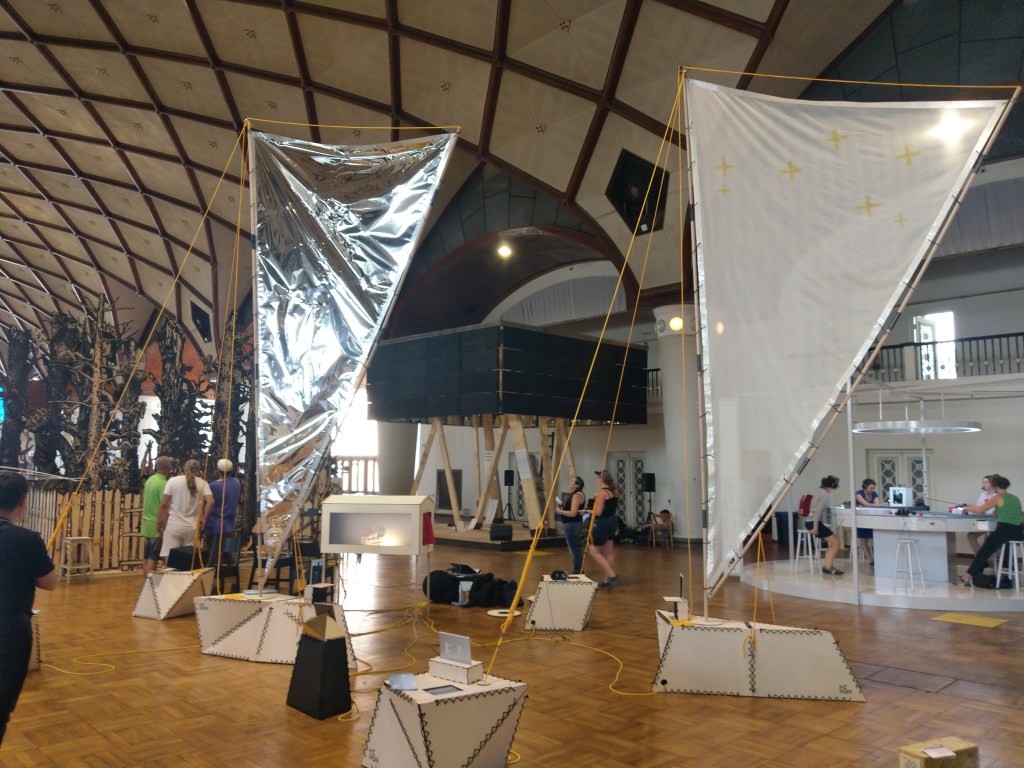
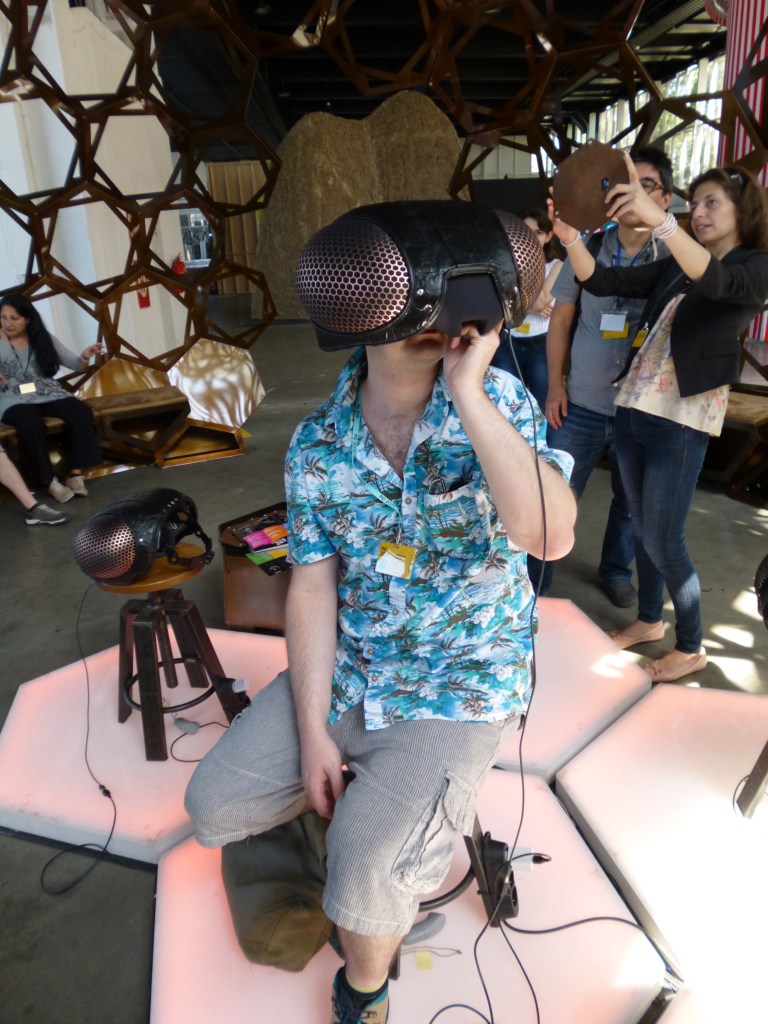
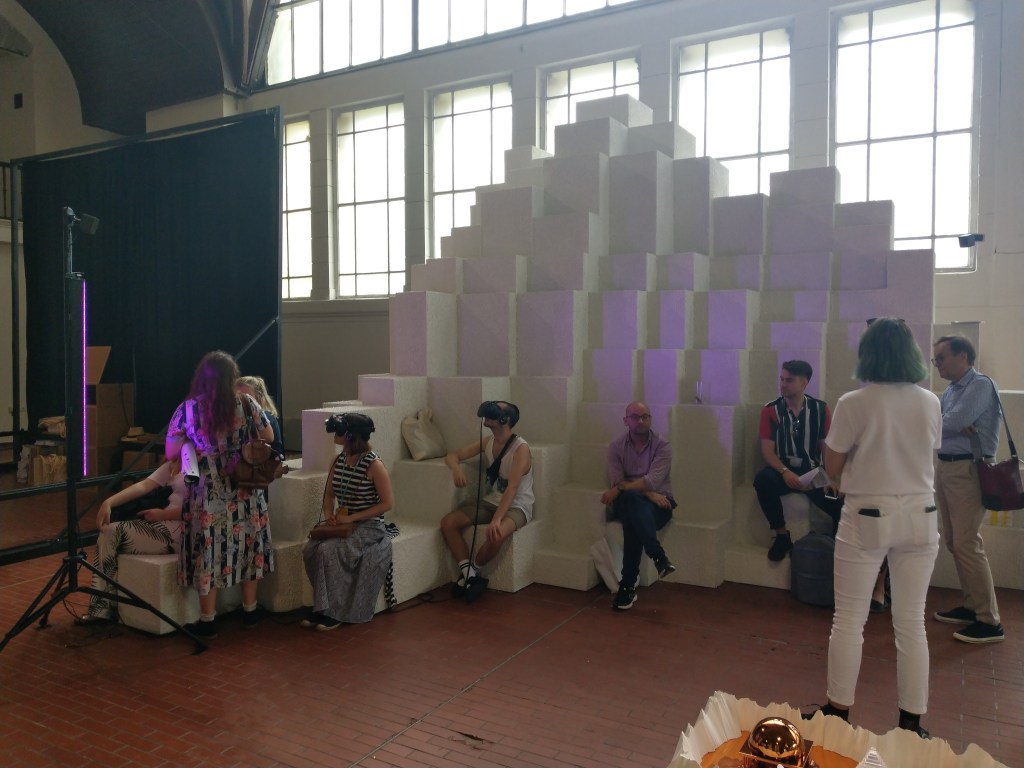
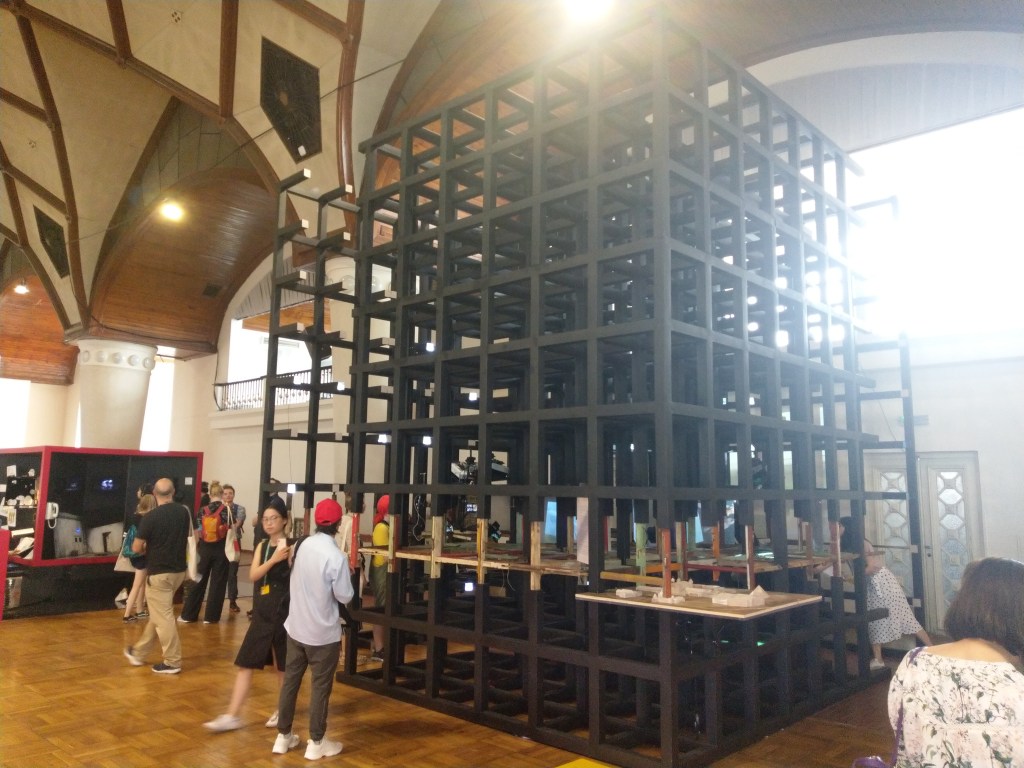
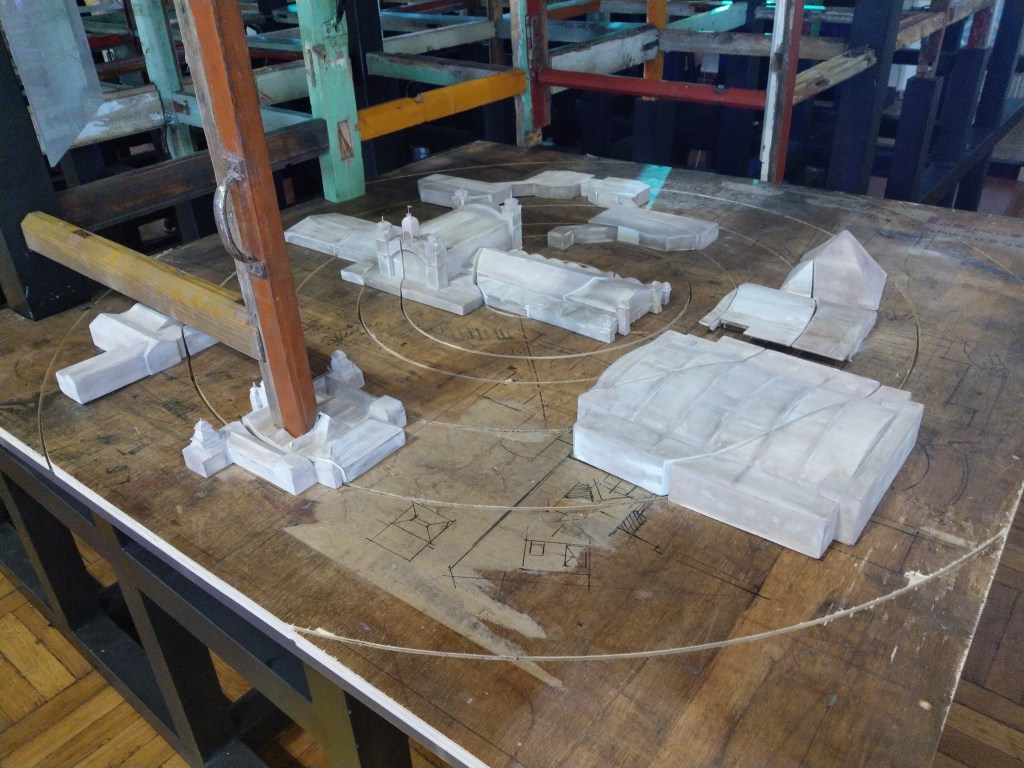
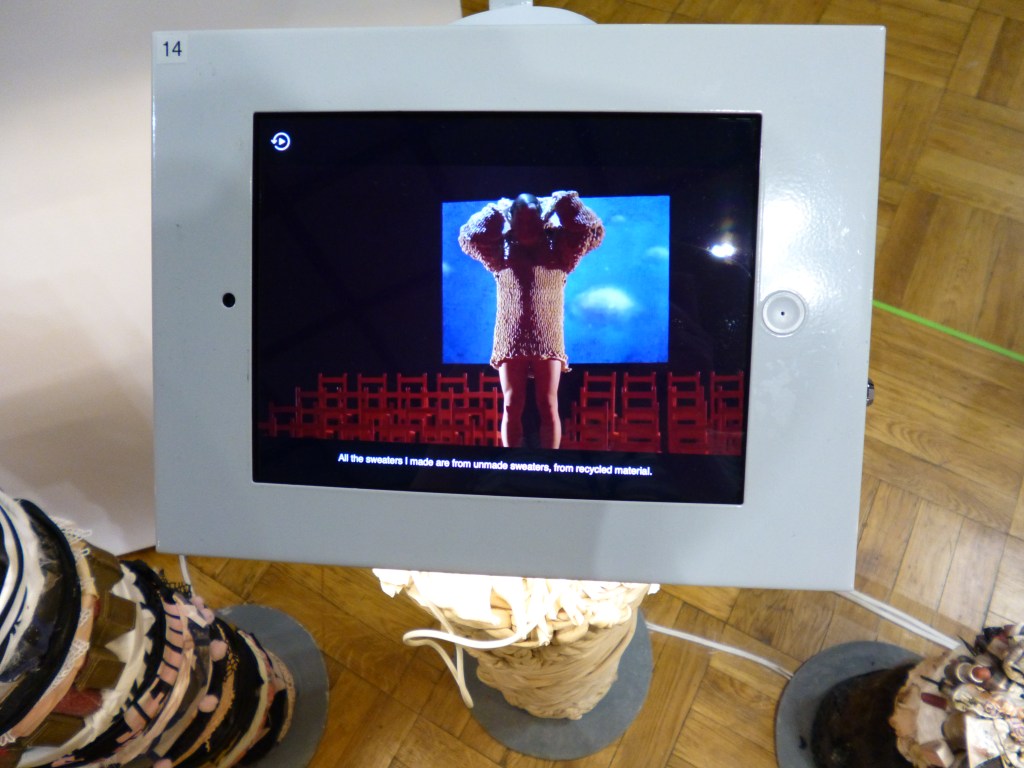
At the Prague Quadrennial, or PQ, countries (and regions, like Quebec) are invited to exhibit the best in their scenography and design over the past four years in about a 6m x 6m space. How they choose to do this is up to each country and there is a lot of variance and creativity on display. I was pleased to see several of the exhibits making use of VR but was a little disappointed that most did little more than show flat, low resolution, 360 videos on them – Ireland’s was notable as using high resolution, stereoscopic video, interlaced with graphics (including a creepy eyeball) to show the work of some of their best designers.

Several of the exhibits featured virtual reality, including some with modified headsets

Several of the exhibits chose environmental themes. I was taken by China’s exhibit as it revolved around a long distance train journey Chinese designers travelled to get to past PQ’s – in contrast to today, it was more expensive to fly so had to go by train.

China’s exhibit used lighting, projection, and mobile phones to showcase design inspired by a long distance train journey from China to Prague

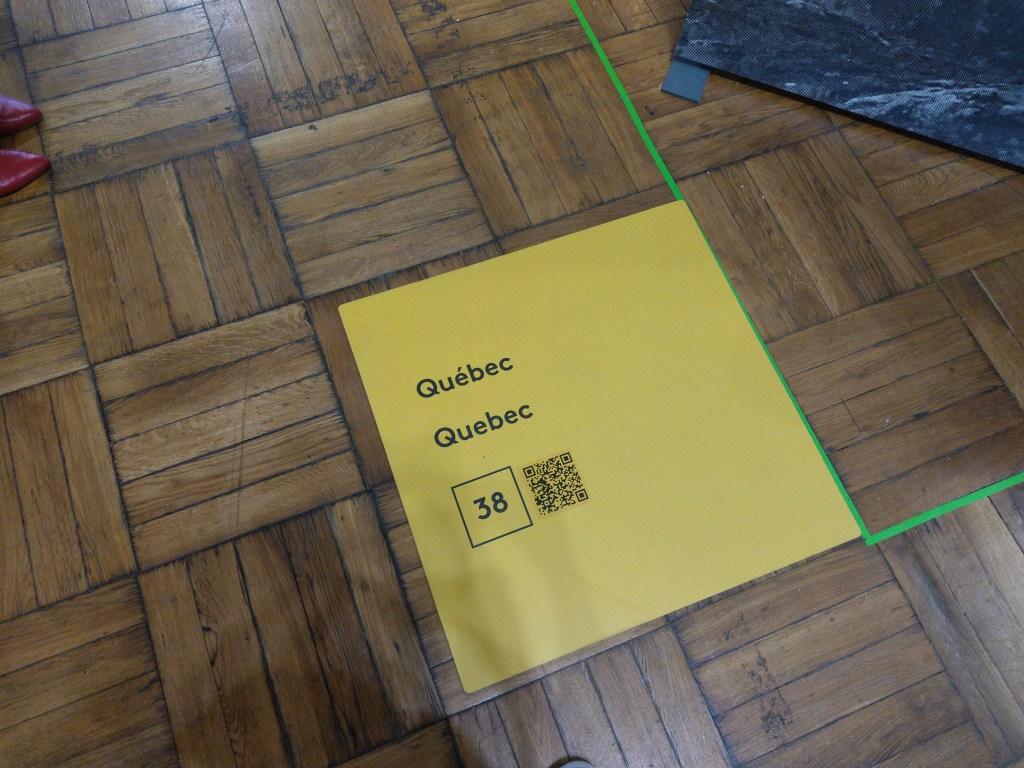
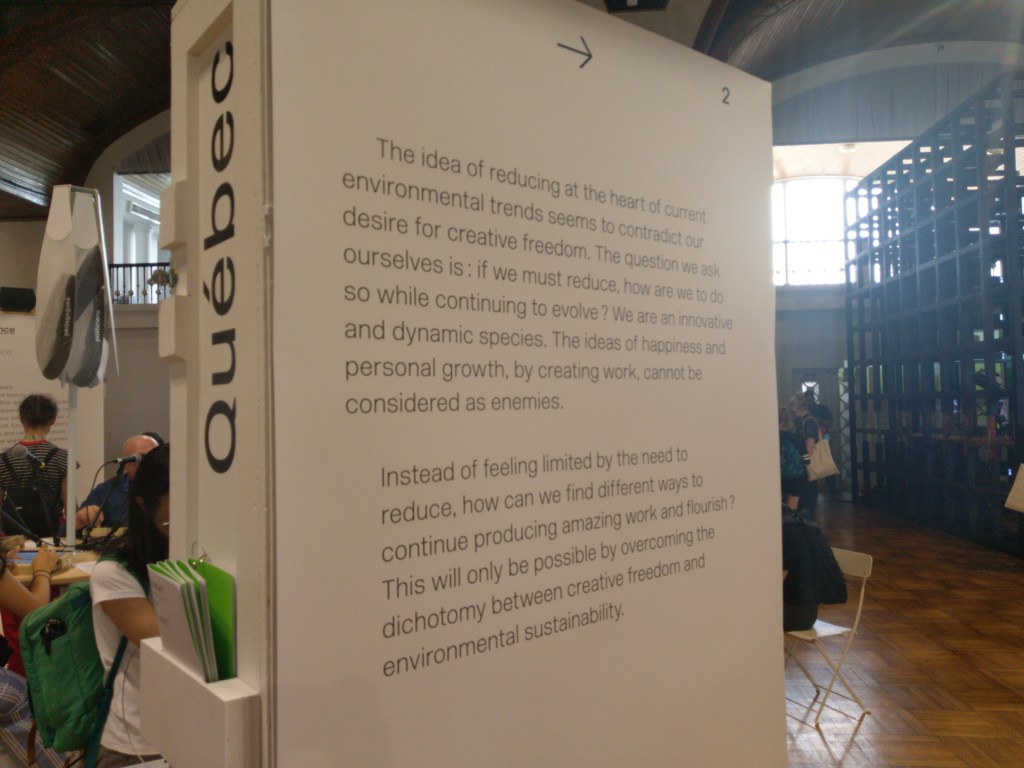
Quebec explored whether reducing our use of resources was at odds with creative freedom, asking whether the performing arts holds the key to renewed environmentalism. They showcased the best in eco-scenography and invited visitors to complete a questionnaire whilst powering a pedal-powered propeller.

Quebec’s exhibited highlighted their designs and use of eco-scenography

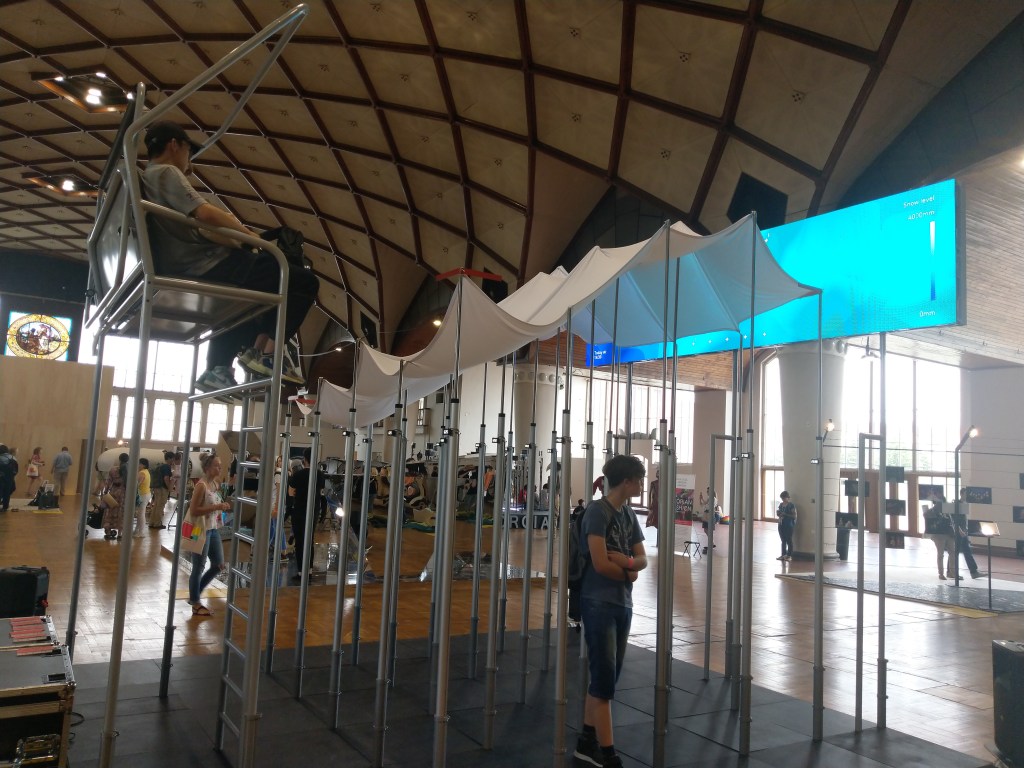
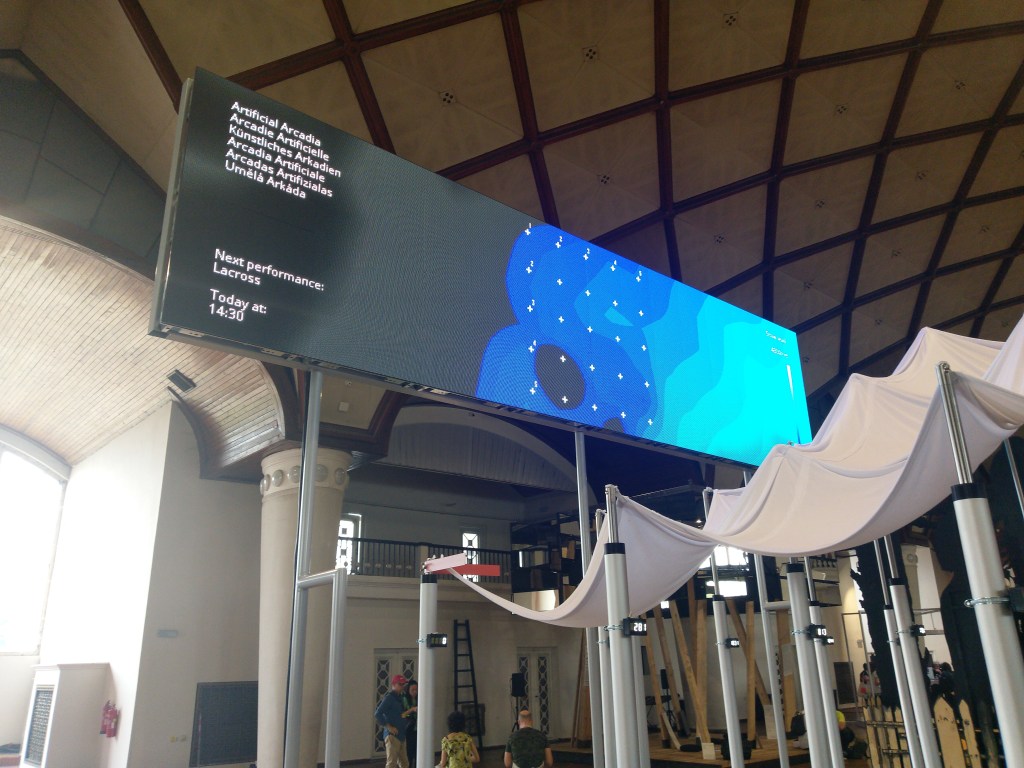
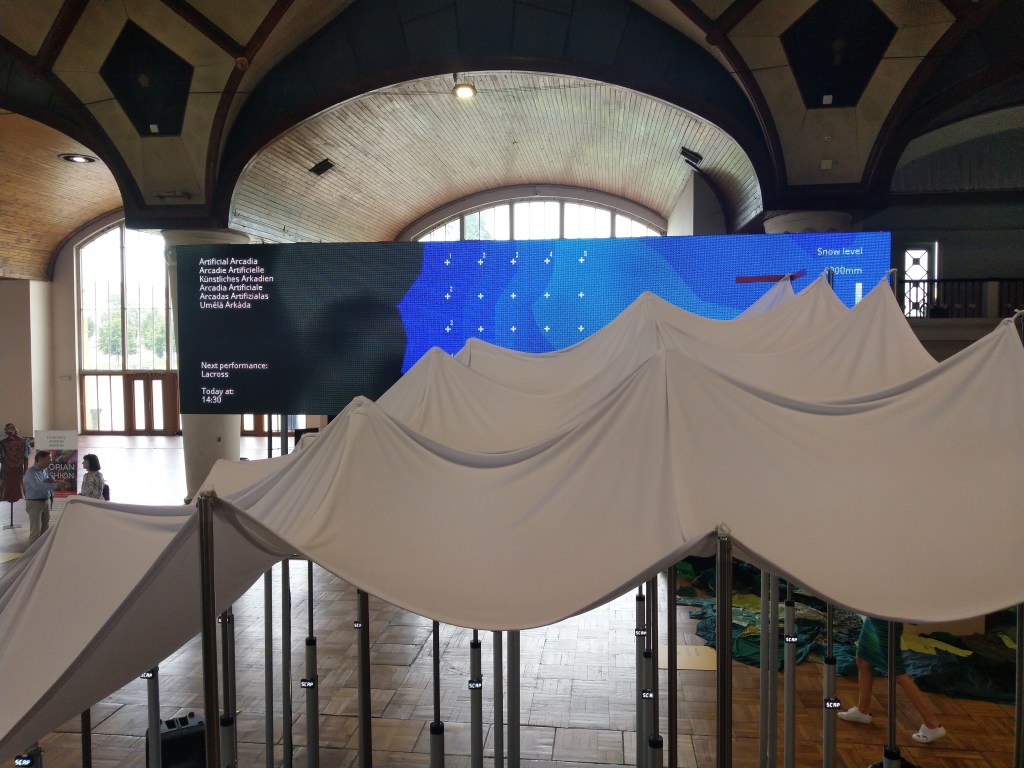
Switzerland used a ski-lift carriage and a canvas held on hydraulic rods to visualise snow depth data in three dimensions, responding dynamically as the data changed resolution on the screen – you had a different perspective whether you were on the ground or one the lift.

Switzerland’s ski-lift could visualise environmental data dynamically and in three dimensions

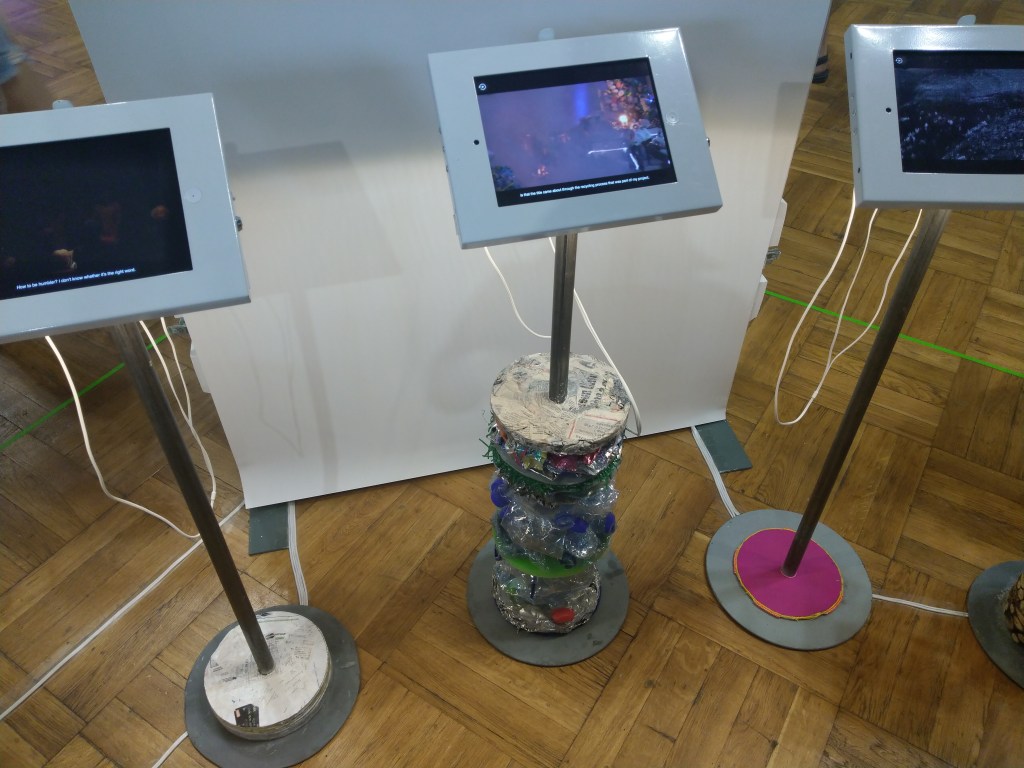
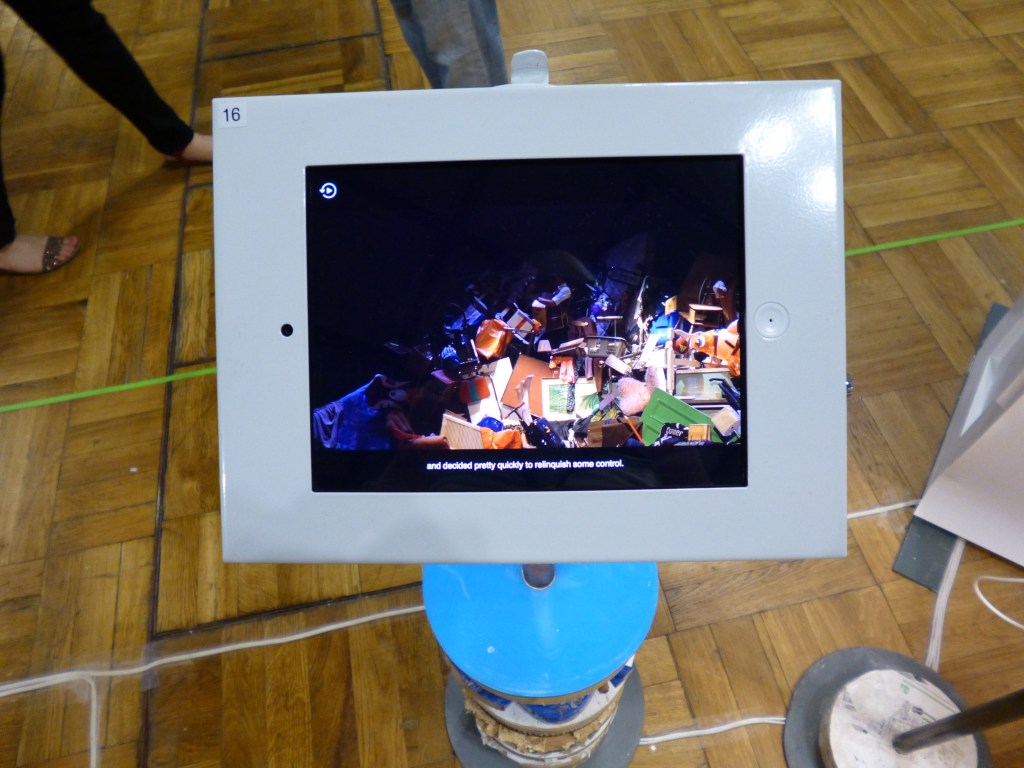
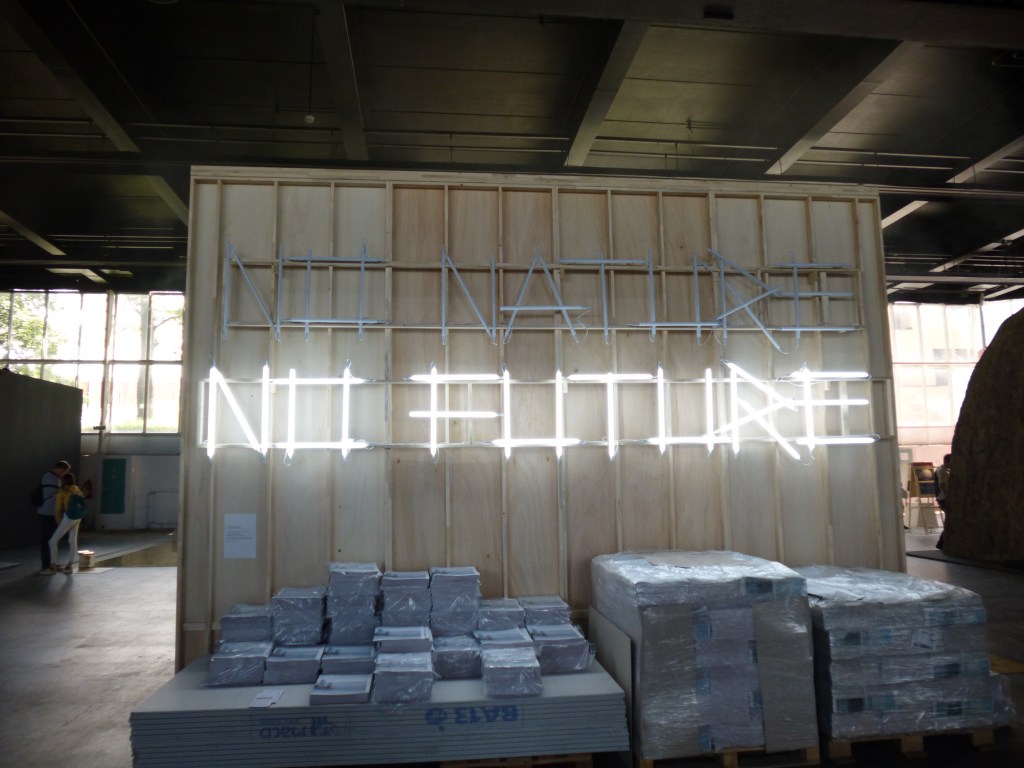
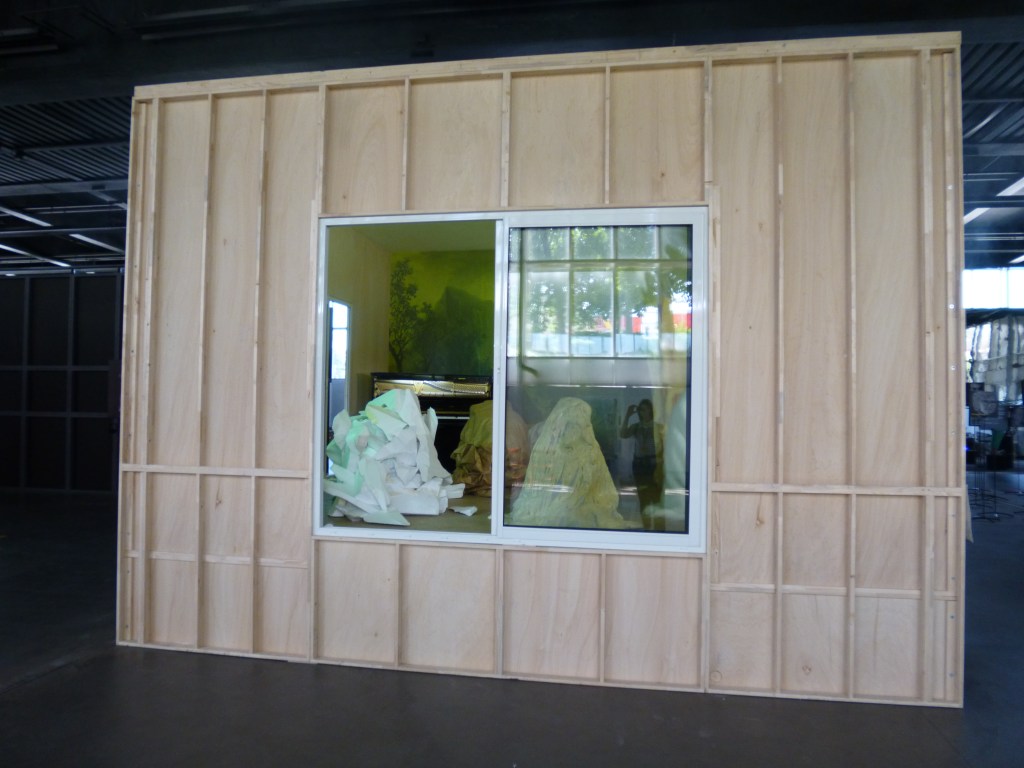
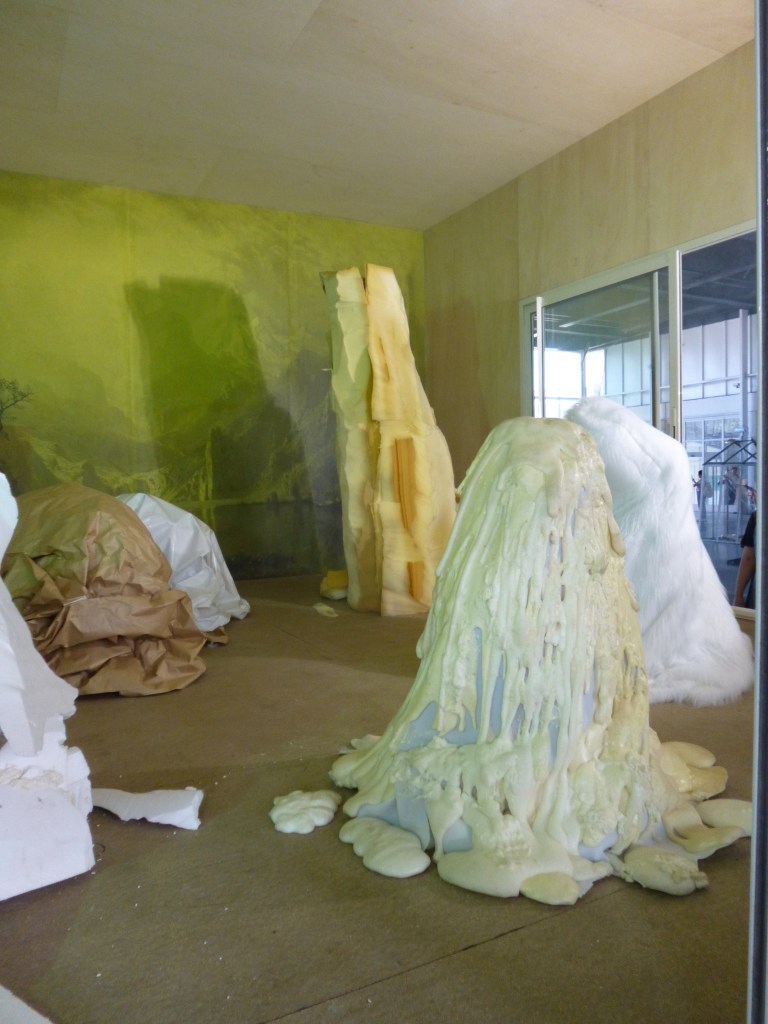
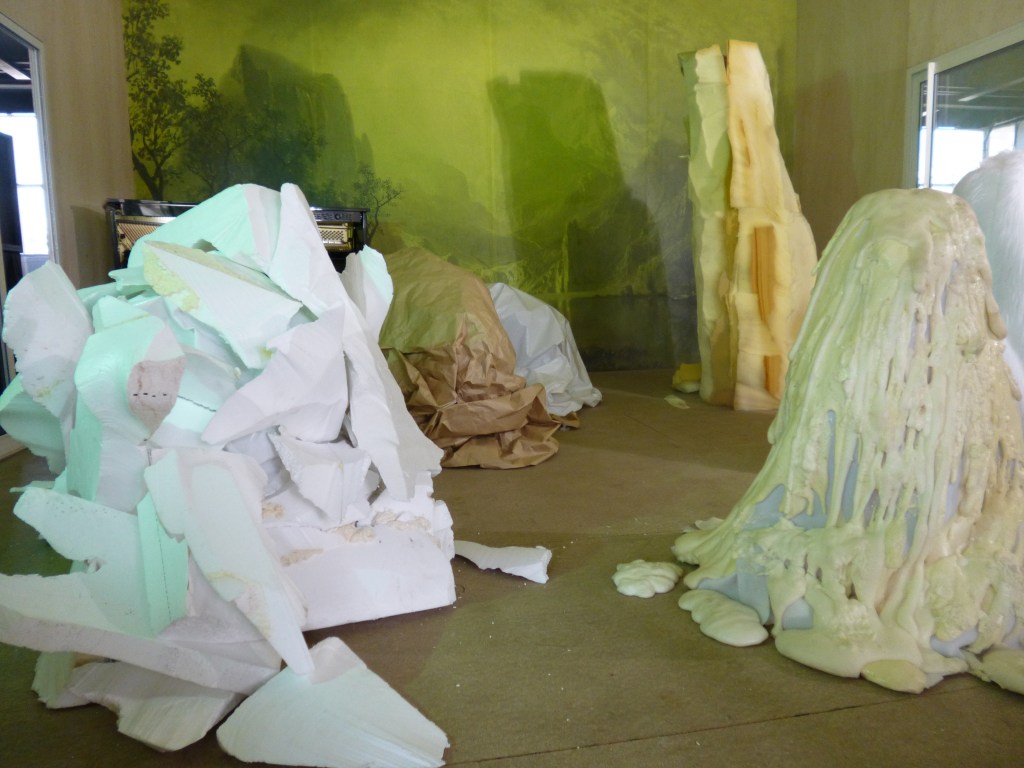
France was one of the winning exhibits and several I spoke to said that it had moved them to tears. On the outside, harsh lights displayed the warning “No Nature, No Future” and on the other side a smoke-filled room with haunting piano music was inhabited by shaking and shivering figures made of the waste of man-made materials. It was bleak and dystopian.

The French exhibit made the waste materials of the artist into human-sized living creatures. It asked what we would be without nature

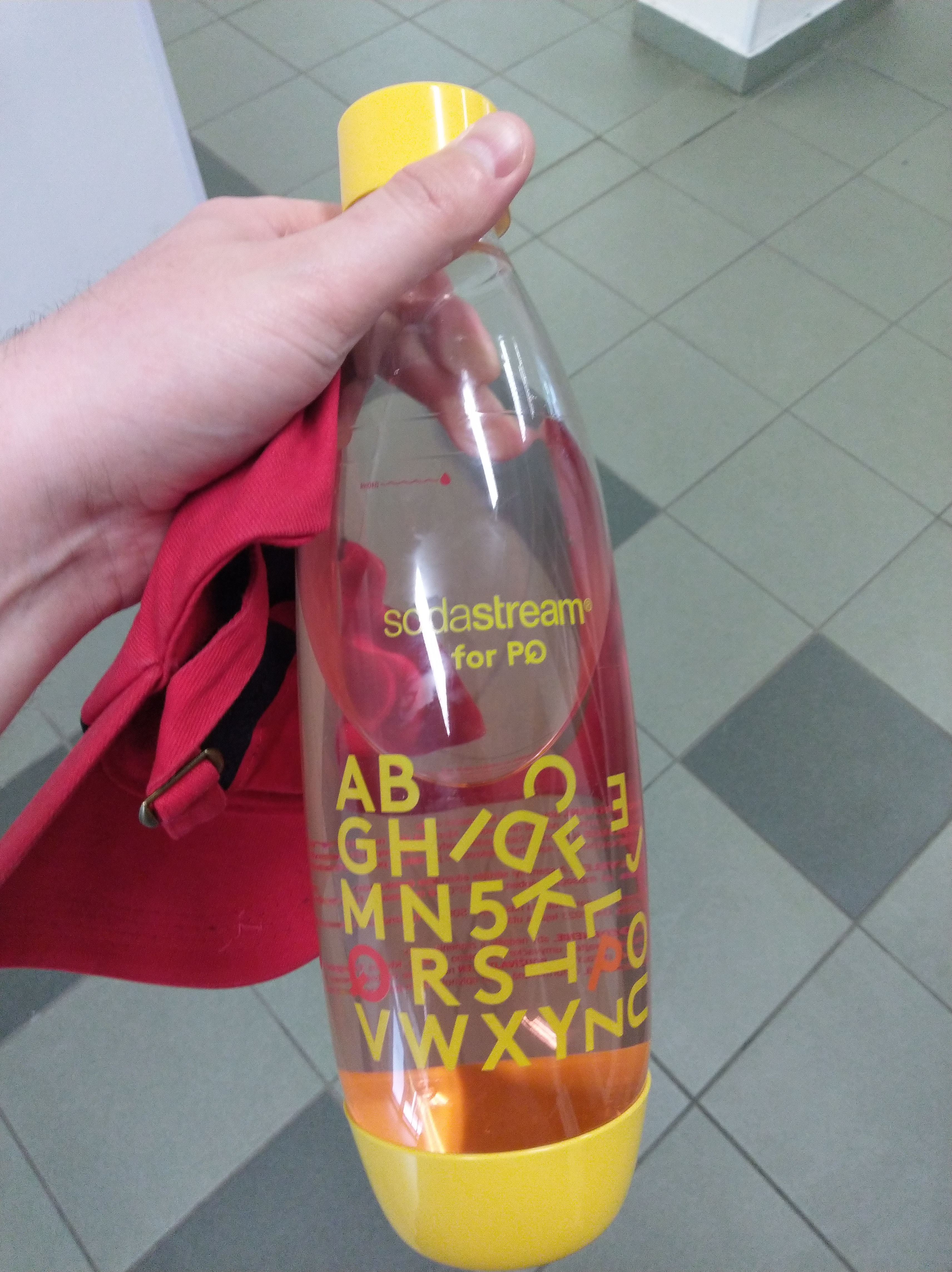
The conference itself engaged with environmentalism, with espresso-sized Keep Cups for sale, and an awesome scheme where if you bought a plastic bottle then Soda Stream, one of the sponsors, would refill it for free with fizzy, flavoured water – this was 200 czk (about £7) well spent, and I really want to buy a Soda Stream now!

I love a conference sponsored by Soda Stream with flavoured fizzy water on tap

The way the exhibits are put together was really inspiring and we have incorporated some of the ideas we saw into the design of the Earth Arcade, particular The Forest. You can find out more about this work on our poster for the European Geoscience Union meeting in 2020.

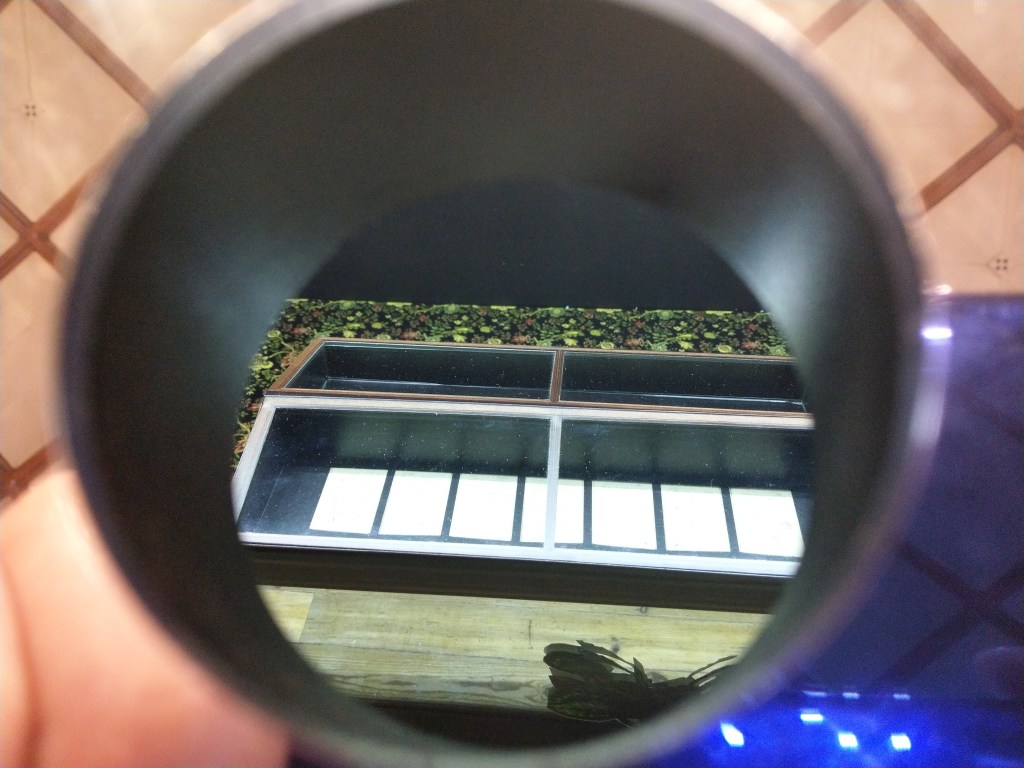
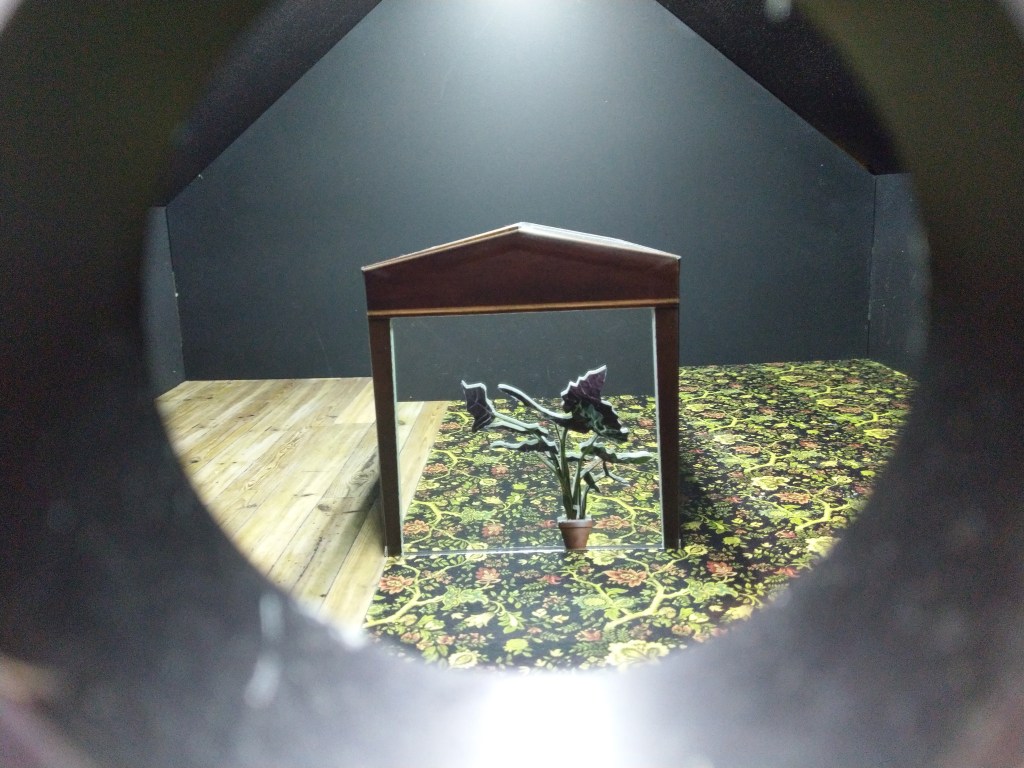
Portugal’s exhibit, Windows, featured mirrored metal boxes with small holes to peer through – inside were lit up models of stage designs. I would love to use this to hide away scenes of possible futures based on climate scenarios – dare you look inside?

Portugal invited you to spy on miniature design scenes through small windows

Cyprus featured a board room table with a bubbling pool of water in the middle – what about hosting a dinner around this where the water rises and falls, occasionally floods, and dinner guests can choose to purchase food, wooden blocks to hold back water, or extra place mats to raise their dinner?

A board room with a risk of flooding, from Cyprus

In Hungary’s student exhibit you had to walk through hanging plastic sticks and as they cascaded against each other it sounded like rain – through the clear floor beneath your feet were examples of design, details you cannot see outside of the ‘storm’. This was so simple, yet so effective.

Walking through a rain storm – Hungary’s student exhibit took you on a experiential journey through the clouds

I am always sad when we leave PQ, there always seems to be more to see and explore. It also means I have to leave Prague, which is a city I adore and would like to live in one day. With it being two years since the last PQ that means, all being well, we’re now half-way to the next one in 2023 – the organisers are now beginning to release details with an official announcement to be made on June 22nd. We plan on visiting again and by train, of course.