

I would not be in my line of work if I did not love being around water. I grew up, was raised, and lived most of my life on the banks of the Humber. Whether it was the open expanses of the bank and cliffs between Barton and South Ferriby, or the concrete defences around the Hull tidal barrier, I have marvelled and been inspired by the mighty tides and the big open skies of the Estuary. These were places I would sit, reflect, and let my imagination wonder.
Until recently, the only time I have lived away from the Humber was three years spent in Coventry. This city, a La Corbusien nightmare of concrete and ringroad, sits close to the point in the UK that is furthest away from any coast. Having buried its river, the Sherbourne, under the concrete the post-war planners loved so much, it is entirely cut off from any form of waterscape altogether. When I worked there, the ‘Jerde Masterplan’ had an ambition to install water features along the old route of the river but this a long way from the daylighting of buried rivers that has been successful elsewhere.
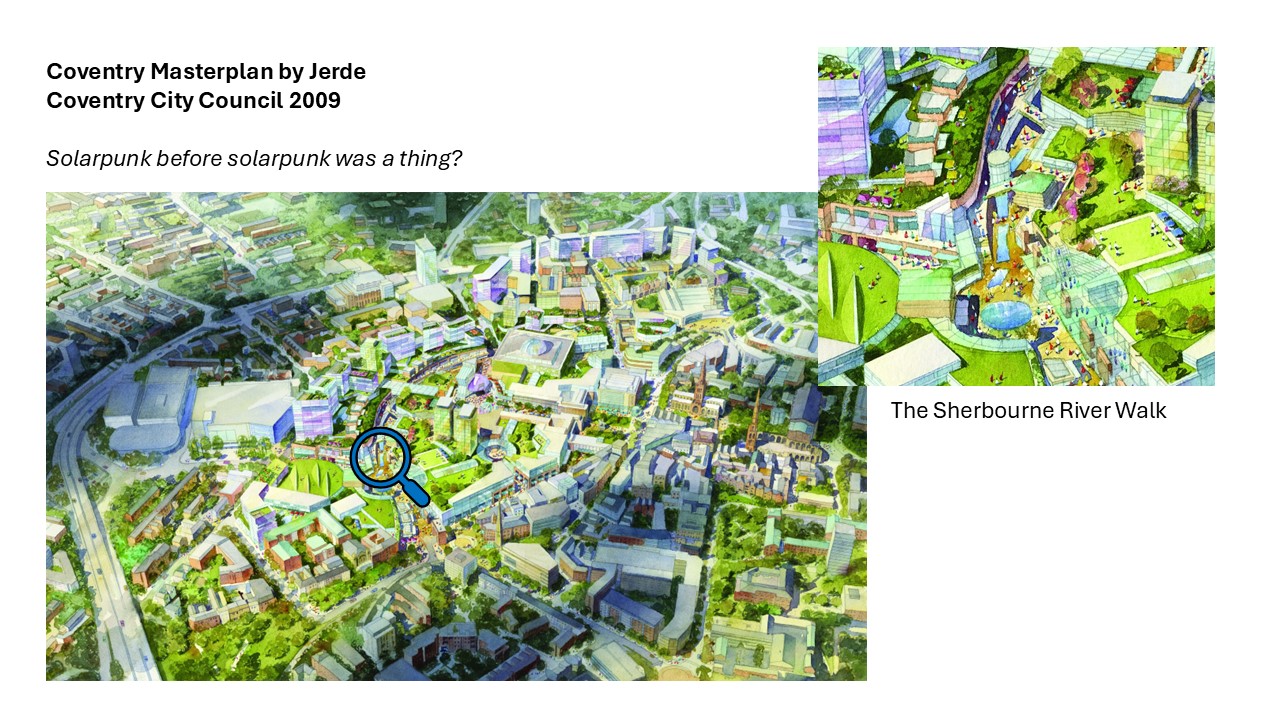
Needless to say, I did not enjoy my time in Coventry. I do not want to bash it, it has lots going for it, but I personally was not inspired or enriched by it. I did not find any spaces where I could sit and imagine. It was not the city for me. A large part of this, I think, was the lack of a waterscape and I felt homesick and longed to be under those open skies of the Humber once again the whole time.
It was not easy then to prepare myself for the move to York. It was move an hour’s drive inland, away from the estuary and the sea. I did not want to feel disconnected and homesick again. Thankfully, York was not devastated by well-intentioned yet misguided town planners whilst recovering from the Blitz and retains much of its Medieval charm (I once heard pre-war Coventry described as “York on steroids”). The River Ouse flows through its centre and I now live just a short walk away. Lunchtime and after-work meanders along its banks have become a near daily ritual, watching the boats, the rowers, and birds diving for fish and trying to guess where they’ll pop up again.

What I really love about the river is how dynamic it is and the liminal spaces at its edges. The river level can rise and drop quickly and since we moved here a few months ago it has spilled over its human-defined edges on handful of occasions. These are my favourite times and places. As I write, one of my favourite walks is diverted by the flood of the river. Not enough to cause harm, just minor nuisance, but it reminds me of its power and creates ambiguity over where belongs to us and where belongs to it.

It prompts my imagination. The water is much higher than usual and higher than I would visualise when it is ‘in bank’. The Ouse can flood to an extent that it causes real damage and misery and woe to those people unfortunate to be impacted by it. It is hard to visualise how it would look and the volume of water that would be needed for it to happen. You can see the evidence in the barriers on houses and businesses. You see it on flood markers (although I haven’t spotted any yet). And, when I see the water spilled over onto footpaths and the layer of fine silt left behind from the river when it was higher the day before, it sparks my mind to consider the hazards.
Here at the river edge, I find something similar to that I find on the banks of the Humber. It different, yet in a metaphorical, spiritual, and a very literal hydrological sense, they are connected. It is a place I can sit, reflect, and imagine. I am excited for the ideas I will have here.
Where are the spaces that spark your imagination?
This post originally appeared in the Imagination Engines newsletter. To read this content a few weeks earlier, subscribe to the newsletter below.
 GeoSkinner