Tag Archives: science communication

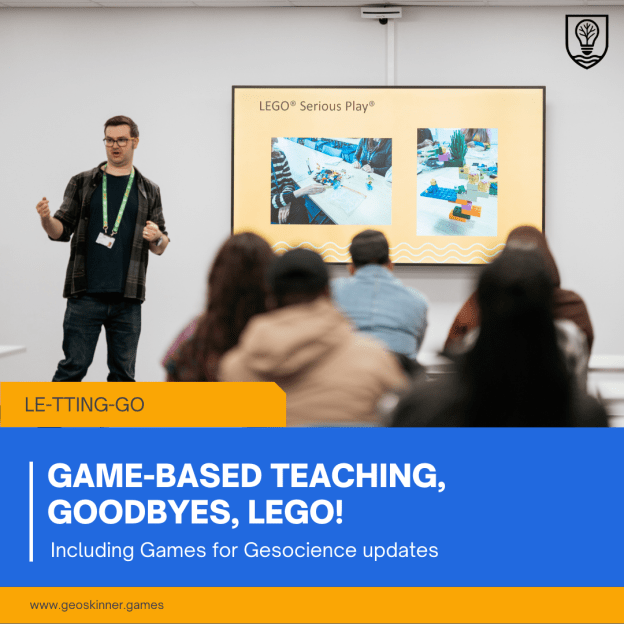
Promo image. All change please. Transitions. Adapting to a new job, career, and pace. Including project updates.

Transitions – February 2026

I’ve just finished presenting a webinar for the UNRISK CDT about my work with games. It was months ago when James McKay and Erica Thompson from the CDT invited me to talk, before I had even applied for my current job. So, figuring out what I was going to say was tough. Back then, I was freelance, GeoSkinner, just messing around with games because it interested me and kept me creative. Now, as an academic again, I have an opportunity to be more serious and focussed about it and do some ‘proper’ research. My presentation sat at this transition point – a collection of ideas waiting to be forged into something meaningful.

Transition, then, has been the theme of my last month, my first as a Lecturer of Geography at York St John University. Obviously, there’s been the usual transition to a new workplace: the obligatory fire safety and slips, trips, and falls training; navigating a different travel booking system; and, learning the unwritten rules of how the new place works. For example, where my old team predominantly communicated using chat in MS Teams, my new team rarely uses it and favours emails. It sounds small, but it’s been an adjustment.

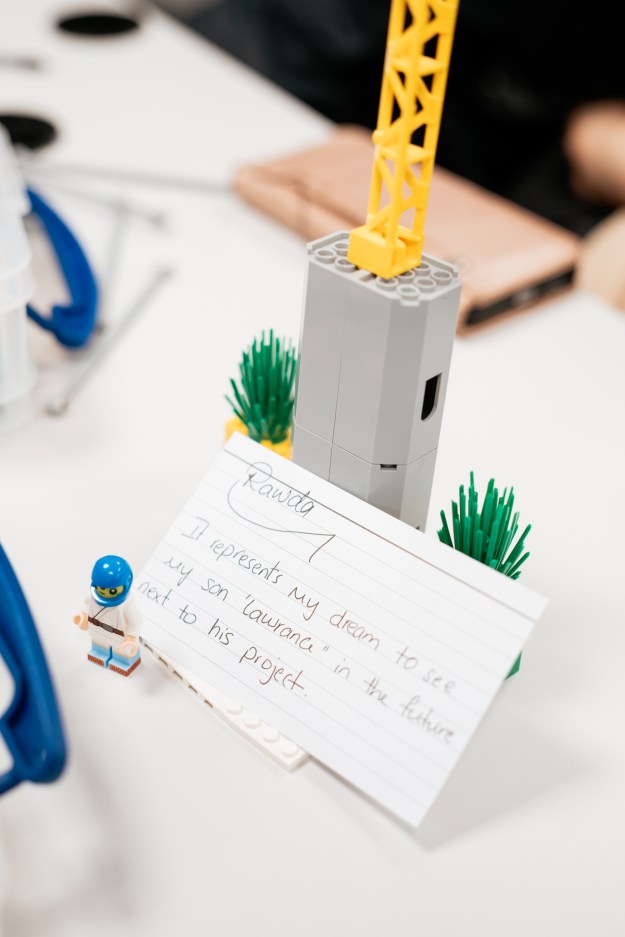
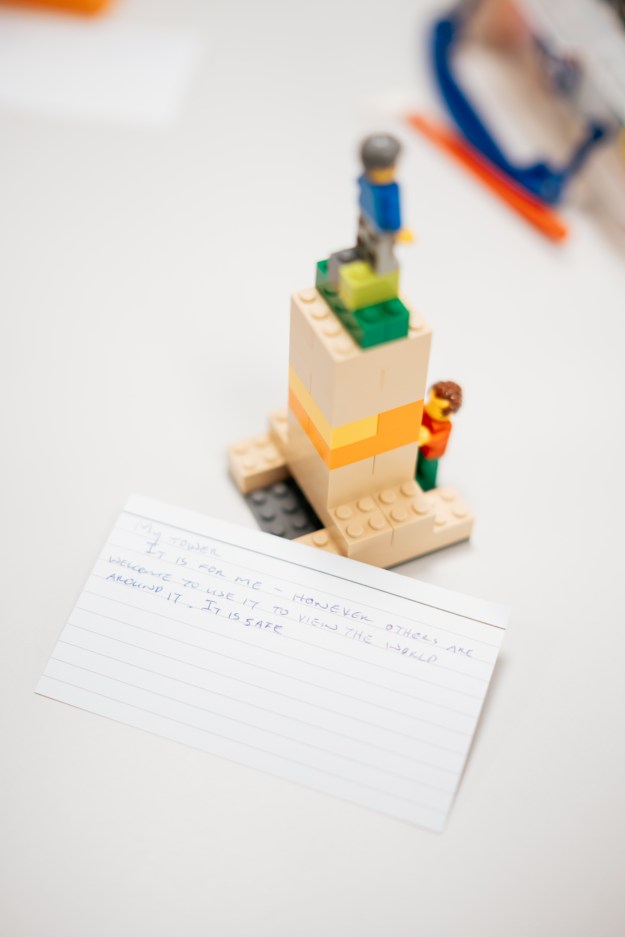
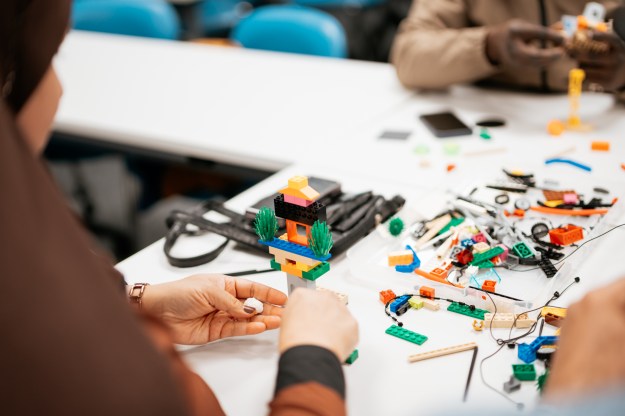
But it hasn’t just been a change of job and employer, it has been a shift in sector and career. What I did not expect was how strong a sense of freedom I would feel, it has taken me by surprise. There were understandable and reasonable limits to what I could do within my previous role, which was why I maintained my interests independently. I hadn’t appreciated how difficult it was to partition my professional life in this way, until I no longer had to. If I want to explore the pedagogical value of building with LEGO bricks it is now valuable professional practice and a potential research avenue that I am encouraged to pursue, rather than something I will try and fit around work and life. Honestly, it feels like I’ve been holding my breath and now I can breathe out finally.

Another big transition has been the change in pace of the work. My old role was strategic and deadlines were defined by quarters and financial years a distance away. As an ADHDer, my concept of time is now and not-now, so strategic planning has never been my strength. I often describe my brain as like an old petrol-powered lawnmower where you keep pulling the cord to get it going but it just keeps sputtering out. It was hard to get going and without the excellent project managers I worked alongside I would have struggled big time. But, in my new role, I’ve had no option but to hit the ground running – there’s marking and moderation to do, students applying for jobs to help, and the start of teaching is looming large. I’m actually finding this change of pace refreshing, more suited to my neurotype and, as well as enjoying this, I’m finding it easy to make use of those liminal times between tasks and meetings.

This then brings me back to that transition at the start of this newsletter. This transition, shaping my interests into a cohesive programme of research, is one I am yet to crack but is something I really want to get right. Whilst I am immensely proud of what I achieved as a Research Fellow at the Energy and Environment Institute, I have always felt regret at not achieving what I would have like to and what I know I am capable of. Looking back, I can see how I was constantly battling the ADHD in my mind, even though I didn’t realise it then. This time around, the expectations and the culture are different and, crucially, I know myself much, much better.

Game-Based Approaches in Geoscience (Game-BAG)

My first project I plan to develop is Game-BAG (I love a dodgy acronym). It will bring together several strands of my work into one place with common objectives. This includes Games for Geoscience, Adventures in Model Land, and my work with the LEGO® SERIOUS PLAY® methodology. Planning is still work in progress but I’d particularly like to look at:

  • How game-based approaches are used to support education and training in geosciences (using EGU’s broad definition)
  • How game-based approaches can support the understanding and development of numerical models with modellers and technical experts
  • How game-based approaches can build model literacy in non-modellers, particularly decision-makers

Games for Geoscience

Games for Geoscience will be back for EGU 26. We got 15 brilliant abstracts and we’re still waiting to hear what format the session will be. More news about the session and the Geoscience Games Night will be available soon – make sure you check the website for updates. As with last year, I also hope to bring blogs and game profiles from those featured in the session.

GeoSkinner YouTube

Testament to how long it has been since I have provided a proper update, there is a ‘new’ video on the GeoSkinner YouTube channel that is already 5 months old… I played Terra Firma, an indie videogame that is essentially a playable landscape evolution model, the type of geomorphology model that much of my previous research made use of. Actually, it’s been so long the Dev has released Terra Firma 2 since…

I have no plans for any new videos to come soon but some ideas I’d like to explore. Going forward, my videos will probably be more closer related to my research especially Game-BAG – yet more transitions to come!

Project Prospero

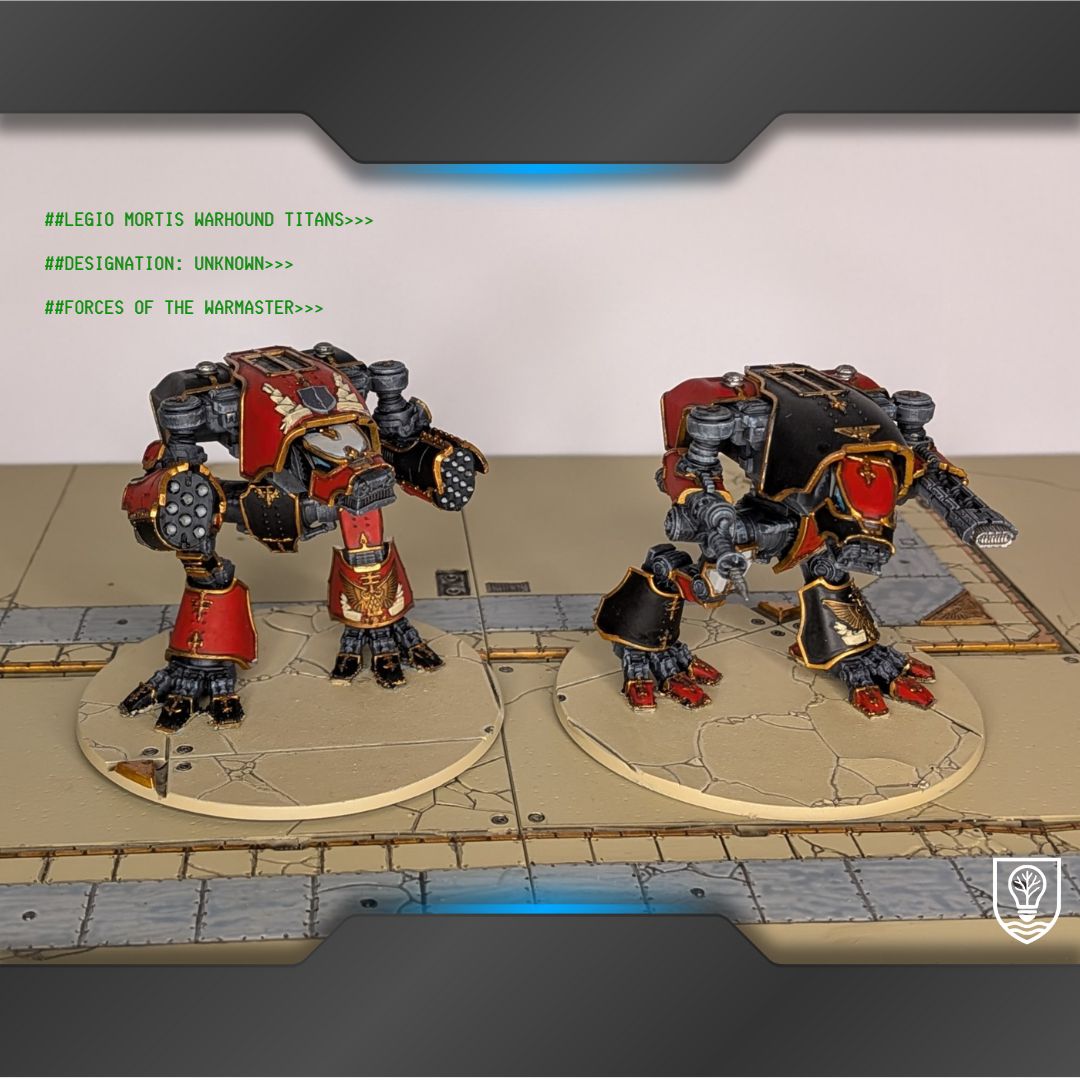
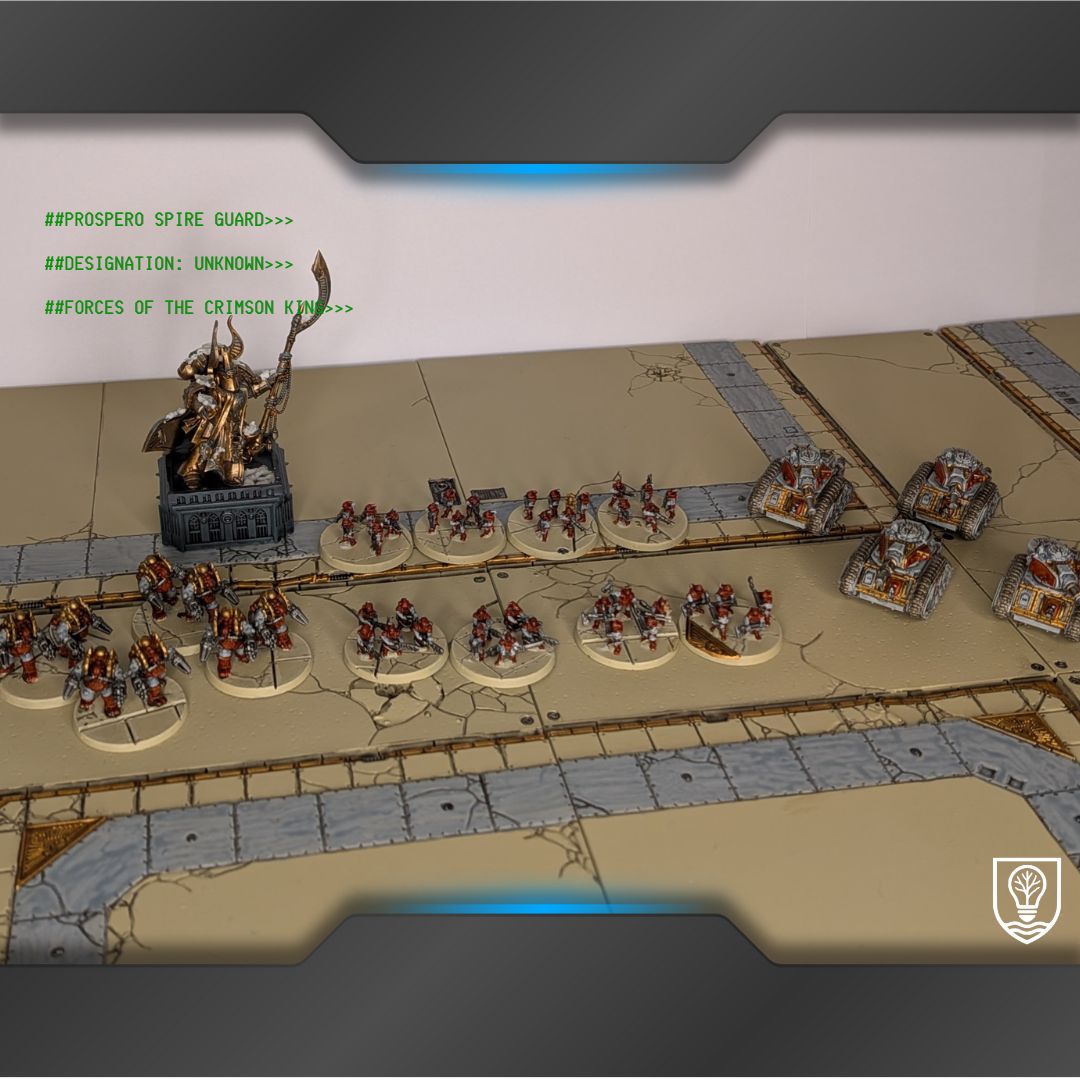
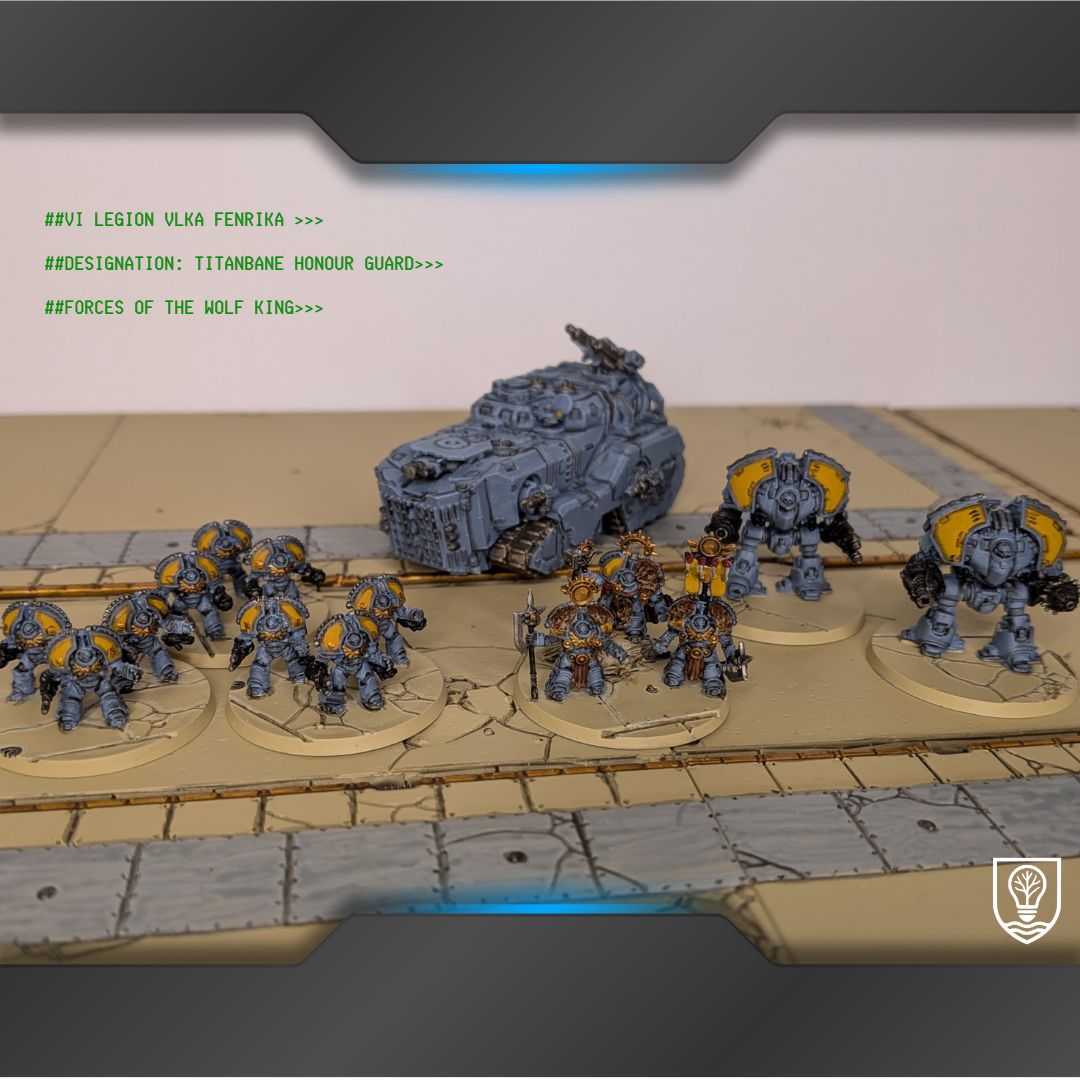
I’ve been on a hobby spree the last couple of months and progressed my Warhammer project, themed on the Burning of Prospero. Too much to update here, but visit my hobby site to see the latest.

Views expressed in this newsletter are mine and do not represent those of my employer. Content and links are provided for informational purposes and do not constitute endorsements. I am not responsible for the content of external sites, which may have changed since this newsletter was produced.

Subscribe to get the latest newsletter sent directly to your inbox:

Imagination Engines. Inspiring Interactions - Simon Clark.

Inspiring Interactions – Simon Clark

Simon Clark is one of the most successful science communicators on YouTube. His channel, @SimonClark, currently has over 644,000 subscribers and his videos regularly amass hundreds of thousands of views. Although his channel is now focussed on promoting climate literacy it started 15 years ago as a vlog about his experiences as a state-educated student attending University of Oxford. This was significant because Oxford and Cambridge have traditionally been a space for privately-educated students – even today where less than 7% of students are privately educated they make up 30% of student intake at these universities, and historically this has led to a disproportionate under-representation of state-educated citizens in important roles (e.g., 65% of senior judges are privately-educated). It’s clear that his representation of the state-educated voice in that arena resonated with many people.

What I have found inspiring about Simon is how he has managed re-invent and evolve his channel throughout his career. From that original vlog, through his time doing a PhD at the University of Exeter, to going full-time afterwards, and now focussing on climate literacy. He has adapted and grown with his audience whilst remaining true to himself and the content he wants to make and feels is important. Recently, he has been open about struggling with YouTube’s algorithm and the threat that poses to his livelihood – this led to another re-invention and the incorporation of some physical models into his videos. Simon makes these by hand and they are beautiful and he has been rewarded with millions of views. It’s imagination, it’s craft, and it’s realness – all the things I think people yearn for.

I’m also inspired by Simon as he is living my dream in many ways. He gets to be creative, share knowledge, and inspire people to learn every single day. He has already achieved my ambition and written a book (with an excellent audiobook version read by Simon himself). Like me, he’s a big gaming and Warhammer fan and successfully brings these into his work (seriously, check out his awesome Hawaiian Orks). When I put together videos for my YouTube channel, I looked to Simon’s for ideas – how can I put it together, how do I tell the story, how can I film this? Simon also co-hosted a brilliant podcast How to Make a Science Video with Sophie Ward where they chatted to other science creators. It is so jammed with useful insights and ideas that I highly recommend you listen if you want to make science videos.

I asked Simon some questions about imagination and his work.

Why is imagination important to the work you do?

Imagination is vital to me for two reasons. Firstly, YouTube is such a crowded marketplace that anyone not being imaginative in how they present their work risks being crowded by any number of content creators making things by the book. By making things that no one has ever made before, you stand out in a competitive niche. But more than that, and this is the second reason, it’s deeply fulfilling. I would never dream of referring to myself as an artist, but I think there is a part of me that clamours to express itself via art. Making videos is of course itself an art form, but trying to innovate and ask “what could I do here that’s unique” provides another level of artistic fulfilment.

How do you keep your imagination sharp?

I firmly believe that in order to create art you must consume art, and so I’m almost constantly hunting for new stimuli in the form of videos, podcasts, ideas, films, games, but particularly music. I’m one of those people who absolutely rinses their Spotify subscription. I think being exposed to new ideas in one medium – such as music – makes you question preconceptions and biases you have in other media forms. And doing that is the first step to creating something innovative. Which is the other key component – in order to create… you need to create! So I try to do something creative, whether that’s painting or singing or writing or videomaking, every day.

What are you currently working on that you would like to shout about?

I’m in the very early stages of a mammoth video that’s a sequel of sorts to my tiny Earth video. I can’t say much, but it’s going to be big in scale and involve very small models. And trains.

This post was originally published as part of the Imagination Engines newsletter. To get my content earlier and straight to your email subscribe using the box below:

Views expressed in this newsletter are mine and do not represent those of my employer. Content and links are provided for informational purposes and do not constitute endorsements. I am not responsible for the content of external sites, which may have changed since this newsletter was produced.

Imagination Engines. Inspiring Interactions - Lucia Perez-Diaz.

Inspiring Interactions – Lucia Perez-Diaz

Lucia Perez-Diaz is just simply multi-talented. You could describe her a Geoscientist. She has a PhD from Royal Holloway, has worked as a researcher, has an impressive scientific publication record and practices geoscience professionally. As an Earth Scientist, of the hard rock geology variety, Lucia specialises in understanding the process of plate tectonics, describing herself as a detective using clues and computer models to recreate the way the earth may have been in the long, distant past.

You could describe her as an artist, or even a science-artist. She is also a freelance illustrator and an incredible artist. She has a very distinctive and aesthetically pleasing style that she describes a “fun and whimsical”. Much of what she creates is made using papercut methods and even when her art is digital, whether that’s the beautiful illustrations for the game QUARTETnary or in her book How the Earth Works,  it still carries that hand-crafted style. This is why her work appeals so much, it has a tactile quality, it looks like you  could pick it up and run your fingers along the edges of each cut piece of paper – like a vinyl record, it is a medium that provides a direct connection between the audience and the creator.

Finally, you could also describe her as a writer and storyteller. She called herself a detective and in How the Earth Works she uses this as a device to draw the reader through the book. The book itself is aimed at children to inspire them with geoscience and learn about plate tectonics, but really it is her own story of investigating the deep past of the planet that she is inviting the reader to join her in. Recently, she has also turned her talents to science-journalism, joining the press team for the European Geoscience Union General Assembly, covering the themes of the conference including gender, AI, and ethics.

I asked Lucia a few questions about imagination and what it means to her work:

Why is imagination important to the work you do?

Much of what we do as Earth Scientists relies on imagination. We imagine processes we can’t directly see, and times we can’t travel to. Science, to me, is built on curiosity—and curiosity naturally leads us to create new ideas, to imagine. For me, science, imagination, and creativity are deeply intertwined.

As an artist, imagination plays the obvious role in the creative process, but also in figuring out how to communicate science in ways that resonate with people who may have different perspectives, interests, or relationships with it. It’s about finding new entry points into scientific ideas.

How do you keep your imagination sharp?

One thing I started doing a few years ago that really helps keep me creatively fit is taking on projects that are outside my comfort zone. Last year, for example, I created a series of illustrations featuring eight different characters based on various lipids.

“Take cholesterol and design a character inspired by its molecular structure and characteristics” — it doesn’t get much weirder than that! At times I regretted agreeing to it, but it pushed me to think in new ways, and I was really happy with the final result.

Some of these experiments never make it to social media — sometimes because I’m not allowed to share them, other times because they don’t fit my usual content — but they absolutely help keep my imagination active.

What are you currently working on that you would like to shout about?

Following my first book How the Earth Works, I’ve been developing ideas for new books — which I can’t talk about just yet, but I’m very excited about!

Alongside that, throughout 2024 and 2025, I’ve been working on a print series called Adventures in Time. It explores what it might be like to travel through different geologic periods. Right now, I’m working on a piece inviting travellers to the Paleogene—where you can climb Mount Everest while it’s still easy! (The Himalayas only began forming around 50 million years ago, so Earth’s tallest mountain was just a hill back then.)

This post was originally published as part of the Imagination Engines newsletter. To get my content earlier and straight to your email subscribe using the box below:

Views expressed in this newsletter are mine and do not represent those of my employer. Content and links are provided for informational purposes and do not constitute endorsements. I am not responsible for the content of external sites, which may have changed since this newsletter was produced.

Imagination Engines. Crafting Connections - Science Communication in a Digital Age

Crafting Connections: Science Communication in a Digital Age

I listen to the radio to help me focus on work. The station I often choose is called Absolute 80s and essentially plays the same ‘Best of the 80s’ CD collection on shuffle every day as far as I can tell. During the adverts, a narrator beckons me to join “Real Dating for Real People”. No thank you, I am a happily married man, I reply, and besides, if I was looking I’d be looking for a dating agency just for an imaginary girlfriend. The station’s ident, I think now voiced by Julian Barratt, then tells me “Absolute 80s, where real music matters” before they play the theme from Ghostbusters.

I’ve always found the way advertisers use language fascinating. For example, around about when Michael Gove unhelpfully spouted “People have had enough of experts” ushering in the erosion of trust in evidence-based approaches, toothpaste commercials transitioned from phrases like “scientifically formulated” and “chosen by experts” to “pro-experts”, and eventually to “professionally formulated”. The term professional seemingly became more palatable than scientific and expert – I tried using this on my online profiles, labelling myself as a ‘professional researcher’ rather than as a scientist.

It would seem today that ‘real’ is an favoured buzzword for advertisers. They are usually well informed about the zeitgeist and they are tapping into a genuine desire for experiences that are genuine, authentic, and human. The digital world has transformed the way we live – and artificial/abominable intelligence (AI) is transforming it again – yet this yearning for connection, for authenticity, for realness, will always win through. But in our digital and AI dominated world, what is ‘real’?

Objects are real.

In The Revenge of Analog by David Sax, he described this as “digital is the peak of convenience, analog is the peak of experience.” Sax places this in the context of the renaissance of vinyl records, sales of which have increased year on year for the last 18 years – he highlights a preference for the richer sound quality and being able to hold, and own, an object – a tangible, tactile thing. There is also a connection here – the music is played live, the very vibrations carving the grooves into a master that is then used to press the records, whose grooves return the original vibrations into music. Thus, a record has an echo of the liveness of the performance. You can run your fingers over the surface of a record, feel the grooves on your skin, and be connected with its creator. Contrast that to a CD or digital file. They are just data transformed multiple times and estranged from their creators.

In the realm of games, there has also been a resurgence for analogue, with the market for board games set to grow from $21bn in 2023 to $41bn in 2029. This isn’t at the expense of digital games either, whose market value far exceeds this and also continues to grow.

There is a strong desire for people to make and build. I love Warhammer – I do not play that often but I like to build and paint their model kits. Despite competition from digital gaming, and predictions 3D printing will kill their business model, parent company Games Workshop are posting year-on-year increases in sales and profits. The doomsayers wanting to write the companies eulogy fail to understand the enduring desire for the tactile – to feel and make things with your own hands and the joy that gives you. Some people call it the Ikea Effect. To me it’s obvious, for example, you cannot replicate the feeling of building a model airplane kit by building a digital model, or even printing out solid components of resin. The experiences are entirely different.

Craft is real.

Recently as I was wasting time in the evening by browsing YouTube I was reminded of the simple pleasure of seeing someone who is very good at their job being very good at their job. I watched Sarah Natochenny, the voice actor for Ash Ketchum on the Pokemon cartoon, being asked to improvise voices for characters she has only just seen. I love watching her facial expressions as she processes, imagines, then embodies the character, giving them not just a voice but a whole personality and back story. She has a craft, she is good at it, and its delightful to see her expressing that craft and me then thinking ‘wow, there’s no way I could do that’.

We will always be delighted by talented people showing off their talent and seeing something incredible being done for real. Even though Harry Palmer will always be my favourite spy, I do enjoy the Bond films. A huge part of their appeal is the action and the real stunts. When you see the Hornet X car do a mid-air corkscrew across a river in The Man with the Golden Gun it is because someone actually did that – it was planned on a computer and there is special FX trickery but ultimately, someone got in that car and drove it up the ramp. This was a rule for Bond films – the action was as authentic as possible. This was regrettably forgotten in the resultingly awful, CGI-riddled Die Another Day, something which will have been noted on Bond’s B107.

Both together are super-real.

The first Wallace & Gromit film, A Grand Day Out, was released, rather terrifyingly, in 1989. It used a painstakingly detailed process of stop motion animation and clay models to bring characters to life and tell the story. Each clay model is sculpted and manipulated by hand – a thing, an object, produced and controlled by someone good at their craft. At Christmas 2024, the latest instalment of the story, Vengeance Most Fowl, became the BBC’s most viewed scripted show since 2002 at a time when TV viewership is declining. Although now augmented with model digital effects, the heart of its production, and its lasting appeal, is that craft and the things it creates.

I don’t want you to mistake this as a false-nostalgia fuelled rant against the use computer animations and CGI. I love those too and my favourite shows as a kid included the vanguard of these, Reboot and Insektors. The point I am trying to make is that there is a still a space for hand-crafted shows and films to cut through –  Recently, the restored 1983 pilot of the original Thomas the Tank Engine show, made using real models of trains and landscapes, has been viewed over 1.6m in the last month of YouTube.

Realness in Science Communication.

Good science communication connects people to science and in particular to the scientists involved. People want to see the ‘realness’ of science, experiencing it in a genuine and authentic way. They want to know the stories of real scientists behind it.

My specialism in science communication has been game-based approaches at festival-style events. The sort of place where you get given a small 3x3m space, a trestle table, and present some form of tabletop activity. I’m probably best known for virtual reality activities in this spaces, such as Flash Flood! and Humber in a Box. There was an appeal for VR in the pre-pandemic era, which I was purposely tapping into but my bet would be this is nowhere near as strong now as it was back then as the novelty has worn off. However, other activities like the EmRiver mini-flume and AR Interactive Sandbox have a timeless popularity owing to their tactile, hands-on approach. If I was doing similar work these days, I’d be focussing on my physical demo work and storytelling, for example Earth Arcade: The Forest.

Science is a craft. It is not easy and it needs years of training, mentorship, and practice to master. We often forget this. Like any craft, people want to see scientists being good at science. In our efforts to make science sharable and understandable we should not lose sight of also needing to amaze people into saying ‘wow, there’s no way I could that’. This may seem counter-intuitive because part of the role of a science communicator is to inspire people to be scientists, but I think this is where inspiration comes from – if I was younger and was better at doing voices, I might instead watch Sarah’s video and say ‘wow, that’s so awesome I want to be able to do that’.

Science communication becomes really special when someone is able to bring together their craft for science and another craft. Sam Illingworth is a scientist and poet and a science-poet. Rolf Hut is scientist and a maker and a science MacGyver. Iris Van Zelst is a scientist and games developer and science-games developer. There is a growing movement of scientists expressing their crafts and research through science-art, including these examples from former colleagues at the University of Hull I had the pleasure of writing about.

As AI becomes more embedded in real-life, as every YouTube thumbnail or LinkedIn ‘thought leader’ relies on increasingly samey AI generated visual slop, and as online writing becomes ever more generic and unimaginative, people will increasing seek a connection to the authentic, the genuine, the real. It might not seem so now, but the desire for tactile objects and demonstrable craft will surge in the future. Science communicators, hold your nerve.

Imagination Engines. Game we played. 13 Beavers.

13 Beavers – A Game We Played

I love a computer game called Timberborn. It’s a city builder game where you manage a colony of anthropomorphised beavers as they build a colony in the ruins of humanity, presumably now extinct. It is gentle, lovely, has a great sense of humour, and is highly addictive.

This is probably why Amy chose the board game 13 Beavers by Format Games as a silly Christmas gift for me. It’s a nice little game aimed at kids but we still had fun. The game has its own lore that tells of 13 legendary beavers who made it to beaver paradise*. These 13 beavers, each with its own theme such as a ninja, a robot, and a cowbeaver, form the artwork of the cards in the game – numbered 1 to 13, you move by correctly guessing whether the next card is higher or lower than the last.

The 13 Beavers game board. Colourful cartoon style, with board squares along a rapid flowing river. A player's hand is using a small fishing rod to catch magnetic fish.

The very simple game play is supplemented by some fun additions, including a magnetic fishing rod and fish that can either give you a bonus or set you back. There is also the opportunity to take a huge shortcut via the ‘tempting tunnel’ if you are able to correctly guess the exact value of the next card – something Amy did the first time we played, crossing the finishing line whilst I was still rooted to the start.

13 Beavers was lots of fun to play – it is funny, fast, and often frustrating (in a good way), whilst also being quite charming. It comes with a colourful board, a deck of attractive cards with the beaver artwork, a magnetic fishing rod and fish, and wooden beaver and dam playing counters. It’s recommended for ages 7+ and for 2-6 players. If you’re looking for a fun game for the family that doesn’t take too long or lead to arguments, this would fit the bill.

The reintroduction of beavers to UK landscapes is a hot topic these days. Beavers can bring great benefits as they create areas of wetland in wooded areas, which in turn increases biodiversity. Areas with beavers have greater resilience to forest fires and by allowing water to pond behind their dams they have potential to contribute to flood risk management too. 13 Beavers is not intended as an educational game but could make a fun hook for younger audiences as part of engagement work involving beaver reintroductions, facilitating conversations.

*I built beaver paradise in Timberborn so I imagine it looks a bit like this.

This post was originally published as part of the Imagination Engines newsletter. To get my content earlier and straight to your email subscribe using the box below:

Views expressed in this newsletter are mine and do not represent those of my employer. Content and links are provided for informational purposes and do not constitute endorsements. I am not responsible for the content of external sites, which may have changed since this newsletter was produced.