Category Archives: Imagination Engines

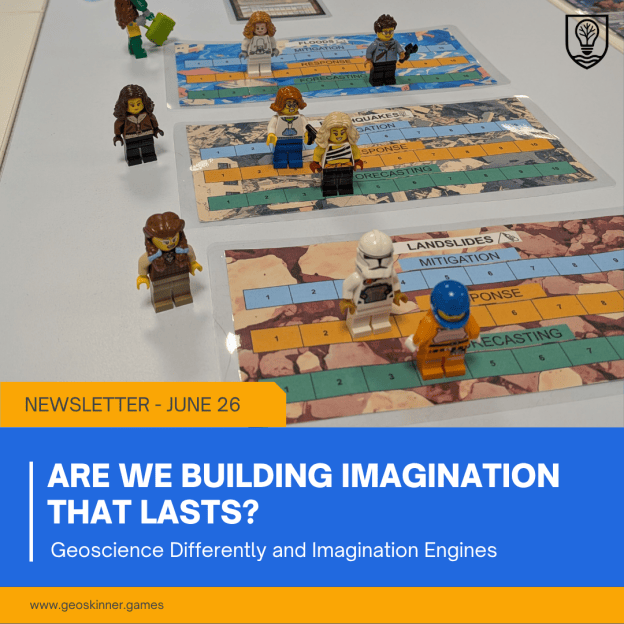
Are we building imagination that lasts? Geoscience Differently and Imagination Engines.

Imagination Engines and Infrastructures – June 2026

This month my understanding of imagination has been challenged and made me reflect on my past work. Are we investing in ways that sustain its impact or just creating moments? Find out more below.

Welcome to June’s edition of the GeoSkinner newsletter, just in time! It is marking season and the volume of concentrated reading is something my ADHD brain struggles with. Forcing myself to focus, along with the emotional drain and worrying about being unfair to students, has triggered a couple of migraines. But hey, I got here in the end.

Regular readers of my newsletter will appreciate that imagination, and its importance to science, is a common theme. We need well-developed imaginations so we can envisage problems, identify solutions, and collectively find alternative futures that give us the hope that they can become reality.

My interest in, and research on, imagination has been inspired and shaped by my former mentor and all-round science hero, Professor Hannah Cloke OBE. Hannah has been talking about how crucial imagination is to disaster communications for years and recently gave a brilliant keynote The Climate Futures We Dare to Imagine – click the link to watch it on YouTube or read her related thoughts in this article for The Conversation.

In both, Hannah introduces the concept of imagination infrastructure to a flood management context as “the building blocks of society’s shared understanding”. She goes on to describe how a flood warning or a photograph of a flooded street can act as imagination infrastructure.

Last summer, I was equally inspired by the Interrogating Imagination Infrastructure report from Joseph Rowntree Foundation. I used the ideas from the report to help develop my ‘Play your Research’ workshops, encouraging early career scientists to think of their work as imagination infrastructure.  The report describes how the idea emerged to help frame the resources that help communities collectively visualise alternative futures. It also describes how the rapid growth in research using imagination infrastructure has led to the use of many different terms, frames, and directions.
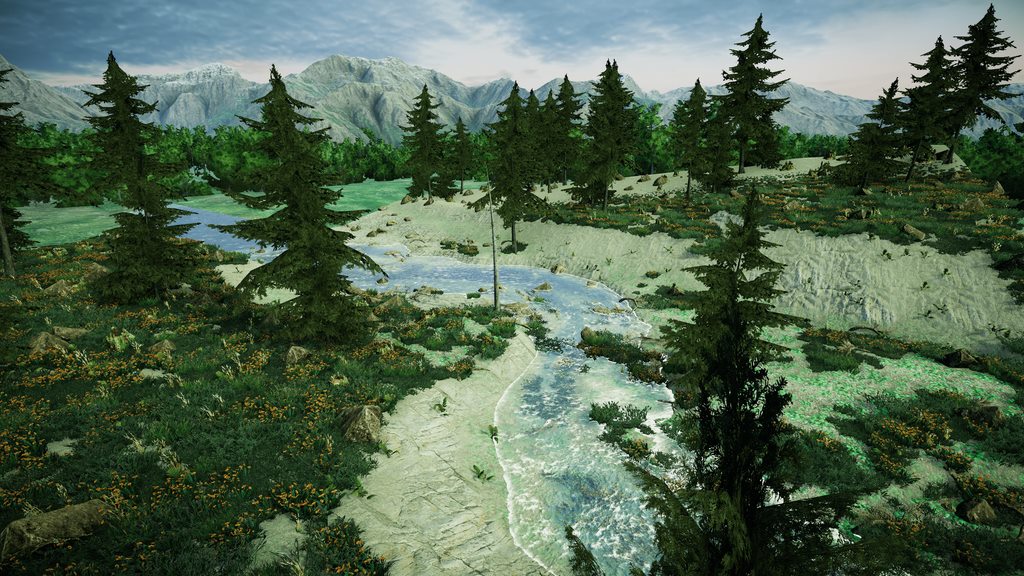
A river valley in computer graphics
Can Flash Flood! be considered imagination infrastructure?

On the one hand, imagination infrastructure is used to describe anything that provides support to people’s imaginations – a warning, a story, a photo, for example. Here, the structural element is applied cognitively. Through showing someone a photo of a familiar yet flooded street, you provide them the cognitive structure to visualise what this might be like on their own street. Thus, the photograph becomes the imagination infrastructure.

However, Interrogating Imagination Infrastructure implores us to think “infrastructurally” about imagination, where infrastructures: are created by and support social practice; can be ‘hard’ (e.g., roads) or ‘soft’ (e.g., movement of information); are shaped by regulations and standards; and, require maintenance. In this understanding, imagination infrastructures are something more than cognitive structures, they are the way they are created.

I find thinking infrastructurally about imagination a useful idea. It calls on us to be deliberate in investment, to continuously support and maintain, and to pay attention to who, and who does not have access. It tells us that building true imagination infrastructure isn’t just building moments, it’s building something that lasts.

Considering this led me to a distinction that I found useful – where the infrastructure exists to build and, importantly, sustain imagination over the long-term, individual resources should instead be considered as imagination engines:

  • The flood warning is an engine – the processes and models that produce and distribute it is the infrastructure.
  • The photo of the flooded street is an engine – the means of capturing, collating, and disseminating such images is the infrastructure.

This distinction might seem arbitrary1, but it provides a useful reflection on practice and its usefulness. My own past work has involved creating lots of imagination engines, for example the Flash Flood! VR experience2.
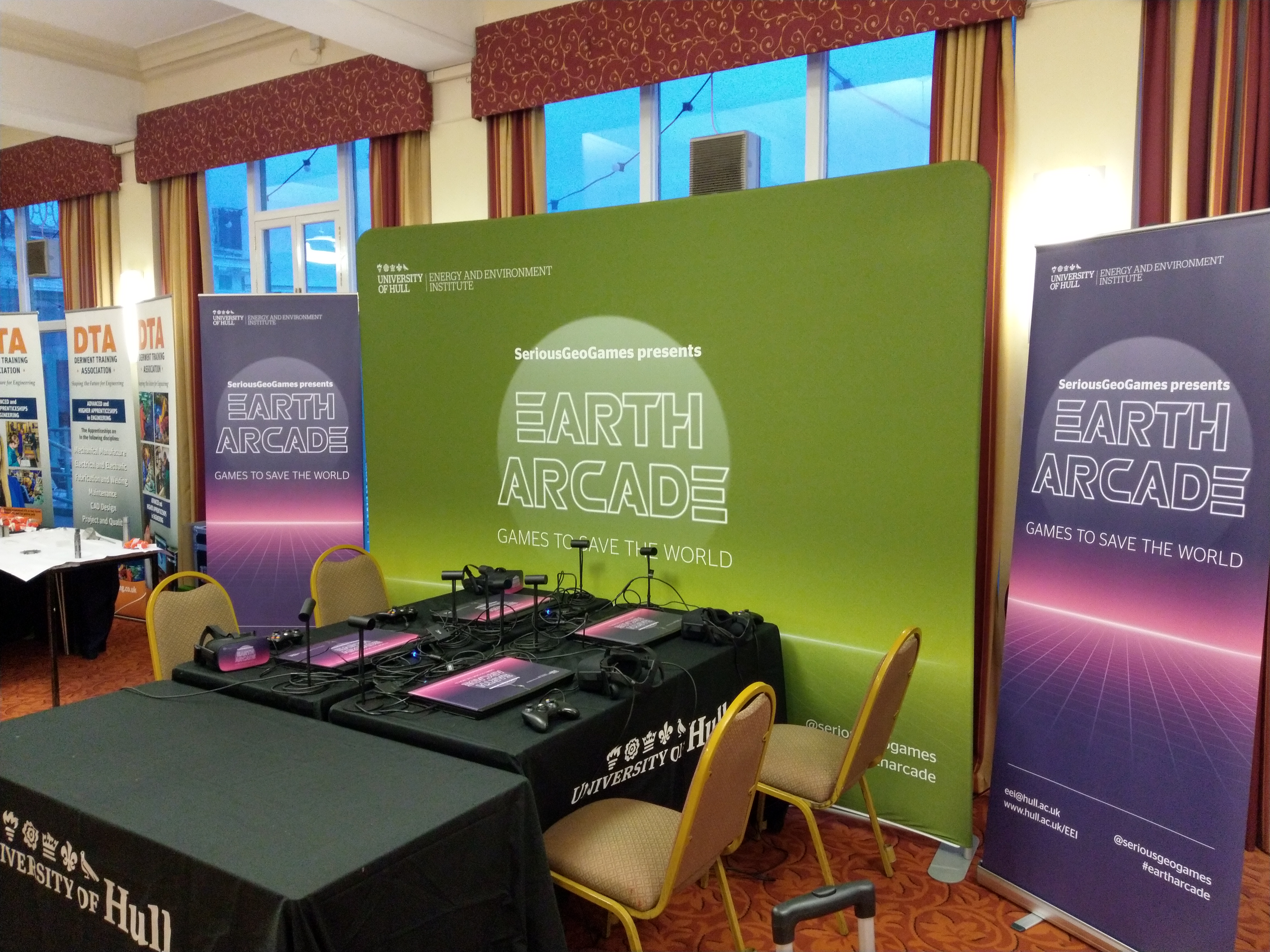
Laptops on a table as part of an event, surrounded by Earth Arcade banners.
If Flash Flood! was an imagination engine was the Earth Arcade imagination infrastructure?

As an activity, Flash Flood! helped people visualise what a flood might look like in a virtual river valley and it made people more interested in learning about flooding – it was an imagination engine. However, it was not supported by imagination infrastructure and that limited its impact. The experience itself has not been used for years and it is likely obsolete for newer VR headsets. To have got the most out of the project, I would need to have put more effort into the infrastructure surrounding it – on reflection, this is what my Earth Arcade project could have been.

This does not mean that imagination engines have no value or are inferior to imagination infrastructure. In fact, they are both vital. The engine is the motor that gets the imagination running, the infrastructure is the open road that sets it free.

I’d love to know:

Are you building imagination engines or infrastructure in your work? Or, do you think the distinction is not helpful? Let me know in the comments below.

1Interrogating Imagination Infrastructure itself warns that the term could become problematic if not applied metaphorically.

2Incidentally, only possible thanks to Hannah’s support, encouragement, and funding via the NERC-FFIR programme.

Dangers & Dwellers is a group roleplaying card game created by Games for Geoscience regulars Emanuelle Intrieri, Samuele Segoni, and Francesco Cardi from the University of Florence (L’Università di Firenze). The action takes place on a fictional island that faces many hazards, including floods, hurricanes, and earthquakes, and players (or teams) assume roles in the island’s governance and take actions to manage the risks. You win if you reach the end of Turn 6 with your island’s happiness, wealth, and population all above 0.
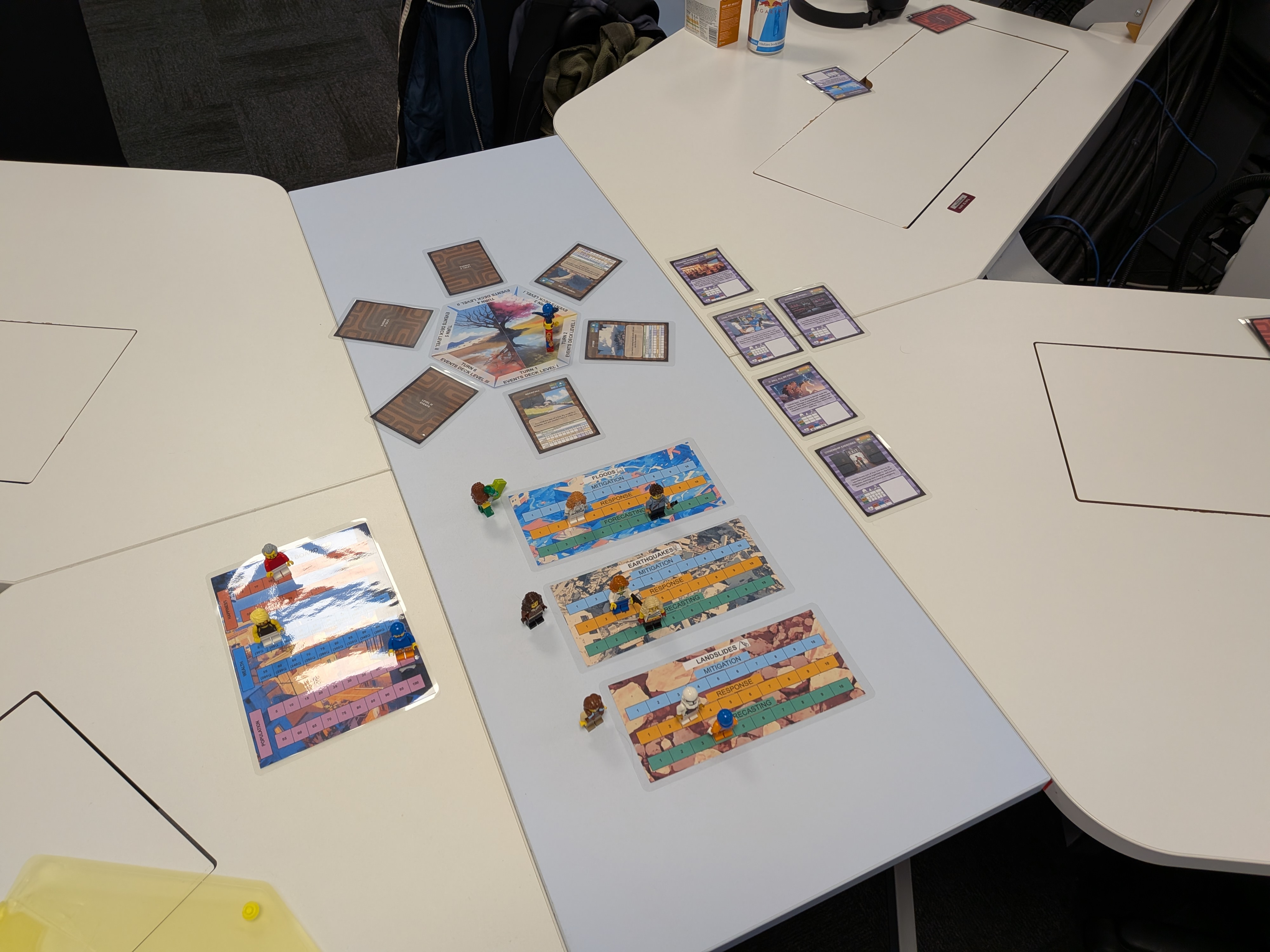
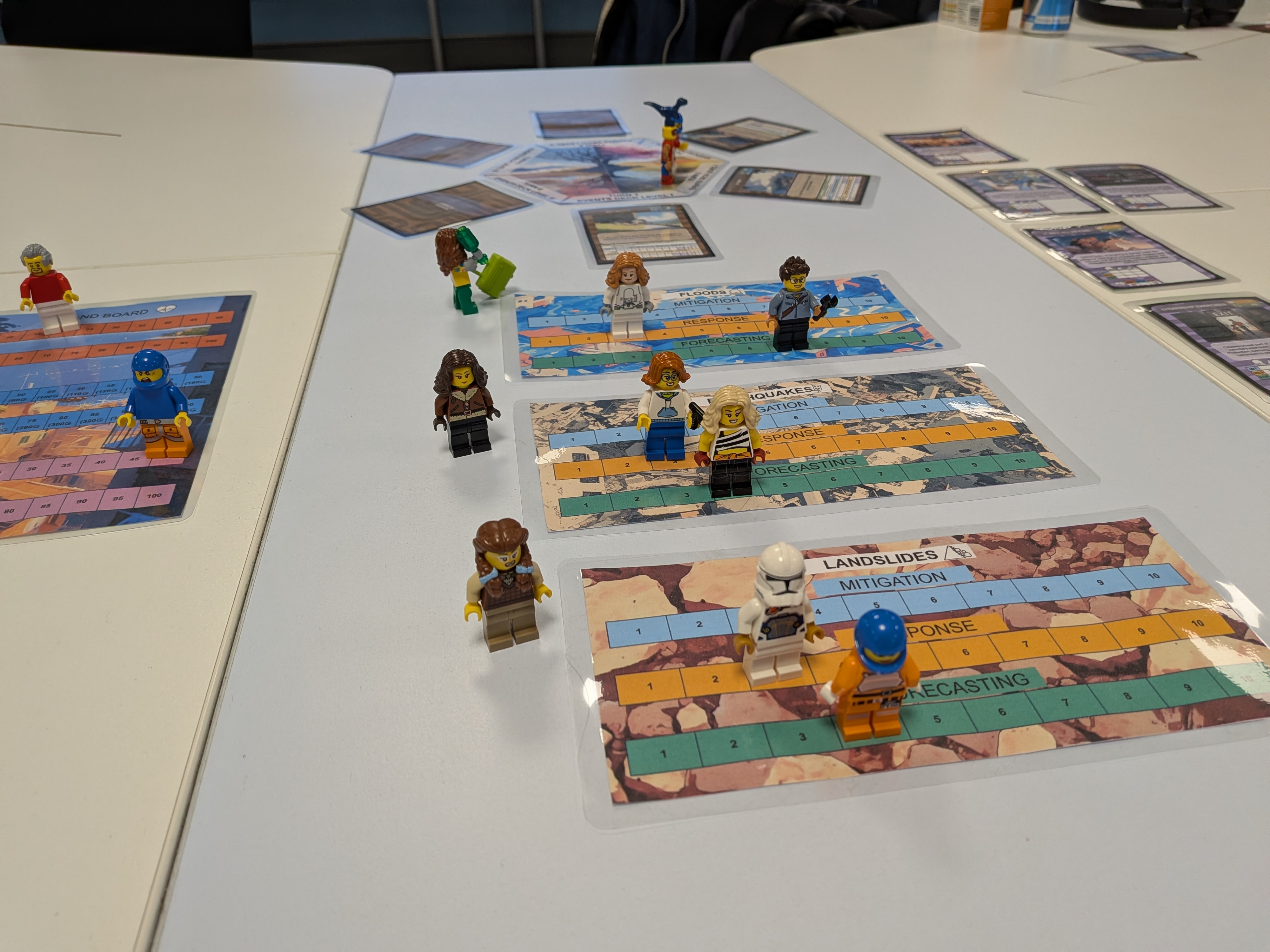
I was sent a print & play version of the game and after a long evening of printing, cutting, and laminating, I played the game with my 2nd-year Environmental Hazards students. In the first attempt, still figuring out how to play, we were out of the game by turn 3, but on our second go we were equipped with better strategies and only lost on the final, big, Level III hazard.

The game was fun to play and benefitted from multiple attempts. It demonstrates the balance of hazard likelihood and impact, different priorities across different groups, and the cumulative impacts of multiple hazards well in a ‘show, don’t tell manner’. Unfortunately, with only two hours I did not get a chance to run a debrief with the students but this was a very enjoyable way to finish the module for the year.  

Do you know a geoscience-themed game I should play?

I have uploaded six new videos to the GeoSkinner 360 channel. This channel is dedicated to only 360 videos, where you change the viewing angle within the video. The six videos were all filmed whilst I was in Edinburgh with our 2-year students and cover several sites that we visited or they used for their projects. Below is a preview of a flood tour I took down the Water of Leith – to get the most of the video, view it using the YouTube App on a mobile device with the highest resolution you can make work.

These videos are part of the imagination infrastructure for my teaching. Students need to design research projects in these sites having never visited them and these videos form just one of the resources available to them to imagine what that would look like.

GeoSkinner’s (mostly) monthly newsletter is for geoscientist students, researchers, educators, and communicators wanting to do things more imaginatively.

With each newsletter, you will find:

  • Geoscience Differently: A big idea about doing geoscience differently
  • Imagination Engines: Examples of inspiring and creative work by others
  • Behind-the-scenes updates from my projects and signposting to useful resources

If you’re interested in geoscience, games, and creativity, you’re in the right place – subscribe below to get the newsletter sent directly to your inbox.
Le-tting-go – March 2026

I’ve been in my new job for two months now and I am pleased to report that I am still loving every second of it. Working with students is full of highs and lows – the last few weeks has had its share of both – but is incredibly rewarding. Although I’ve had plenty of experience lecturing and leading workshops, I’ve not had much experience of the one-to-one tutorial work and I’ve been enjoying getting to grips with this part of the job.

I am especially enjoying getting to use creative and game-based approaches for my Environmental Hazards module. This includes some of my favourite tools and also things I have worked on in the past but never really had the opportunity to use properly. Firstly, I wanted the students to appreciate how individuals had different vulnerabilities and resilience to hazards – we explored this in the context of children and young people using the Help Callum and Help Sali 360 immersive storytelling videos from the Flood Stories project. Five years on from finishing these, this was the first time I had got to use them!

Stop Disasters is absolute classic of the games for geoscience and disaster risk reduction genres. It is made for school kids really, but framed in the right way it can be useful in higher education too. I’ve already used the flood level in my River Management module to explore the ‘art of the possible’ in flood risk management, and a couple of weeks ago I used the tropical storm level in my Environmental Hazards module to allow students to try out counterfactual thinking. We also played Good Morning, a micro-RPG I wrote last year to explore how downward counterfactuals work. I was pleasantly surprised at how well it worked and a good feeling to effectively use a tool I had written.

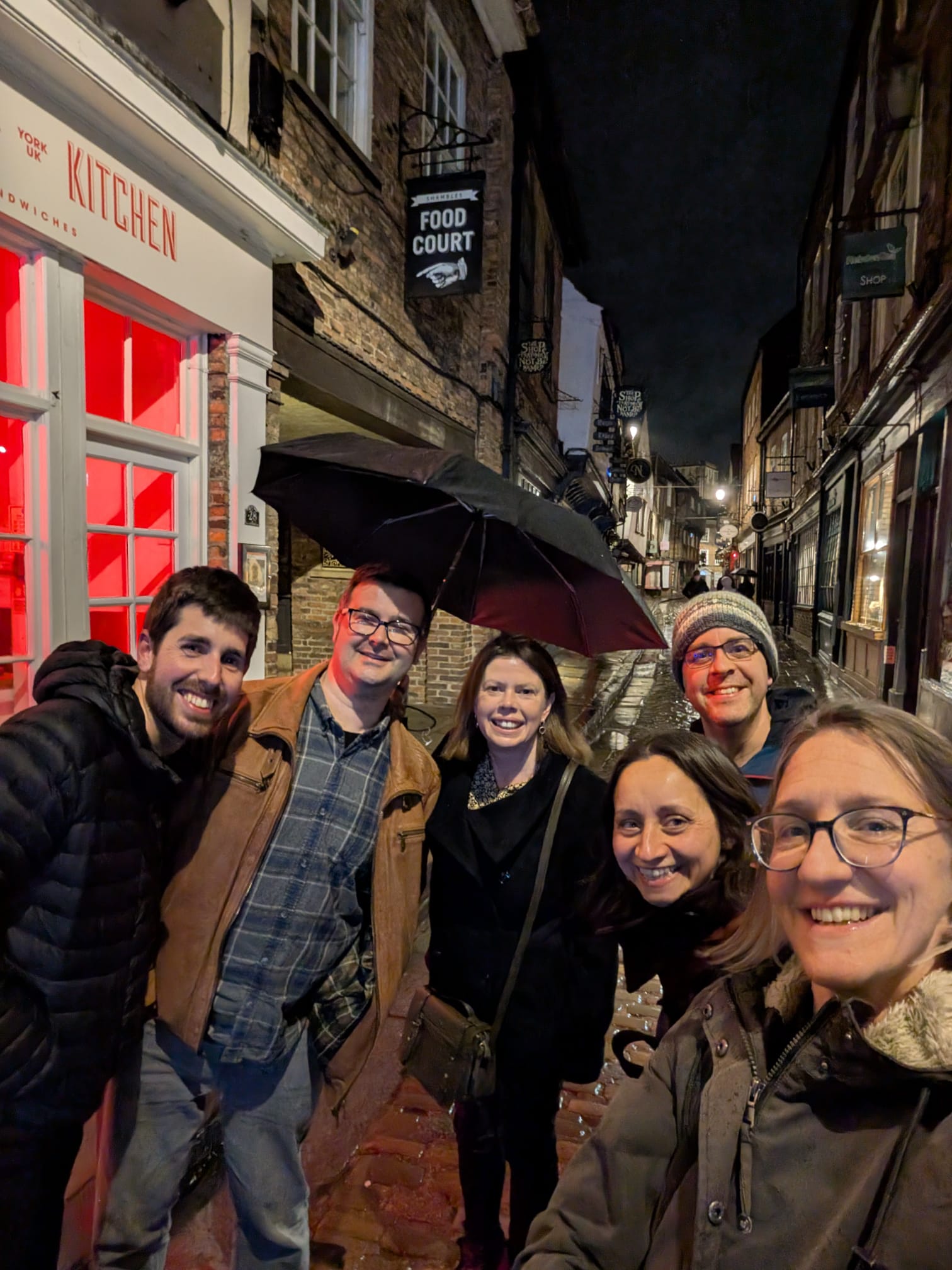
This month I also got to say a proper goodbye to my former Environment Agency colleagues from the Flood Hydrology Improvements Programme (FHIP). As a dispersed national team, we worked almost entirely remotely and only got together in-person two or three times a year. They chose to meet in York for their first meeting of 2026 so I could join them for dinner. This was such a nice gesture and I was reminded of just how much I miss them all. It still does not feel right that I won’t get to see them all regularly anymore…

Me and some of the FHIPsters in York

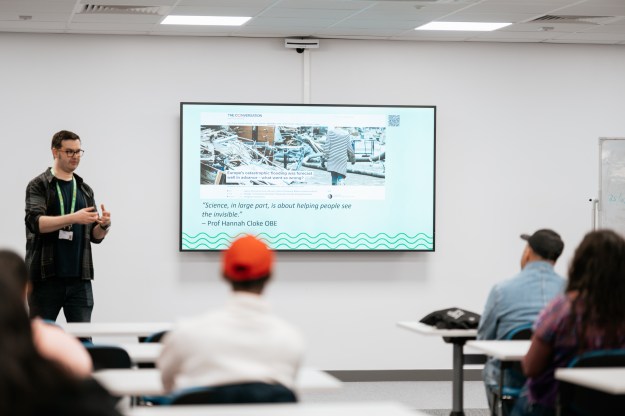
Another highlight from the last month was the workshops for the NERC EMBRACE Enviro project. Led by the wonderful Dr Olalekan Adekola, this pilot project is part of the NERC Opening up the Environment call, and seeks to engage members of the refugee and migrant communities with environmental science and careers. Over three days, two groups undertook two days of free training. This included analysing water quality in the lab, GIS, and science communication.

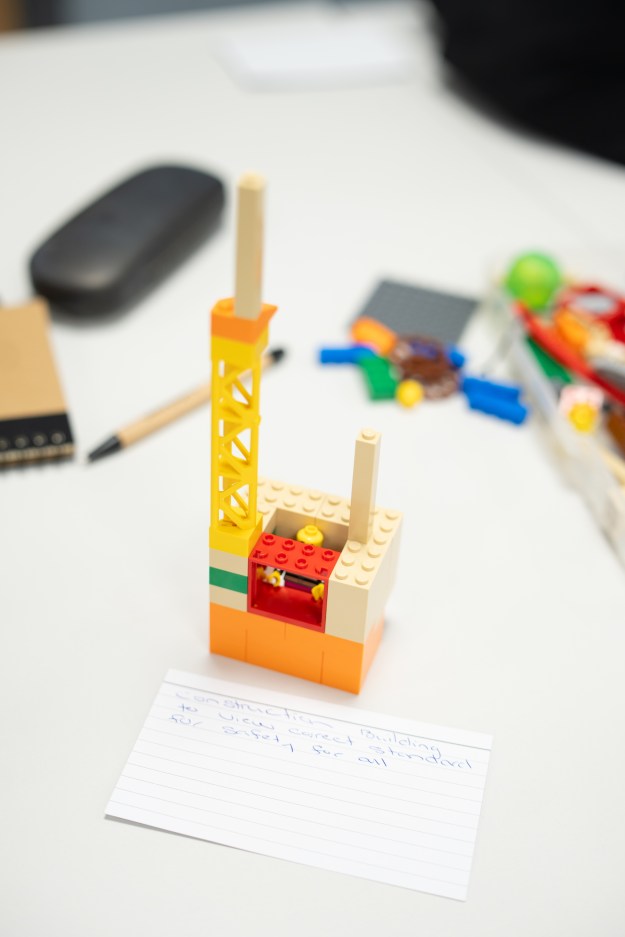
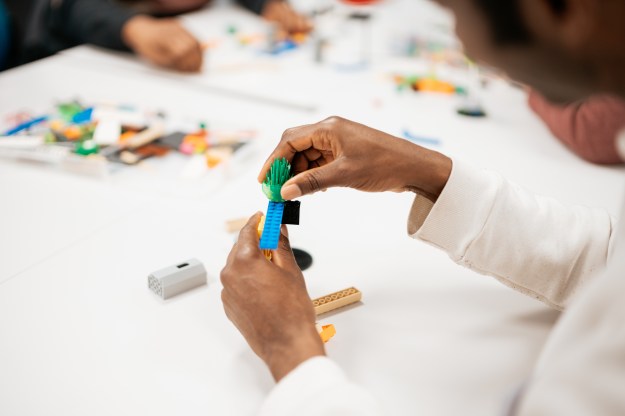
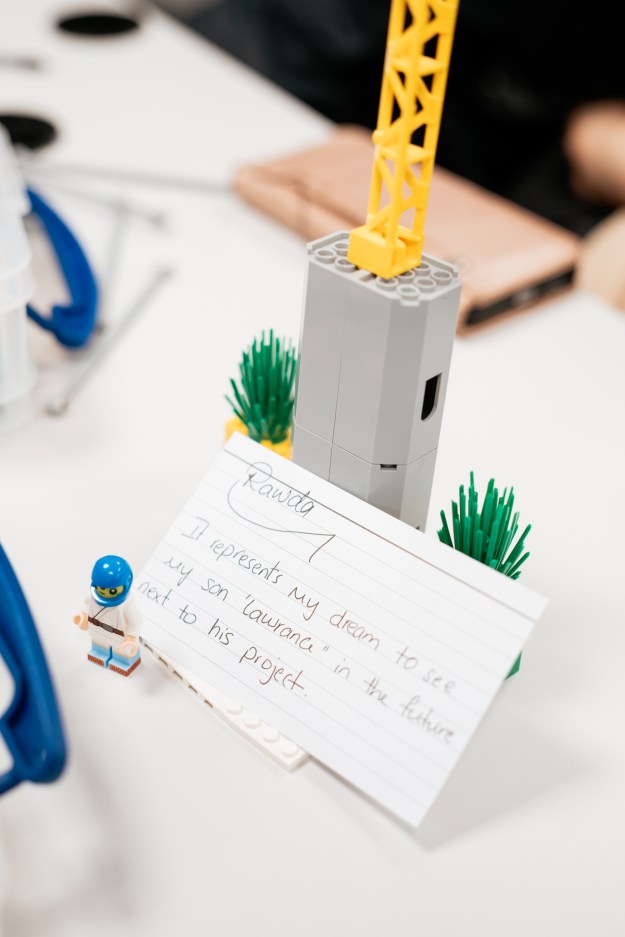
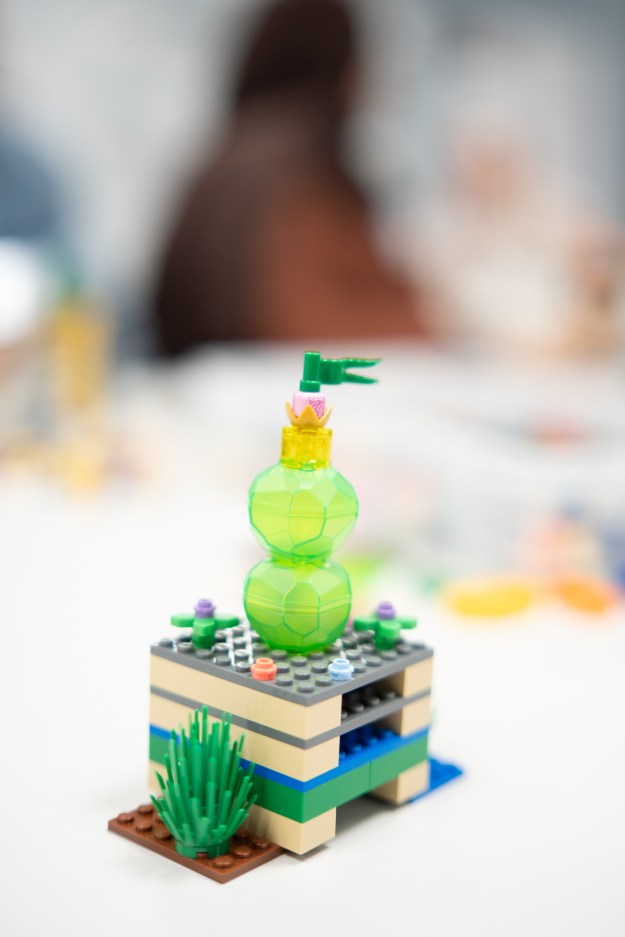
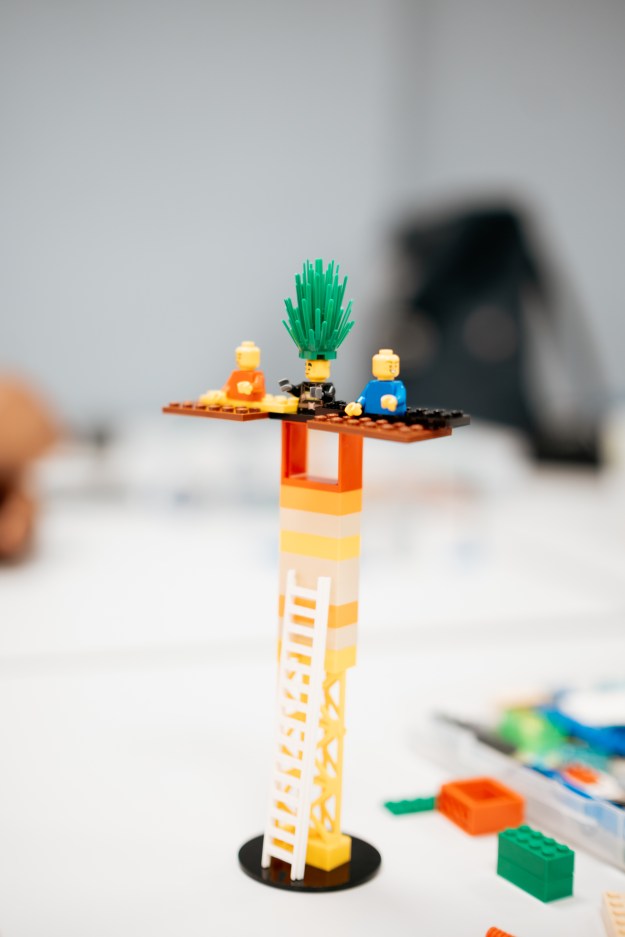
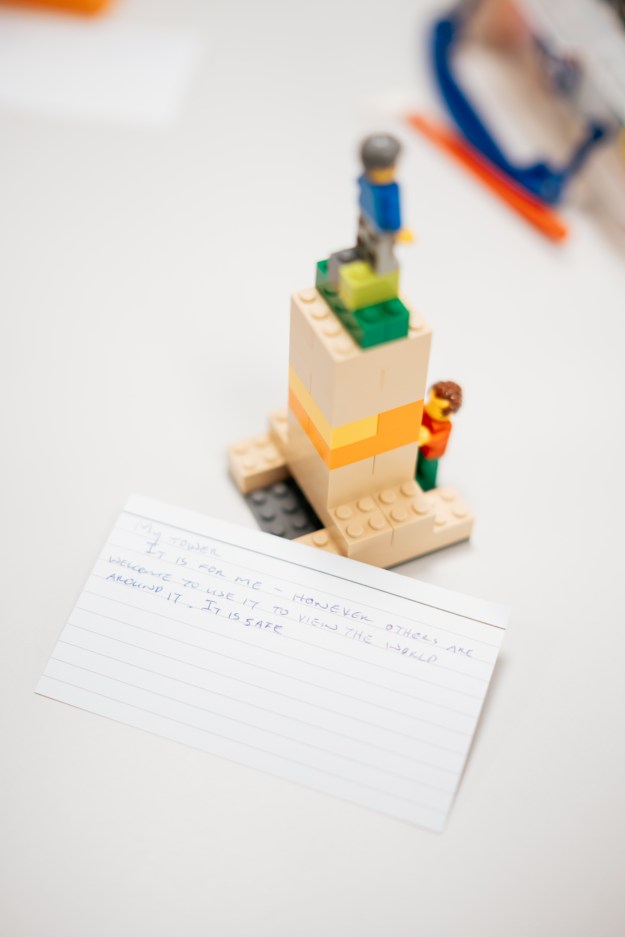
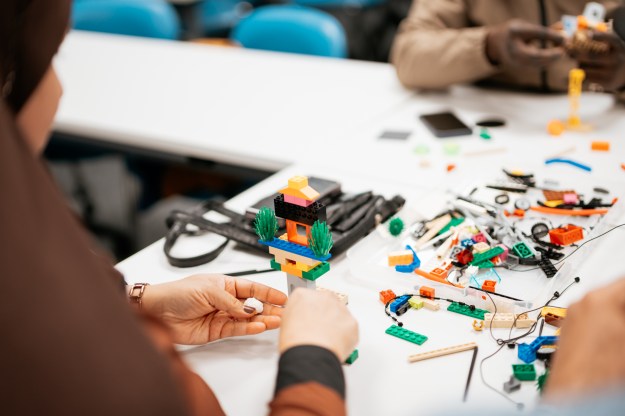
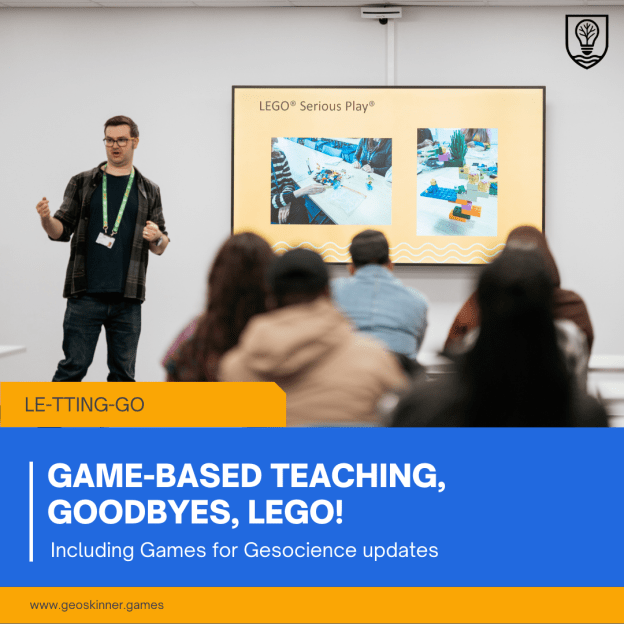
I was involved in the project in the middle of last year, long before my current role was even advertised. I was included as an external consultant – through my side quest as GeoSkinner – to support the science communication training. These workshops then were also my last act as a freelancer and were based on my LEGO(R) Serious Play(R) inspired Play your Research workshops. I helped the participants find and visualise their science and personal stories of the workshop by building with the LEGO bricks.

These workshops never cease to amaze me. The start is often a mix of some being excited at the prospect of playing with LEGO bricks and others being cynical for the same reason. But, once we get going people are surprised by their own imagination and creativity and the insights that they self-reveal are truly incredible. I reflected on the workshop that not only did the participants discover their own stories, their insights highlighted the power of the workshop and the benefits they got from it. It would have been powerful evaluation data.

I have a new paper out! For the last few years I have been part of an International Association of Hydrological Sciences (IAHS) working group on science communication, part of the organisation’s HELPING science decade. The paper reflects the collective work of the group – expertly led by Christina Orieschnig and Soham Adla – and provides a summary of science communication in hydrology and tips to make sure it is effective.

Honestly, many have put a lot more working into this than I have but I’m proud to have contributed and to have my name attached. You can read the open access paper in Hydrological Sciences Journal.

In the last few weeks the organising committee of the European Geoscience Union General Assembly has been working hard wrangling nearly 20,000 abstracts into a conference programme. With 14 abstracts, Games for Geoscience fell just below the threshold for a full science session (talks + posters) so instead this year the session will be PICOs.

I’m a little disappointed as the session usually has a good involvement with those attending virtually, and I have found the poster and PICO sessions far less accessible for virtual presenters and attendees than talks. But, I’m still looking forward to another awesome session and of course, the world famous Geoscience Games Night will be back too!

Next month’s newsletter will be devoted to EGU, including the full programme for the Games for Geoscience session and sharing the contributions I’ll be making at the conference – my first as a academic since before the Covid lockdowns!

See you in April!

Chris

Views expressed in this newsletter are mine and do not represent those of my employer. Content and links are provided for informational purposes and do not constitute endorsements. I am not responsible for the content of external sites, which may have changed since this newsletter was produced.

Get this newsletter sent directly to your inbox each month:

Imagination Engines. Game we played. 13 Beavers.

13 Beavers – A Game We Played

I love a computer game called Timberborn. It’s a city builder game where you manage a colony of anthropomorphised beavers as they build a colony in the ruins of humanity, presumably now extinct. It is gentle, lovely, has a great sense of humour, and is highly addictive.

This is probably why Amy chose the board game 13 Beavers by Format Games as a silly Christmas gift for me. It’s a nice little game aimed at kids but we still had fun. The game has its own lore that tells of 13 legendary beavers who made it to beaver paradise*. These 13 beavers, each with its own theme such as a ninja, a robot, and a cowbeaver, form the artwork of the cards in the game – numbered 1 to 13, you move by correctly guessing whether the next card is higher or lower than the last.

The 13 Beavers game board. Colourful cartoon style, with board squares along a rapid flowing river. A player's hand is using a small fishing rod to catch magnetic fish.

The very simple game play is supplemented by some fun additions, including a magnetic fishing rod and fish that can either give you a bonus or set you back. There is also the opportunity to take a huge shortcut via the ‘tempting tunnel’ if you are able to correctly guess the exact value of the next card – something Amy did the first time we played, crossing the finishing line whilst I was still rooted to the start.

13 Beavers was lots of fun to play – it is funny, fast, and often frustrating (in a good way), whilst also being quite charming. It comes with a colourful board, a deck of attractive cards with the beaver artwork, a magnetic fishing rod and fish, and wooden beaver and dam playing counters. It’s recommended for ages 7+ and for 2-6 players. If you’re looking for a fun game for the family that doesn’t take too long or lead to arguments, this would fit the bill.

The reintroduction of beavers to UK landscapes is a hot topic these days. Beavers can bring great benefits as they create areas of wetland in wooded areas, which in turn increases biodiversity. Areas with beavers have greater resilience to forest fires and by allowing water to pond behind their dams they have potential to contribute to flood risk management too. 13 Beavers is not intended as an educational game but could make a fun hook for younger audiences as part of engagement work involving beaver reintroductions, facilitating conversations.

*I built beaver paradise in Timberborn so I imagine it looks a bit like this.

This post was originally published as part of the Imagination Engines newsletter. To get my content earlier and straight to your email subscribe using the box below:

Views expressed in this newsletter are mine and do not represent those of my employer. Content and links are provided for informational purposes and do not constitute endorsements. I am not responsible for the content of external sites, which may have changed since this newsletter was produced.

Imagination Engines. Book I've Read. The Science of Storytelling by Will Storr

The Science of Storytelling by Will Storr

This is not a new book, having been published in 2019, so I am probably not the first person to tell you this book is great, but… this book is great! The author, Will Storr, takes a scientific approach to storytelling. By this, I mean he has extensively researched what the research literature is telling us about what makes a good, compelling story, drawing on diverse fields but especially psychology. It started as a successful course for aspiring writers but thankfully Storr has made all this learning more easily accessible through The Science of Storytelling.

Its origins as a course are evident throughout the book. It is clear, it is engaging, it is packed with examples that illustrate the points, and it is exceptionally practical and useful. I initially listened to the audiobook, read by Storr himself, and found it entertaining in a way I have not found any other non-fiction book – his knowledge, his passion, and his belief in the message he’s communicating comes through in abundance and just makes you want to keep listening. I especially enjoyed his renditions of the many quotes from literary works throughout.

The true testament to the practicality of The Science of Storytelling is that once I had finished the audiobook I went straight out and bought a physical copy. My intention is to re-read it and make a whole load of notes. Of particular use is the Appendix, titled ‘The Sacred Flaw’, which is a step-by-step method for writing a novel – an ambition I have harboured since my early teens.

What I did not expect was for this book to help me improve my understanding of the nature of models. Talking about understanding characters and their motivations, Storr draws on the Theory of the Mind, which is our ability to understand how people perceive the world in different ways. Storr describes how we all create our own models of reality, which are not truth but controlled hallucinations. The best stories emerge from characters being faced with the wrongness of their model – the lie of it – and are forced to change as its usefulness has diminished. For a clear and extreme example of this happening to a character, think of the Truman Show. How can we ever build a perfect model of reality when even our own perceptions and understanding of that real world are themselves an imperfect model?

The Science of Storytelling is essential reading if you write fiction or harbour any ambition to write fiction. However, even if you do not write fiction but are involved in any form of science communication, I implore you to read this book. You will not regret it and it will help you craft compelling narratives and stories to engage and enthuse people with science and research. It sits well within a growing body of work that draws on fields like psychology and behavioural insights to make communication and storytelling more effective, such as How to Save the World by Katie Patrick.

Finally, if you are modeller read this book. It will help you appreciate the cognitive biases we all have and how these shape our perceptions of reality. In all good stories change happens, the resolution is achieved, when someone is able to escape from their own personal model land. This is a useful metaphor for escaping from our numerical model lands too.

This post was originally published as part of the Imagination Engines newsletter. To get my content earlier and straight to your email subscribe using the box below:

Views expressed in this newsletter are mine and do not represent those of my employer. Content and links are provided for informational purposes and do not constitute endorsements. I am not responsible for the content of external sites, which may have changed since this newsletter was produced.

Imagination Engines Logo

Imagination Engines – August 2025

Welcome to August’s issue of Imagination Engines! Thank you for reading.

This summer I have been given a wonderful opportunity to develop a brand new module on River Management for York St John University’s Geography courses. I am so excited for this and have been loving designing the module and beginning to put the elements together. It’s hard work – fun hard work – and consequently I’ve had to reprioritise how I use my spare time.

It does not change my long-term goal of writing a book. In fact, I think the whole process is excellent practice and brings that goal closer. However, I need to temporarily change how I use this newsletter – I have been using it as a motivator to get me writing regularly and to explore different ideas, with 3-4 articles each month. I just don’t have capacity for this now but want to maintain a monthly publication schedule. Instead, I will focus on giving short updates on my main projects that are listed on the front page of my website.


Ongoing Research

I have a new paper out this month as a co-author. The work was led by my former supervisee, Josh Wolstenholme, and covers his PhD field work on the geomorphic change induced by the installation of leaky woody dams. It is a timely reminder that rivers move and change, especially if you stick stuff in them.

Wolstenholme et al (2025). Localised geomorphic response to channel-spanning leaky wooden dams. Earth Surface Dynamics. DOI:10.5194/esurf-13-647-2025


Adventures in Model Land

This is an open-source system to make game worlds based on the numerical models we use to learn about the world around us and predict the future. It is inspired by the world building used in tabletop roleplay games (such as Dungeons & Dragons) and just needs your imagination. You find out more and download the free guide here.

I’ve also started a Discord server for Adventure in Model Land as a place to discuss the system, share the game worlds you create, and to get help from others. Join it here.


FloodSkinner YouTube Channel

I had a new Short out in the last month. I came across some videos discussing rumours and leaks about the (long) upcoming Grand Theft Auto 6, including some indications it might include a dynamic weather system. The rumours suggest that the weather system would interact with the terrain and influence the game – it rains, water pools, and roads flood and become inaccessible.

This is obviously very exciting for me so I put my thoughts into a Short. I was short on time and cutting all the clips together was quite laborious – unfortunately I didn’t get chance to do a full set up and did not light my greenscreen properly, so this is a bit messy (the kitten also moved the screen partway through filming and messed it up more…). Despite this, it did moderately well, with >1,100 views.


Games for Geoscience

After the annual General Assembly of the European Geoscience Union (EGU), summer is pretty quiet for Games for Geoscience. With the call for sessions for the 2026 General Assembly now out, in the coming month I’ll be pulling the team together and proposing what would be the 9th Games for Geoscience session.

I still have ambitions to make it more than just an EGU event, with year-round activity and a community. If you’re interested, you can join the Discord server.


LEGO® SERIOUS PLAY®

In the last month I had the great pleasure of the supporting the Geography staff at York St John University with a LEGO SERIOUS PLAY inspired workshop. I was asked to support the department as they considered the best ways to support the future employability of their students and the creative approach of the workshop led to some valuable insights.

A table filled with Lego and models and surrounded by people
Making models with York St John’s Geography staff.

I’m looking forward to October this year where I will be returning to Southampton to once again deliver a Play you PhD workshop to the new cohort of Flood CDT students.


Project Prospero

Project Prospero is my hobby project where I am combining two pillars of geekdom into one nerdy-monster – a Warhammer-themed train set! The setting is the homeworld of the Thousand Sons Space Marine Legion, Prospero, as it is being pillaged by the Space Wolves Space Marine Legion. I am using models from the Legions Imperialis game and n-gauge tracks and trains. The centrepiece will be the giant pyramid of the Pyrae Cult, partially destroyed, using a Playmobil pyramid as its base.

This month I have been progressing the models and mocking up the layout to get some idea of scale. Because I don’t have space to leave out a layout, it will need to be fully modular. Check out a video I made from my mock up below:


About this Newsletter

I am Chris Skinner, a science communicator, STEM professional, and ADHDer. I am on a mission empowering people to unlock their full potential by transforming imagination into a powerful, actionable skill. This newsletter tracks my journey. I would like you to join me, so please subscribe. This newsletter is free and I do not offer a paid tier. If you would like to say thank you and/or help me in my mission please buy me a coffee using the link below.

Buy Chris a Coffee

Support FloodSkinner. Ko-fi.com/floodskinner
Click to support me.

Views expressed in this newsletter are mine and do not represent those of my employer. Content and links are provided for informational purposes and do not constitute endorsements. I am not responsible for the content of external sites, which may have changed since this newsletter was produced.

All my links