Category Archives: flooding

A bunch of new research

A bunch of new research

I have a whole bunch of new papers recently published to tell you about. I can’t take (all) the credit though as they have been led by amazing colleagues. Huge shout out especially to Josh Wolstenholme who has been working hard to publish various bits of his PhD research.

Hydro-geomorphological modelling of leaky wooden dam efficacy from reach to catchment scale with CAESAR-Lisflood 1.9jGeoscientific Model Development.

The first paper in this update led by Josh covers the modelling work performed for his PhD. He used an enhancement of CAESAR-Lisflood I wrote that allows users to represent leaky woody dames in the model, including those with flow gaps underneath. This provides an ideal tool to simulate the long-term changes natural flood management can cause in rivers. Josh’s research demonstrates the feasibility of this including verification against field observations.

Localised geomorphic response to channel-spanning leaky wooden damsEGUSphere Pre-print (under review for Earth Surface Dynamics).

This is the second paper Josh has produced from his PhD research, currently under review but you can access the pre-print. Whilst the paper above covers his modelling work, this one covers his fieldwork. This includes some enjoyable, yet very cold, trips to Dalby Forest, North Yorkshire, and the installation of trail cams. The field work observed changes to the river before and after natural flood management interventions had been undertaken.

Flood hazard amplification by intra-event sediment transportResearchSquare Pre-print (under review for Nature Earth & Environment).

I cannot tell you how happy I am to see this paper out! Five years ago this was going to my big paper, the one with significant findings rather than some niche model sensitivity tests. But every time I made progress something in the model popped up to frustrate me. After I left Hull in 2021 I let it sit. Last year, Josh picked it up again and brought fresh eyes and energy to it. He has done a brilliant job and made it his own.

The way we assess flood risk assumes rivers do not change shape during floods. In the majority of cases this is a reasonable assumption, however, the modelling work here shows that it is not always the case. Large amounts of sediment can be transported downstream and deposited, increasing flood inundations and volumes during later stages of the same event.

Using 360° immersive storytelling to engage communities with flood riskGeoscience Communication

This paper, led by Katie Parsons, describes the work we did co-creating educational materials to support the Help Callum and Help Sali 360 videos. The videos came about when I worked with Alison Lloyd-Williams to use my immersive storytelling research to tell the real-life stories of flood-affected children that were shared through Alison’s research. Katie brought her education expertise to work with children, young people, and teachers to create resources to use the videos in the classroom.

I have been so privileged to get to collaborate with amazing and wonderful researchers like Josh and Katie. It’s also great to see them work together on the HedgeHunter’s project too. I had nothing to do with this but it is really cool work:

Automated identification of hedgerows and hedgerow gaps using deep learningRemote Sensing in Ecology and Conservation.

Back in 2020, just before the lockdown, Katie took part in my NERC-funded Earth Arcade Academy project with a project called INSECURE and it grew massively since (nothing to do with me!). Katie used creative methods to foster intergenerational engagement in communities at risk of coastal erosion. Even though my contribution was tiny and remote, it is such a great project I am going to pretend I had a small hand in it!:

Crumbling cliffs and intergenerational cohesivity: A new climate praxis model for engaged community action on accelerated coastal changeEGUSphere Pre-print (under review for Geoscience Communciation)

Both Josh and Katie are now at Loughborough University and working on new projects together. I cannot wait to see what they will produce.

This article was originally posted in the Imagination Engines newsletter. To receive this content in your email weeks earlier, subscribe using the box below.

Views expressed are my own.
The role of imagination in flood preparedness.

The Role of Imagination in Flood Preparedness

In a previous post, I looked at how a failure of imagination potentially contributed to a tragic loss of life in the 2021 floods across Northern Europe. Because people were not able to grasp the potential impacts of the flood that they were being warned of, they did not take appropriate action to keep themselves safe. Professor Hannah Cloke of the University of Reading described the role of scientists here as “helping people see the invisible”.

Recent research led by Joy Ommer, part of Cloke’s research group, begins with the line “What’s the worst that could happen?“. The paper, ‘Surprise floods: the role of our imaginations in preparing for disasters‘ – published open-access in Natural Hazards and Earth System Sciences – looks back at those floods in 2021 and explores the role a lack of imagination played. Crucially, it also shows the role we as scientists have in helping people understand risks.

Ommer places imagination in the context of this research as “the ability to depict a particular situation in your mind and your actions linked to that situation“. We use this cognitive ability to visualise in our everyday decision-making and for trying to work out what the future might hold. It is informed by our experiences and our ability to imagine – Ommer describes people as having different abilities to imagine, which may be cultivated, but does not explore it as a skill that can be trained. Importantly for disaster preparedness, imagination plays a key role in risk perception by adding to our reality and existing knowledge of a situation.

The research used a survey of people who were affected by the floods to better understand their perspectives. As highlighted in the paper, many of those affected reported that their ability to understand the impacts of the flooding was lacking – it was unimaginable or they did not have the imagination to understand the scale of it. Several linked their inability to imagine the flooding to a lack of preparedness for it. To many, it was only when they saw videos of flooding happening, and feeling empathy for those in the videos, that they started to comprehend the potential consequences for themselves.

This research by Ommer and co-authors highlights and breaks down key aspects about how imagination is linked to risk perception and preparedness for disasters. The solutions they propose include using forecasts and warnings designed to trigger imaginations. They also argue that we need to work with those at risk to cultivate their imaginations using creative approaches, such as local storylines, and helping them to visualise potential impacts.

This is a really important and interesting paper for understanding the important role imagination has to play in disaster preparedness.

How can you help to become more prepared for disasters like flooding?

This post originally appeared in the Imagination Engines newsletter. To read this content a few weeks earlier, subscribe to the newsletter below.

The human factor in flood warnings: a failure of imagination.

The Human Factor in Flood Warnings: A Failure of Imagination

In July 2021 devastating flood impacted northern Europe, including Belgium, Germany, and the Netherlands. The floods caused over 10 billion Euros worth of damage and caused extensive damage to properties and communities over large areas. Tragically, nearly 200 people lost their lives.

This is despite the flooding being well forecast by the European Flood Awareness System (EFAS), which provided warnings 3 to 4 days in advance, seemingly giving organisations and individuals enough time to prepare. Even if they could keep their homes and businesses safe, they should have had time to keep themselves safe.

Professor Hannah Cloke of the University of Reading, who specialises in flooding, wrote an article for The Conversation following the flooding examining the reasons for why warnings were not as effective as expected. Hannah was involved in setting up EFAS, so was well positioned to comment and I think you might expect her to pass the buck, to say the science was right and it was not the fault of the forecasters that those warnings were not heeded. But she doesn’t.

Quote by Paul Virilio: When you invent the ship, you also invent the shipwreck; when you invent the plane you also invent the plane crash; and when you invent electricity, you invent electrocution... Every technology carriers its own negativity, which is invented at the same time as technical progress.

The philosopher Paul Virilio wrote about technology: “When you invent the ship, you also invent the shipwreck…“. As scientists, when we create anything we need to imagine what could go wrong and own that. It is not enough to put together an early warning system, however world leading, accurate, and timely, if no one acts on it.

Six mountains right to left, joined by bridges. Each is labelled, from left to right, Observation (sensor technology), weather forecast (atmospheric modelling), hazard forecast (environmental modelling), impact forecast (socio-economic modelling), warning (communication science), decision (behavioural psychology).

Golding et al (2019) described how early warning systems are made up of steps together in a chain. At each step, value is built as a mountain, between each step the value is lost in the ‘valleys of death’. Bridges of communication, understanding, and knowledge transfer ensure that value is retained and passed forward. The only value of an early warning system emerges when people respond to it appropriately.

Hannah described in her article how the failure laid in the way that warnings were produced, disseminated, and interpreted. The EFAS relies on public agencies to respond to their warnings – as happened in some places but not others – they are not available to the public. Professor Linda Speight, University of Oxford, who also specialises in flooding, described the difficulty of issuing warnings with the right message, especially when working with numerous different groups and organisations – a one-size fits all approach does not work for effective warning.

Both Hannah and Linda conclude that flood warnings are only effective if people understand the potential impacts on them. Linda described the benefits on impact-based forecasting, for example: “river levels will rise rapidly causing widespread flooding. Damage to roads and property is expected”. Hannah summarised the job of a flood warning (and science more widely) as “helping people see the invisible” – it is helping people imagine those potential impacts in response to the warning so they are compelled to take action. To Hannah, this failure in imagination was the missing bridge in the early warning chain, between warning and decision, where that value, tragically and literally, fell into the valley of death.

How would you help people see the invisible?

This post originally appeared in the Imagination Engines newsletter. To read this content a few weeks earlier, subscribe to the newsletter below.

Exploring Slovenia: A hydrology lecture experience

Exploring Slovenia: A Hydrology Lecture Experience

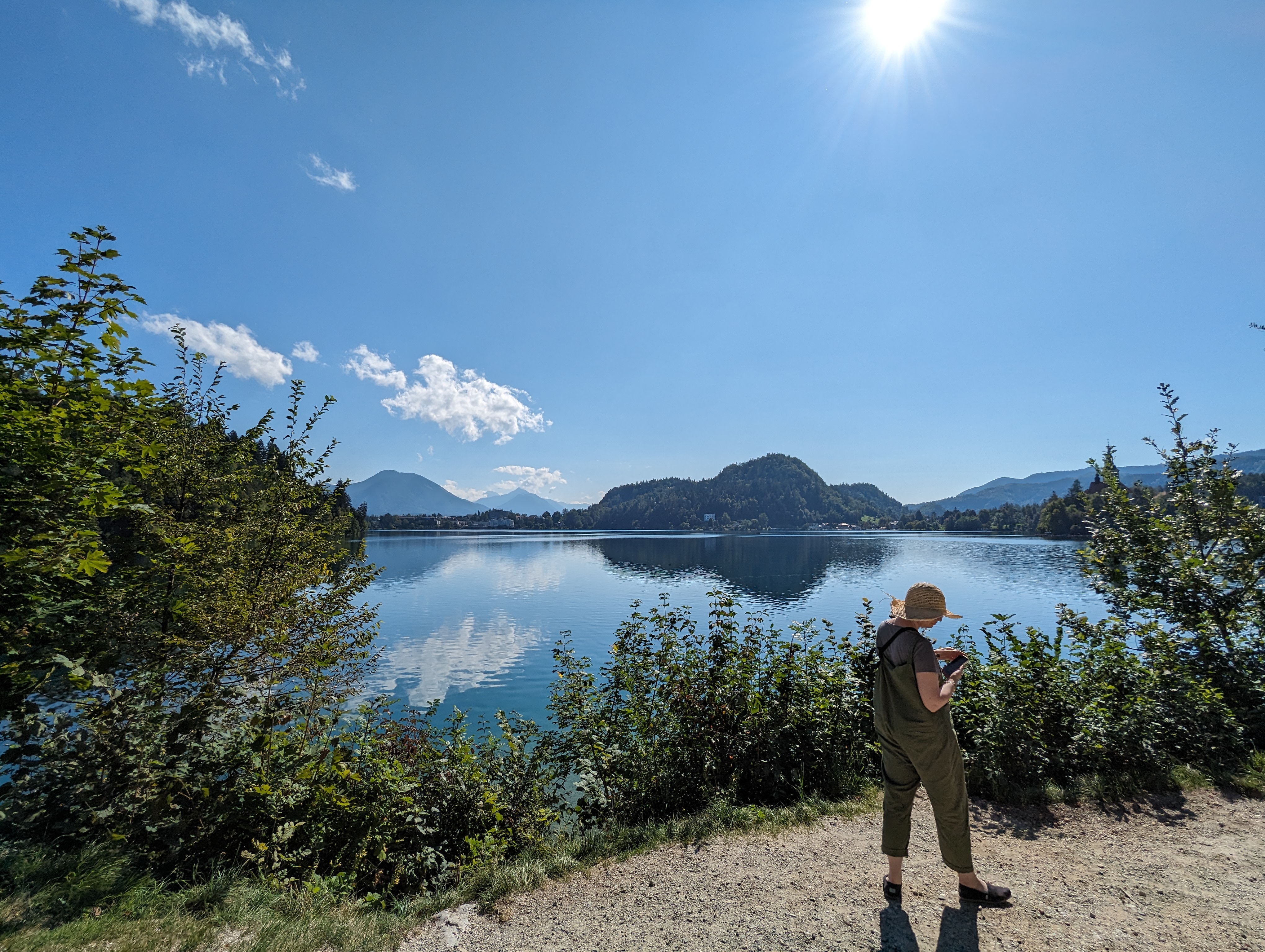
Slovenia, and its capital, Ljubljana, are beautiful. Just stunning. I just want to get that out of the way straight off! Just look at this panorama of Lake Bled to give you some idea.

I travelled there because I was invited to lecture on communicating hydrology as part of the HydRoData summer school at the University of Ljubljana. The summer school was jointly organised by the university and the UNESCO Chair on Water-related Disaster Risk Reduction.

Students on the course learnt valuable skills on collecting, managing, and processing hydrological data, including fieldwork and coding using R. My lecture fell in the middle of the week-long programme, on September 6th.

The run-in to the lecture was not ideal. I lost most of August to an awful bout of Covid (definitely not a cold!). I don’t fly so was travelling by rail and, whilst travelling out, our return leg via Milan got cancelled due a landslide blocking all routes between Italy and France. We had to quickly book a new route via Munich*.

However, I put a lot of work into my lecture and I am proud of the content I shared with the students. Titled “Hydrology. Sci-comm. Games”, I took the students through the importance of being able to effectively communicate hydrology. I drew on my backgrounds in both research and operational hydrology to discuss specific issues around that research-practice nexus.

Me presenting at the HydRoData summer school. Picture by Nasrin Attal.

I shared some tips on constructing effective storytelling and how they can use their own passions to help engage people with their research and projects. I structured the lecture around the six key attributes, or qualities, I believe society needs from hydrologists**. These are:

  • Knowledgeable
  • Technical
  • Practical
  • Playful
  • Sharing
  • Collaborative

You will be hearing a lot more from regarding these six qualities as I plan to create a set of resources around them. I’m sure they’ll feature on my Floodology channel in the near-future too.

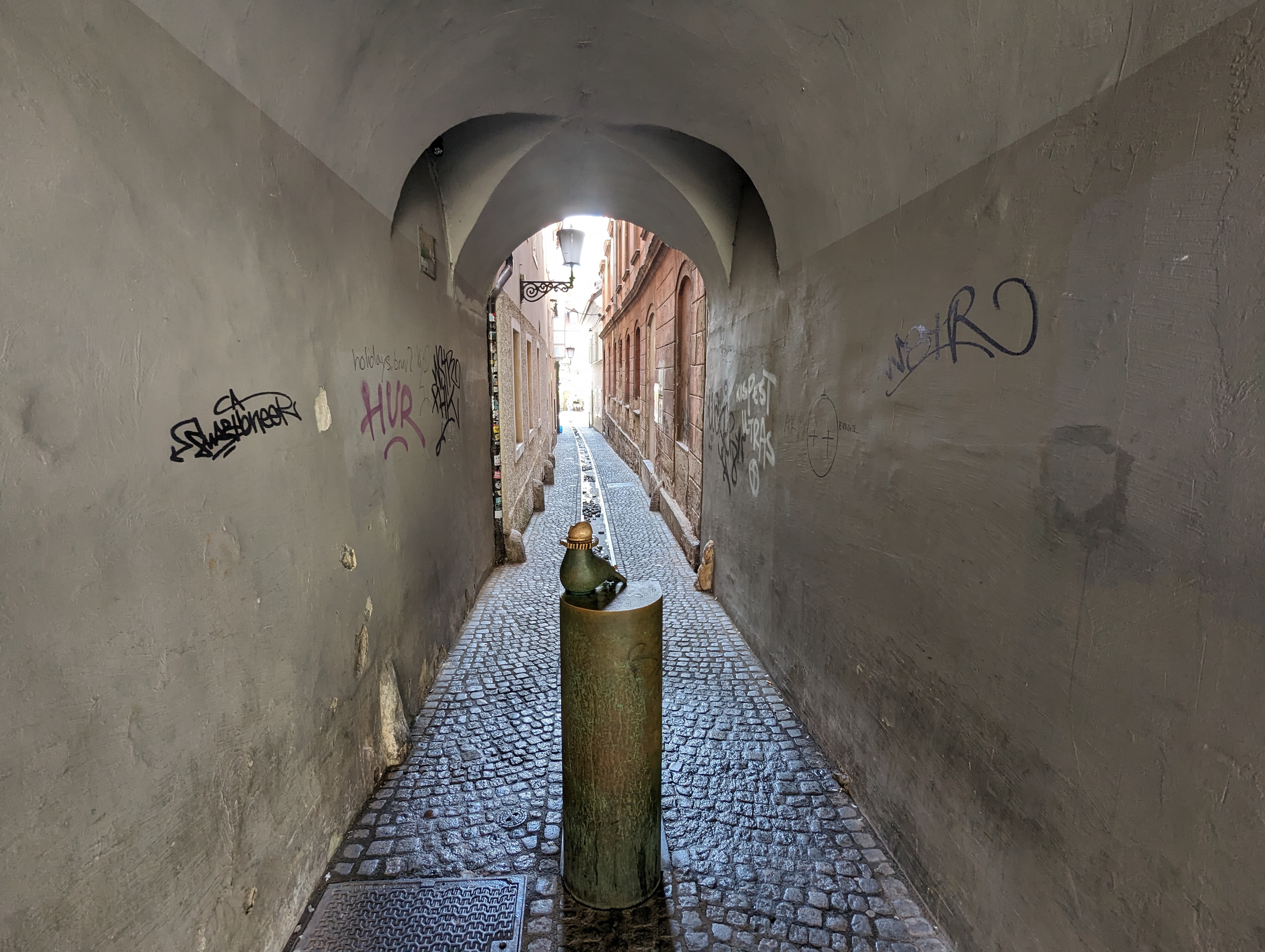
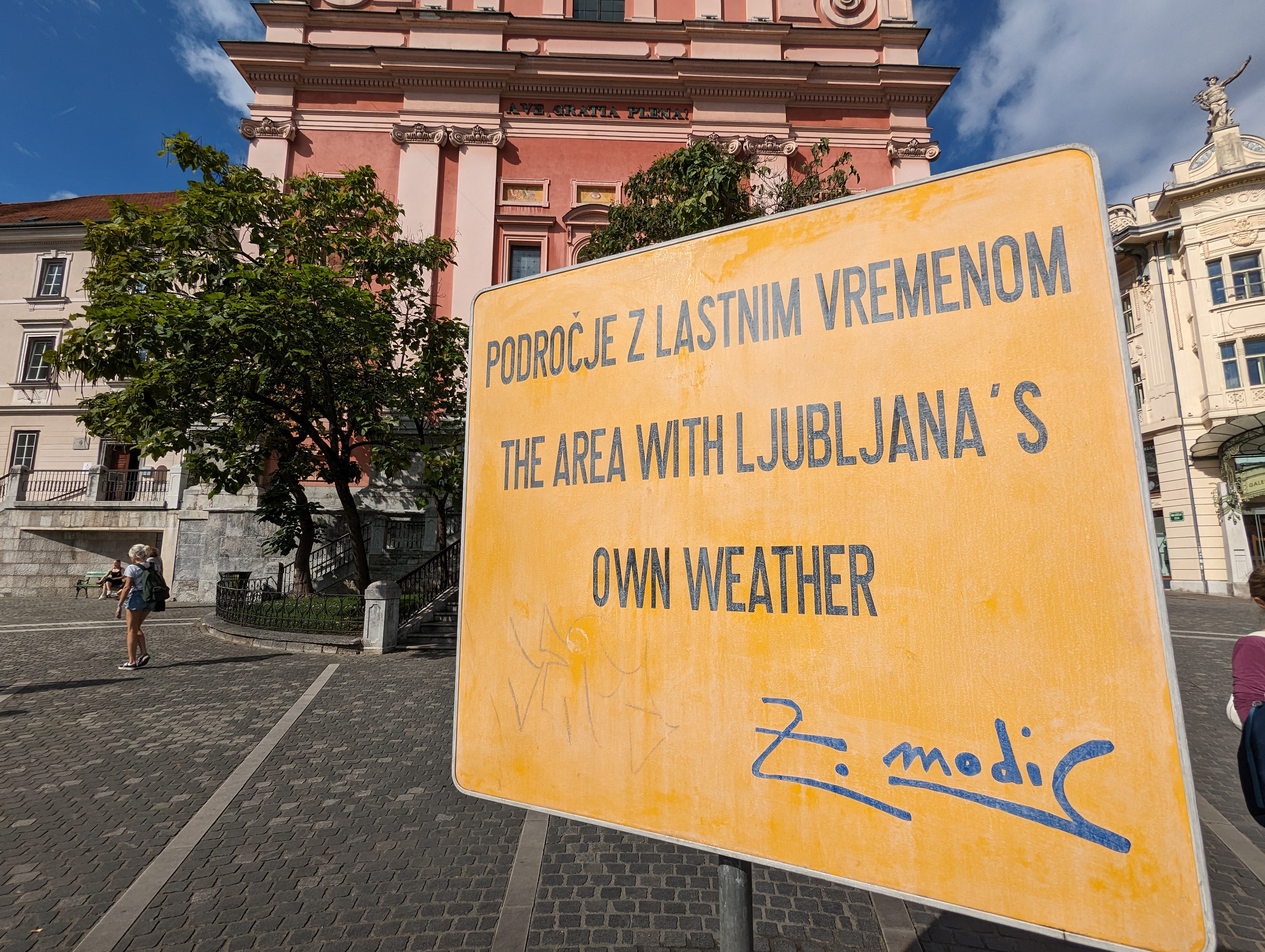
If you’d like me to share this lecture with your students or group, please do get in touch. In the meantime, here is some my awful photography that does not do Slovenia justice.

Chris

*This too was disrupted when a broken powerline closed all of Munich station. We ended up waiting nearly 6 hours for a FlixBus in a bleak car park outside Salzburg…

**Or any scientist really.

Improving environmental models - less is more

Improving Environmental Models: Less is More

I am speaking to the environmental modellers now. Imagine, you have been asked to make your model better, to improve its performance, and generally make it a more useful tool for decision makers. You have got a generous budget and free reign to do whatever you want. Just take a short moment to think about what you would do.

When you read the paragraph above, what did you think about? I am going to guess it was something along the lines of “Amazing, I’m going to add in representation of that process the model currently doesn’t have”. Maybe it was how you would increase the resolution of the model or how you would collect more data to add into it.  I am also going to guess that you did not think about what you would take away from your model.

A recent study by Adams et al (2021), published in Nature, found that we are hard wired to solve solutions by adding things in rather than looking at taking things away, despite the fact that taking something away would have been the better and more efficient way. I really encourage you to watch the video below that nicely summarises this work.

I know when I have approached modelling problems, my go to has been to add something in, rather than to consider what could be taken away. Yet, often when we add in new processes or increase the resolutions we may improve our outputs but we also increase the complexity, resulting in slower processing speeds and increased uncertainties. When assessing the models on how useful they are to decision makers, we may have actually made them worse.

The European Centre for Medium Weather Forecasts (ECMWF) have recently upgraded their Integrated Forecast System. One of the improvements they made is a great example of taking something away to solve a problem. Previously, they had stored numbers using 64-bits of memory within their computers. Using 64-bit over 32-bit allows you to store bigger numbers, i.e., use more decimal places and increase the precision of the output. This sounds like it is better, it sounds like if you had the option to go to 128-bit you ought to as you could have even bigger numbers and even greater precision still. The flipside is that storing and computing with bigger numbers takes a tiny bit longer to do each time and when multiplied over the vast number of sums the supercomputers at ECMWF do, this adds up. They realised that they did not need that level of precision and, for many processes, using 32-bit instead of 64-bit made little different to the output. Making the switch reduced the computational load by 40%, meaning swifter, and therefore more useful, results.

Photo by Gabriela Palai on Pexels.com

This is not anything new in numerical modelling and reduced-complexity approaches are popular and long established. However, these were designed with a conscious effort to take things away and it is when we stop making this conscious effort that we default back to adding things in as a first option. This is especially true, as the video tells us, when our cognitive load is high. Next time you sit down to solve a modelling problem make sure to remind yourself to stop and think – what can I take away to make this better?

Chris

Fridays are my non-work day so I try to write a short blog post on my thoughts about environmental modelling, games, or really anything else that is on my mind. The purpose is for nothing more than the love of writing and for practice but I do hope you enjoy them. For the avoidance of any doubt, all of the views and opinions I express in these blogs are very much my own and not those of my employer.