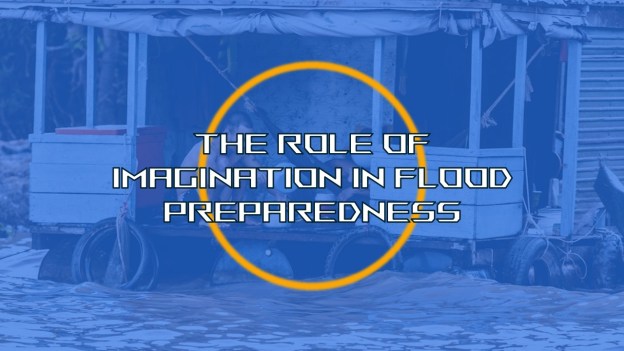
In a previous post, I looked at how a failure of imagination potentially contributed to a tragic loss of life in the 2021 floods across Northern Europe. Because people were not able to grasp the potential impacts of the flood that they were being warned of, they did not take appropriate action to keep themselves safe. Professor Hannah Cloke of the University of Reading described the role of scientists here as “helping people see the invisible”.
Recent research led by Joy Ommer, part of Cloke’s research group, begins with the line “What’s the worst that could happen?“. The paper, ‘Surprise floods: the role of our imaginations in preparing for disasters‘ – published open-access in Natural Hazards and Earth System Sciences – looks back at those floods in 2021 and explores the role a lack of imagination played. Crucially, it also shows the role we as scientists have in helping people understand risks.
Ommer places imagination in the context of this research as “the ability to depict a particular situation in your mind and your actions linked to that situation“. We use this cognitive ability to visualise in our everyday decision-making and for trying to work out what the future might hold. It is informed by our experiences and our ability to imagine – Ommer describes people as having different abilities to imagine, which may be cultivated, but does not explore it as a skill that can be trained. Importantly for disaster preparedness, imagination plays a key role in risk perception by adding to our reality and existing knowledge of a situation.
The research used a survey of people who were affected by the floods to better understand their perspectives. As highlighted in the paper, many of those affected reported that their ability to understand the impacts of the flooding was lacking – it was unimaginable or they did not have the imagination to understand the scale of it. Several linked their inability to imagine the flooding to a lack of preparedness for it. To many, it was only when they saw videos of flooding happening, and feeling empathy for those in the videos, that they started to comprehend the potential consequences for themselves.
This research by Ommer and co-authors highlights and breaks down key aspects about how imagination is linked to risk perception and preparedness for disasters. The solutions they propose include using forecasts and warnings designed to trigger imaginations. They also argue that we need to work with those at risk to cultivate their imaginations using creative approaches, such as local storylines, and helping them to visualise potential impacts.
This is a really important and interesting paper for understanding the important role imagination has to play in disaster preparedness.
How can you help to become more prepared for disasters like flooding?
This post originally appeared in the Imagination Engines newsletter. To read this content a few weeks earlier, subscribe to the newsletter below.
Back in 2019, at the peak of my work on the Earth Arcade, I picked up a board game called Photosynthesis. I am not a big board game player but I was attracted by its beautiful, and very ‘green’, aesthetic and its tactile tree playing pieces*. I was also drawn by its promising environmental messaging, with the publisher’s, Blue Orange, motto proudly stated ‘Hot Games Cool Planet’.
I also remember playing it with Amy. Each turn the sun moves around the board. You plant trees. Those trees collect light energy and cast shadows on other tree to stop them collecting energy. You use energy to grow your trees or plant new ones. You score by chopping grown trees down. We remarked how it was bizarre how you won an environmentally-themed game through deforestation but then thought no more of it. I went on to use the game as an example of an environmentally themes board game as part of my Earth Arcade Academy launch event.
Dr Chloé Germaine and Prof Paul Wake of the Manchester Game Centre think about games on a whole different level to most people. Certainly more than me. Recently, I was very happy to be invited to the University of York’s Environmental Sustainability at York (ESAY) by Director of Education, Prof Lynda Dunlop, to hear Chloé and Paul talk about their research. And Photosynthesis was right in the heart of their work.
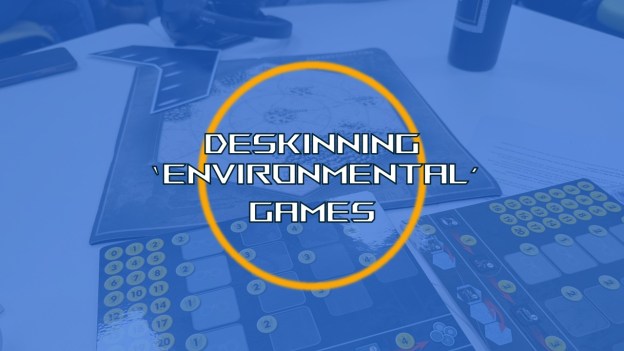
Games can be broken down into their components: the mechanisms of the rules and systems that dictate how it plays; the dynamics of player inputs and decision-making; and the skin of aesthetics and story that add flavour to the game. They saw through the skin of Photosynthesis to what it was hiding underneath. It isn’t an environmental game at all, it is a war game and they were going to show it by peeling back the game’s skin and revealing its true nature.
Chloé and Paul took the game back to its bare bones. They created a new narrative based on the siege of Bastogne during World War 2’s Battle of the Bulge. New artwork was commissioned for the board and all of the game assets. The rule book was reproduced but not rewritten – only names were changed. Suppressive Fire was created. Functionally, the game was completely unchanged yet visually it was unrecognisable. When they tested it alongside Photosynthesis, audiences preferred the deskinned version as the narrative fit the mechanism more comfortably.
The presentation taught me valuable lesson about the importance game mechanics. The way a game works, the decisions it compels players to make, are a huge part of what they take away. Assuming good faith from developers, the mechanics of their game will be leaving players having learned the wrong message. A pretty, green-coloured skin is not enough to make a game environmentally-themed, especially when it is rooted in a system that is creating the problem.
You can read more in Chloé’s chapter, Nature’ Games in a Time of Crisis, in Material Game Studies: A Philosophy of Analogue Play. More publications based on this work are in the pipeline and will likely be included in the Gaming Environments newsletter in the future.
What game would you reskin to give it an environmental aesthetic?
*The trees have been useful for my gaming imagery over the years…
This post originally appeared in the Imagination Engines newsletter. To read this content a few weeks earlier, subscribe to the newsletter below.
Ideas do not come out of nowhere. We are all influenced by the environment around us. We absorb information and experiences that shape our mindsets. The people we encounter will bring us new ways of seeing the world and inspire us. In this new item, which I hope to make a regular feature, I introduce you to someone who has been an inspiration to me and ask them a few questions about their thoughts on imagination. I’m going go to start with legendary science-poet, Professor Sam Illingworth.
Sam is a Professor in Academic Practice at Edinburgh Napier University. After completing a PhD in Atmospheric Physics at the University of Leicester, Sam instead chose to pursue a career in science communication. He is best known for his poetry, with his science poetry blog attracting over 100,000 readers a year.
He is dedicated to service in scicomm too. He is the Chief Executive Editor for Geoscience Communication and founder of science-art journal Consilience. He was a convener for the popular EGU science communication session, which was where I first met Sam after I presented my work with Humber in a Box.
Sam shares my love for games and has published many himself, including a climate change hack of Settlers of Catan and Carbon City Zero. He gave me a hugest of legs up in my career when he and Rolf Hut approached me about starting Games for Geoscience at EGU – it wouldn’t have happened without them.
I refer to Sam on how science communication research should happen: innovative, blurring boundaries, fun, yet thoroughly evidence-based. Every so often, I revisit his presentation from when he accepted the Katie and Maurice Krafft Award to remind me of these things.
Why is imagination important to the work you do?
Imagination is at the heart of everything I do – whether it is writing poetry, exploring how students interact with GenAI, or making games. For me, poetry is a way of stretching thought, a means of making connections between ideas and disciplines that might not otherwise meet. It is also a space for possibility, for imagining the world not just as it is but as it could be.
How do you keep your imagination sharp?
Writing poetry is one of the best ways I know to keep my imagination alive. The constraints of form – whether haiku, sonnet, or something more free form – force me to think differently, to approach ideas from new angles. I also find that collaborating across disciplines, whether with artists, scientists, or educators, pushes me to engage with new perspectives and ways of thinking.
What are you currently working on you would like to shout about?
Two projects I am particularly excited about at the moment:
Student x GenAI ( https://www.studentxgenai.co.uk/) explores how students are using generative AI, giving them a platform to share their experiences and perspectives. It is an ongoing, collaborative project funded by the Leverhulme Trust that raises some fascinating questions about creativity, authorship, and learning in an AI-shaped world.
Rooted in Crisis ( https://rootedincrisis.com/) is an incredible project at the intersection of science, art, and environmental storytelling. It uses games and narrative to explore climate change, and we should hopefully go live on Kickstarter later this year. We also have some new artwork to share very soon!
What would you write a science-poem about?
This post originally appeared in the Imagination Engines newsletter. To read this content a few weeks earlier, subscribe to the newsletter below.
As I write this, it is currently Trustees Week in the UK – 6th to the 10th of November 2023. Trustees are at the heart of all charities. They are a special type of volunteer who provide leadership to the charity, making sure it fulfils its (legal) purpose and ensuring its volunteers and members have the support they need. This role is called governance.
To date, I have over five years of experience serving as a trustee for different charities. These roles are among the most rewarding things I have done in my career. They also provided me experiences of leadership, collaboration, and communication when I was an early-career researcher, and these have equipped me well for the challenges of my career. I have found new colleagues, new collaborations, and friends for life.
In 2015, I started volunteering as the Press Officer for the British Society for Geomorphology (BSG). This was a non-trustee position, helping the sub-committee for Outreach and Education by maintaining the Society’s social media channels and dealing with press enquiries. I was just two years out from my PhD at this point and it was good exposure to the world of professional societies, which are often small charities. I also had the opportunity to do some exciting things, like supporting a BSG exhibit at Cheltenham Science Festival with my Humber in a Box virtual reality experience.
The BSG Stand at Cheltenham 2015The original Humber in a Box set upThe ‘Hawaiian-Chris’ origin storySteve’s Delorian next door that played Power of Love on a loop for 10 hours for 6 days.
In 2018, I stood for election for Vice-Chair of the Outreach and Education sub-committee of the BSG, to succeed my friend Annie Ockelford (difficult shoes to fill). This was a trustee position and I was elected by the BSG’s membership for a three-year term. For those three years I ran the sub-committee alongside another trustee, firstly Louise Slater and followed by Hannah Williams. The Outreach and Education sub-committee existed to promote geomorphology, careers in it, and its value to society to the public and all levels of education. Some of the core tasks were:
Maintaining relationships with partner organisations, including the Royal Geographical Society and the Geographical Association.
Issuing outreach grant awards to members.
Judging the Marjorie Sweeting Award for best undergraduate dissertation in geomorphology.
Much of my time in this role was affected by the Covid pandemic and resultant lockdowns. But problems present opportunities. The lack of travel saved the Society a lot of money and it needed to spend it (the Charity Commission does not like you building up excessive reserves), so I designed and ran a grant award for digital outreach and educational tools. From my own experience, outreach and science communication grants are usually small (often < £1k) and this means you can not achieve a lot. I was keen to provide something with a bigger budget and see what could be achieved. This enabled us to fund some amazing projects and create some amazing tools for geomorphologists to use:
Steddfod Amgen 2021 Virtual Field trips (example).
The Digital Resource Series was rounded off with a knowledge sharing workshop, with expert contributions from Bethan Davies, Leah Forsythe, and Chloe Leach. These recorded presentations are still freely available to anyone and I look back with pride at the knowledge we were able to capture and share through this grant call. Check out the videos, they are inspiring.
It was also in this role that I developed a love for video editing. Steve Brace, the representative from the Royal Geographical Society supporting our sub-committee, suggested making some videos introducing some of the great debates in geomorphology. These were to act as provocations to be used by teachers, showing that there are open questions in geomorphology – things we don’t understand. With the support of the membership, I started these videos and made two episodes. I enjoyed this a lot and I see this as the moment that started my journey to the Floodology YouTube channel. The events of summer 2020 led to society engaging with more important debates and I did not feel it was appropriate to continue the series then. Sadly, I did not get chance to revisit it.
In September 2021, at the end of my three-year term, I left my role as Trustee of the BSG. I did so with great memories and am pleased with what we had achieved in that time. Earlier in 2021, I had also left academia to join the Environment Agency as a Senior Advisor in Hydrology. This marked a shift in my professional focus from the mud and rocks in rivers, to the water in (and especially out) of them. I successfully stood for election as a Trustee of the British Hydrological Society (BHS) and the week after my role ended at the BSG, my new role began at the BHS.
The BHS is organised differently to the BSG and instead of having a defined role I joined as one of a group of seven ‘ordinary members’. The ordinary members are all elected Trustees, serving for three years, and each contributing to several of the sub-committees. I have had roles in the Communications and Publications and the Equality, Diversity and Inclusion sub-committees.
At this time, my wife had been helping a group apply for charitable status and had been researching charity governance in detail. This proved useful as I took in a lot of this information in by osmosis and volunteered to perform a review of the BHS’ governance following guidance from the Charity Commission. If you wish to do a similar task, I recommend the following resources:
Following my review, I made several recommendations that are currently being implemented by the board of trustees. This includes changing the BHS’s charitable status, creating new policy documents and codes of conduct, and restructuring the Society’s governance and volunteering set up.
On this last point, my recommendations drew strongly on my experience at the BSG and what I saw that worked well there. I consider myself a disorganised person (undiagnosed ADHD) but I also strongly believe that organisation and structure is immensely freeing and can inspire creativity (there’s a reason the blank page is the hardest place to start writing from). By giving each ordinary member a defined role, leading just one sub-committee, and supported by new non-trustee volunteers, I hope we will be able to achieve more and be more reflexive to challenges and opportunities.
My trustee role in the BHS will be as Chair of the Communications and Publications sub-committee and our key tasks will be:
Producing the quarterly editions of Circulation magazine.
Maintaining and growing the BHS social media channels.
Maintaining the BHS website.
But our remit does not end there. With new volunteers joining there will be new voices, fresh energy, and innovative ideas to deliver more for the benefit of the charity, for hydrology as a discipline, and for the members.
In September 2024 my term at the BHS will end. I plan to take a break from volunteering after six years at that point to focus on new things – I’d like to put more time and energy into new ventures like the FloodSkinner brand and other projects currently in development. However, I know my trustee story is not over yet and I will be back volunteering in the future when the time is right.
Being a trustee is a serious role. You take on a legal role with responsibilities and even risks. But it is highly rewarding and places you in a position where you can affect real change. It is a unique opportunity to contribute based on your skills, experiences, and drive. It is a role where you can make it what you want – just supporting the charity tick over in its day-to-day function is extremely valuable and there are always opportunities to do more.
If you’d like to know more about being a trustee, especially if you’d like my role from September 2024, please do reach out.
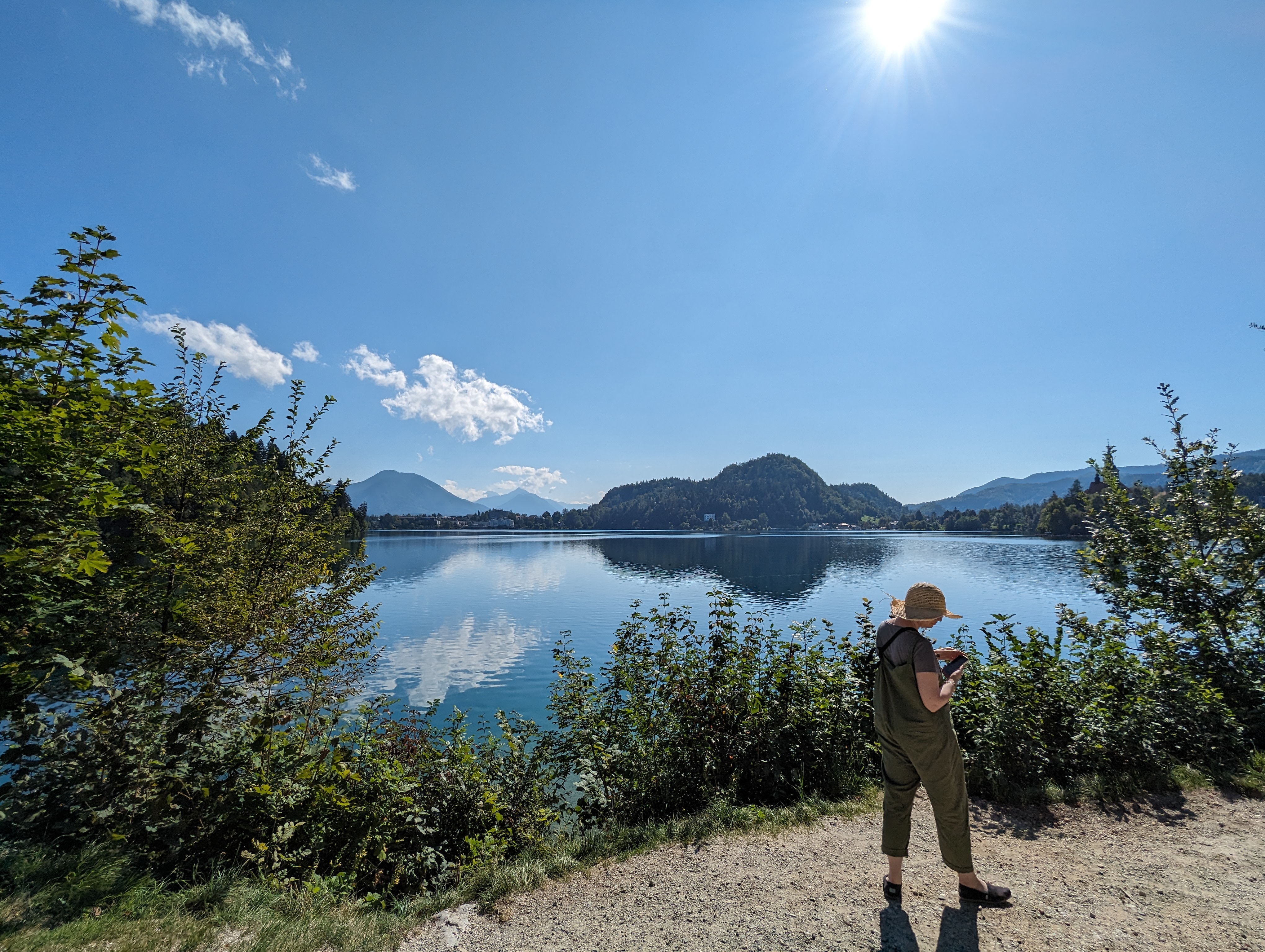
Slovenia, and its capital, Ljubljana, are beautiful. Just stunning. I just want to get that out of the way straight off! Just look at this panorama of Lake Bled to give you some idea.
I travelled there because I was invited to lecture on communicating hydrology as part of the HydRoData summer school at the University of Ljubljana. The summer school was jointly organised by the university and the UNESCO Chair on Water-related Disaster Risk Reduction.
Students on the course learnt valuable skills on collecting, managing, and processing hydrological data, including fieldwork and coding using R. My lecture fell in the middle of the week-long programme, on September 6th.
The run-in to the lecture was not ideal. I lost most of August to an awful bout of Covid (definitely not a cold!). I don’t fly so was travelling by rail and, whilst travelling out, our return leg via Milan got cancelled due a landslide blocking all routes between Italy and France. We had to quickly book a new route via Munich*.
However, I put a lot of work into my lecture and I am proud of the content I shared with the students. Titled “Hydrology. Sci-comm. Games”, I took the students through the importance of being able to effectively communicate hydrology. I drew on my backgrounds in both research and operational hydrology to discuss specific issues around that research-practice nexus.
Me presenting at the HydRoData summer school. Picture by Nasrin Attal.
I shared some tips on constructing effective storytelling and how they can use their own passions to help engage people with their research and projects. I structured the lecture around the six key attributes, or qualities, I believe society needs from hydrologists**. These are:
Knowledgeable
Technical
Practical
Playful
Sharing
Collaborative
You will be hearing a lot more from regarding these six qualities as I plan to create a set of resources around them. I’m sure they’ll feature on my Floodology channel in the near-future too.
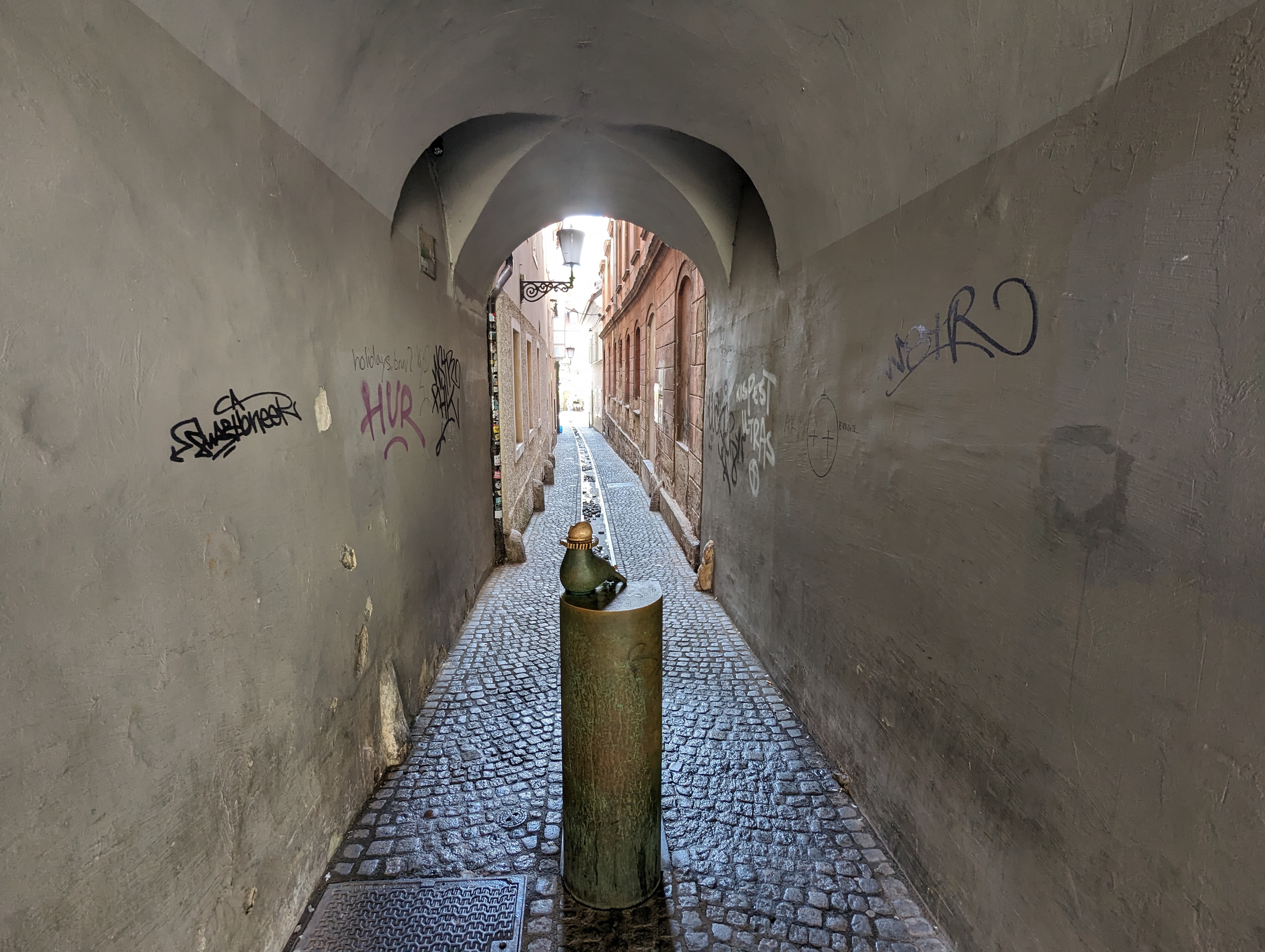
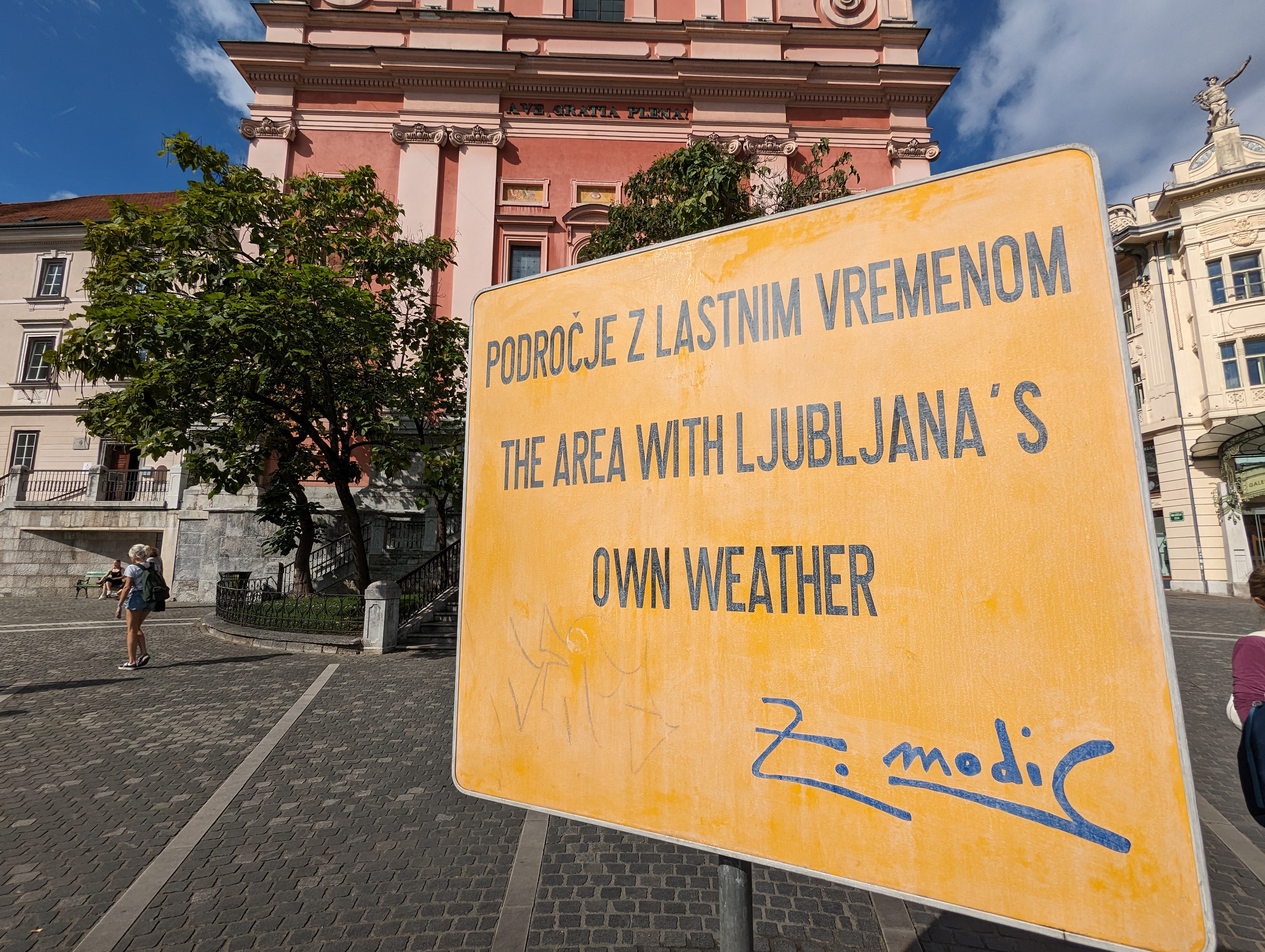
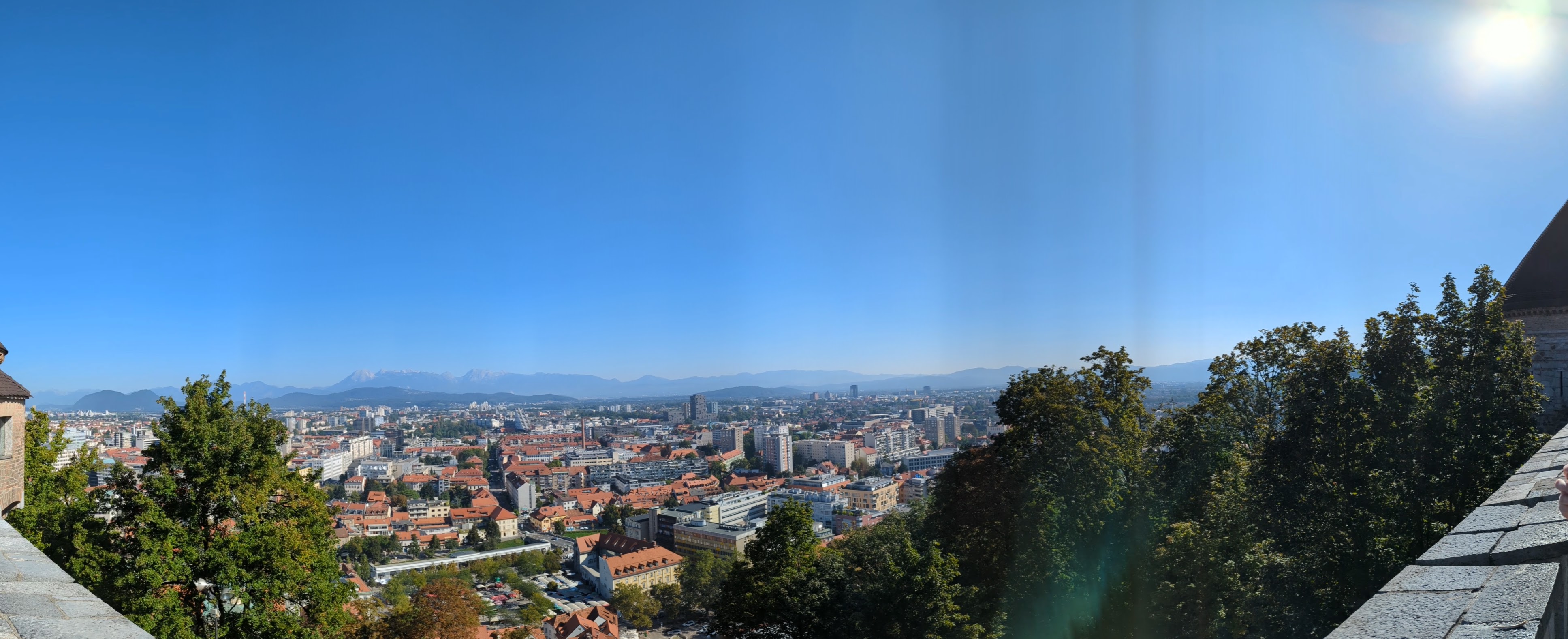
If you’d like me to share this lecture with your students or group, please do get in touch. In the meantime, here is some my awful photography that does not do Slovenia justice.
Chris
*This too was disrupted when a broken powerline closed all of Munich station. We ended up waiting nearly 6 hours for a FlixBus in a bleak car park outside Salzburg…