Tag Archives: communication

Building Blocks of Environmental Communications

Building Blocks of Environmental Communication

I’m not the sort of person who starts a project by doing loads of preparation and extensive planning. My neurodivergent brain much prefers to dive right in, try things out, and figure out what works along the way. I think this is quite common with ADHDers, making us well suited to things that require flexibility and rapid ingenuity but less suited to strategic thinking. It is a double edged sword for an academic. On the one-hand, the heuristic mindset and approach is a blessing for experimenting but can often leave you lacking the theoretical framework in which to place and define your work.

My science communication journey started in 2015 at the first Hull Science Festival. Back then I was running a hacked version of my model of the Humber Estuary that allowed people to change sea level in it. It was the idea of my then boss, Prof Tom Coulthard but it was my job to make and demonstrate it. In the 10+ years since, I have gained a lot of experience in science and environmental communication, trying out lots of ideas and exploring a shed load more. Surely, there’s plenty of knowledge stored in my head that would be useful to share with others?

This was my challenge when I was asked to give a two hour session on Environmental Communication to the Geography students at York St John University (see last month’s Imagination Engine to read more about my Visiting Fellowship there). The students will be undertaking research projects in Slovenia and as part of their coursework they will be creating communication materials to share that research, including posters, short-form videos, and social media posts. My session was to prepare them for this.

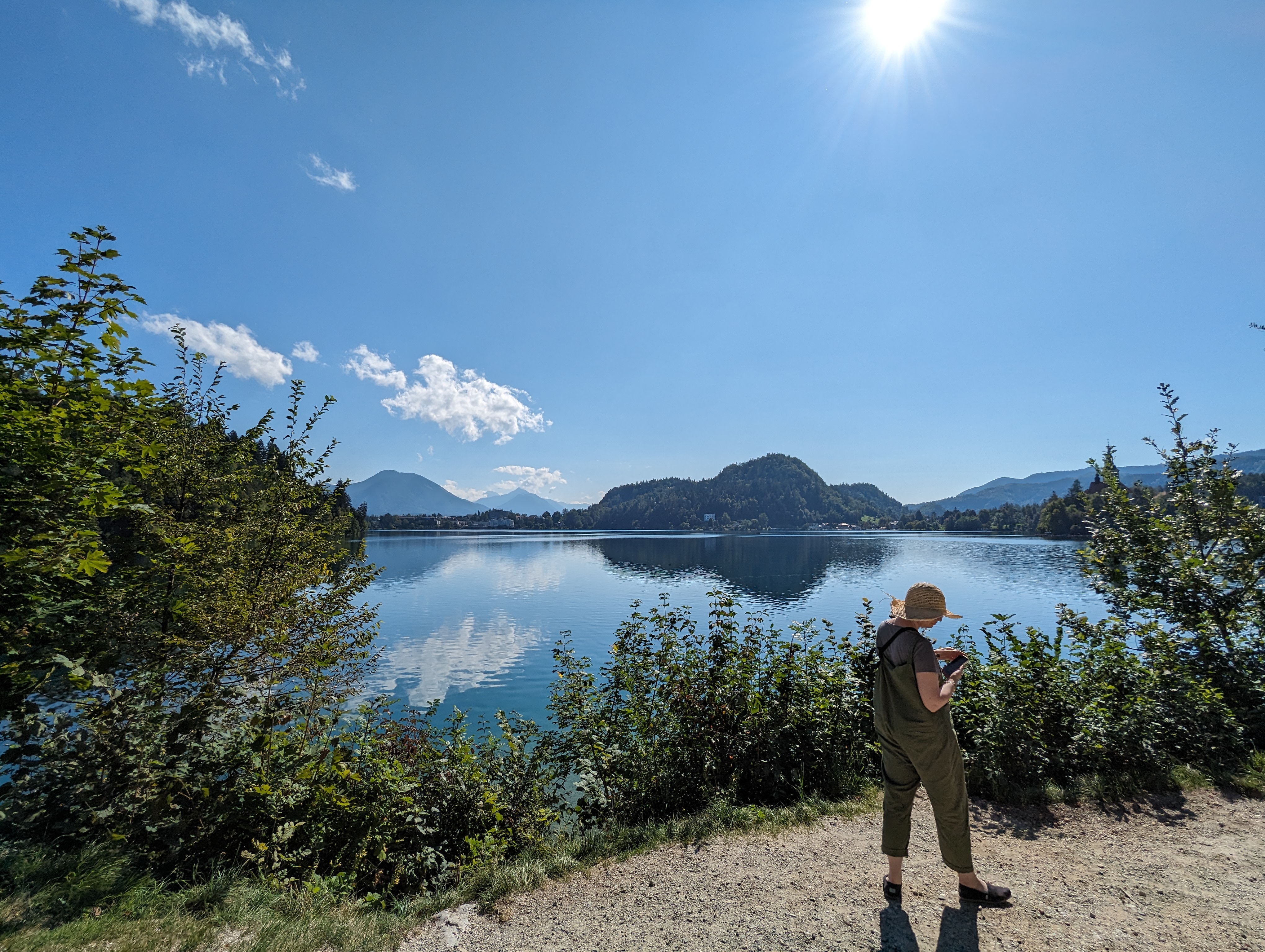
A photo of Lake Bled, Slovenia, under clear blue skies.
Lake Bled, Slovenia, just because it is pretty.

What I really appreciated from this experience was that it finally got me to sit down and pull my experiences together into a single narrative – a story told through powerpoint. The question I asked myself was ‘what is it that I do when I design an exhibit? What am I trying to achieve when I put a video together? I compiled together my building blocks for effective environmental communications:

  • Aim for impact – your communications want to change something, what is it, and how does it work towards it?
  • Embrace a behavioural model for change – work with the way people’s brains work, learn from psychologists.
  • Avoid robbing people of agency – empower people, don’t drown them in doom and gloom.
  • Emphasise positive actions – show examples of others doing good work so they won’t feel like Billy no mates.
  • Structure an engaging narrative – tell a story, don’t give a scientific report.
  • Share the ‘Hero’s Journey’ – all good stories have a hero who changes and grows, who it is?
  • Make it resonate with your audience – make your message relevant to the things your audience cares about.

When I reflect on the building blocks I shared, it was apparent that my approach is still that of a practitioner – not that there’s anything wrong with that. I find ideas and I apply them. It is still my ambition to put my work into relevant theoretical frameworks and critically reflect on the literature in the many fields I have drawn from, including psychology, museology, gaming, and scenography. Maybe one day I will study a Master’s degree in science communication to force me to do it!

If you’d like to learn more about my building blocks of environmental communication then Subscribe to my YouTube channel. I plan to turn the session into a series of resources that I will post there, possibly in the second half of 2025.

This article originally appeared in the April issue of Imagination Engines. To get my content earlier and sent directly to your email, subscribe using the box below.

Views are my own.

Exploring Slovenia: A hydrology lecture experience

Exploring Slovenia: A Hydrology Lecture Experience

Slovenia, and its capital, Ljubljana, are beautiful. Just stunning. I just want to get that out of the way straight off! Just look at this panorama of Lake Bled to give you some idea.

I travelled there because I was invited to lecture on communicating hydrology as part of the HydRoData summer school at the University of Ljubljana. The summer school was jointly organised by the university and the UNESCO Chair on Water-related Disaster Risk Reduction.

Students on the course learnt valuable skills on collecting, managing, and processing hydrological data, including fieldwork and coding using R. My lecture fell in the middle of the week-long programme, on September 6th.

The run-in to the lecture was not ideal. I lost most of August to an awful bout of Covid (definitely not a cold!). I don’t fly so was travelling by rail and, whilst travelling out, our return leg via Milan got cancelled due a landslide blocking all routes between Italy and France. We had to quickly book a new route via Munich*.

However, I put a lot of work into my lecture and I am proud of the content I shared with the students. Titled “Hydrology. Sci-comm. Games”, I took the students through the importance of being able to effectively communicate hydrology. I drew on my backgrounds in both research and operational hydrology to discuss specific issues around that research-practice nexus.

Me presenting at the HydRoData summer school. Picture by Nasrin Attal.

I shared some tips on constructing effective storytelling and how they can use their own passions to help engage people with their research and projects. I structured the lecture around the six key attributes, or qualities, I believe society needs from hydrologists**. These are:

  • Knowledgeable
  • Technical
  • Practical
  • Playful
  • Sharing
  • Collaborative

You will be hearing a lot more from regarding these six qualities as I plan to create a set of resources around them. I’m sure they’ll feature on my Floodology channel in the near-future too.

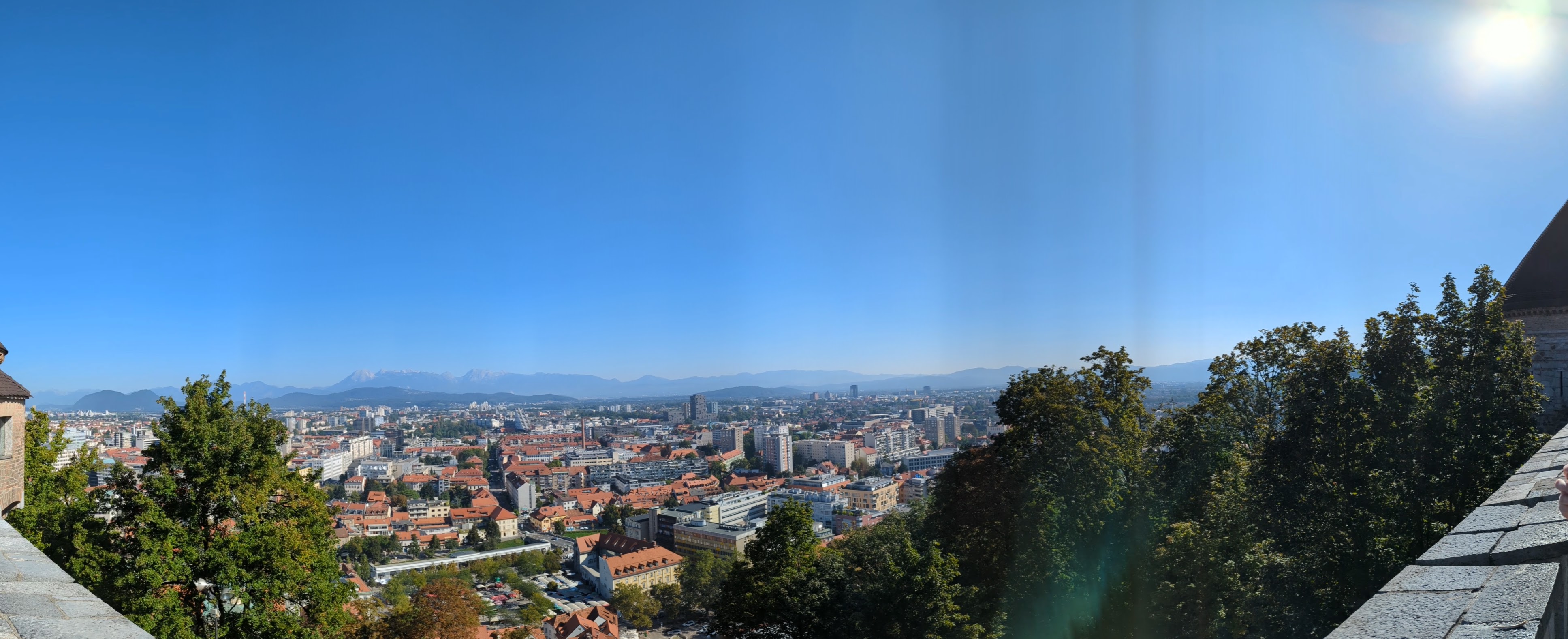
If you’d like me to share this lecture with your students or group, please do get in touch. In the meantime, here is some my awful photography that does not do Slovenia justice.

Chris

*This too was disrupted when a broken powerline closed all of Munich station. We ended up waiting nearly 6 hours for a FlixBus in a bleak car park outside Salzburg…

**Or any scientist really.

The importance of useful models in research

The Importance of Useful Models in Research

One thing I’d really like to do in 2021 is get back into writing just for fun. Although I have written a lot academically in the last few years, my space and time to just write my thoughts had become really squeezed. I hope to use some spare time on Friday mornings to quickly put a few words together about what’s on my mind at the time and re-engage with the craft. These are my own personal views and opinions.

On the useful-ness of models

Most numerical modellers will be familiar with mathematician George Box’s quote “All models are wrong, but some are useful”. I love this quote, as even though I don’t think it was intended for numerical simulations, it strikes right at the heart of many of the issues our research community are trying to address.

Photo by Genaro Servu00edn on Pexels.com

Too often though, we don’t consider how ‘useful’ our models are. How wrong they are? Yes, we look at that all the time. We develop new ways to calculate, express, and communicate how wrong they are. We work hard on new methods and at collecting new, more, and better data so we can make the models less wrong. When we’ve done this, we have models that are either less wrong, which is good as they will be right more often, or are able to show us how wrong they might be, which is also good as it allows people to make better informed choices about risks.

When we do consider how useful a model is, it’s often in the ways discussed above. Providing decision makers with the information about how wrong a model is lets them make a better informed decision. It is more useful to them. Great, box ticked. But, in my opinion, the model does not stop there.

Photo by ThisIsEngineering on Pexels.com

In a recent post for CIWEM, Phiala Mehring, a floodie, research director, and PhD researcher, discussed how we communicate with communities affected, or at risk of being affected, by flooding. It’s a really important post so please go read it here. There was one paragraph that really stood out for me:

“Imagine having lived in your home for three decades, to have a complete stranger knock on your door to say you are at risk of flooding “because the flood model says so”. What do you believe; a model that simulates the area – or your lived experience of more than 30 years?”

In this situation, to this audience, it does not matter how precise and accurate that model had been made. All the effort and hours put in developing methods to communicate how wrong the model might be do not matter either. It also does not matter how useful decision makers found it. Here, in this situation, the model is useless.

How we utilise model results when working out in the real-world communicating flood risk is a crucial facet of the model’s development and its use. It’s just as important as finding reliable and accurate rainfall information to input into it right at the start of the chain. And it’s the reason we should always measure our models by that one criteria George Box proposed to us – how useful they are.