Tag Archives: scicomm

Imagination Engines Logo

Imagination Engines – August 2025

Welcome to August’s issue of Imagination Engines! Thank you for reading.

This summer I have been given a wonderful opportunity to develop a brand new module on River Management for York St John University’s Geography courses. I am so excited for this and have been loving designing the module and beginning to put the elements together. It’s hard work – fun hard work – and consequently I’ve had to reprioritise how I use my spare time.

It does not change my long-term goal of writing a book. In fact, I think the whole process is excellent practice and brings that goal closer. However, I need to temporarily change how I use this newsletter – I have been using it as a motivator to get me writing regularly and to explore different ideas, with 3-4 articles each month. I just don’t have capacity for this now but want to maintain a monthly publication schedule. Instead, I will focus on giving short updates on my main projects that are listed on the front page of my website.


Ongoing Research

I have a new paper out this month as a co-author. The work was led by my former supervisee, Josh Wolstenholme, and covers his PhD field work on the geomorphic change induced by the installation of leaky woody dams. It is a timely reminder that rivers move and change, especially if you stick stuff in them.

Wolstenholme et al (2025). Localised geomorphic response to channel-spanning leaky wooden dams. Earth Surface Dynamics. DOI:10.5194/esurf-13-647-2025


Adventures in Model Land

This is an open-source system to make game worlds based on the numerical models we use to learn about the world around us and predict the future. It is inspired by the world building used in tabletop roleplay games (such as Dungeons & Dragons) and just needs your imagination. You find out more and download the free guide here.

I’ve also started a Discord server for Adventure in Model Land as a place to discuss the system, share the game worlds you create, and to get help from others. Join it here.


FloodSkinner YouTube Channel

I had a new Short out in the last month. I came across some videos discussing rumours and leaks about the (long) upcoming Grand Theft Auto 6, including some indications it might include a dynamic weather system. The rumours suggest that the weather system would interact with the terrain and influence the game – it rains, water pools, and roads flood and become inaccessible.

This is obviously very exciting for me so I put my thoughts into a Short. I was short on time and cutting all the clips together was quite laborious – unfortunately I didn’t get chance to do a full set up and did not light my greenscreen properly, so this is a bit messy (the kitten also moved the screen partway through filming and messed it up more…). Despite this, it did moderately well, with >1,100 views.


Games for Geoscience

After the annual General Assembly of the European Geoscience Union (EGU), summer is pretty quiet for Games for Geoscience. With the call for sessions for the 2026 General Assembly now out, in the coming month I’ll be pulling the team together and proposing what would be the 9th Games for Geoscience session.

I still have ambitions to make it more than just an EGU event, with year-round activity and a community. If you’re interested, you can join the Discord server.


LEGO® SERIOUS PLAY®

In the last month I had the great pleasure of the supporting the Geography staff at York St John University with a LEGO SERIOUS PLAY inspired workshop. I was asked to support the department as they considered the best ways to support the future employability of their students and the creative approach of the workshop led to some valuable insights.
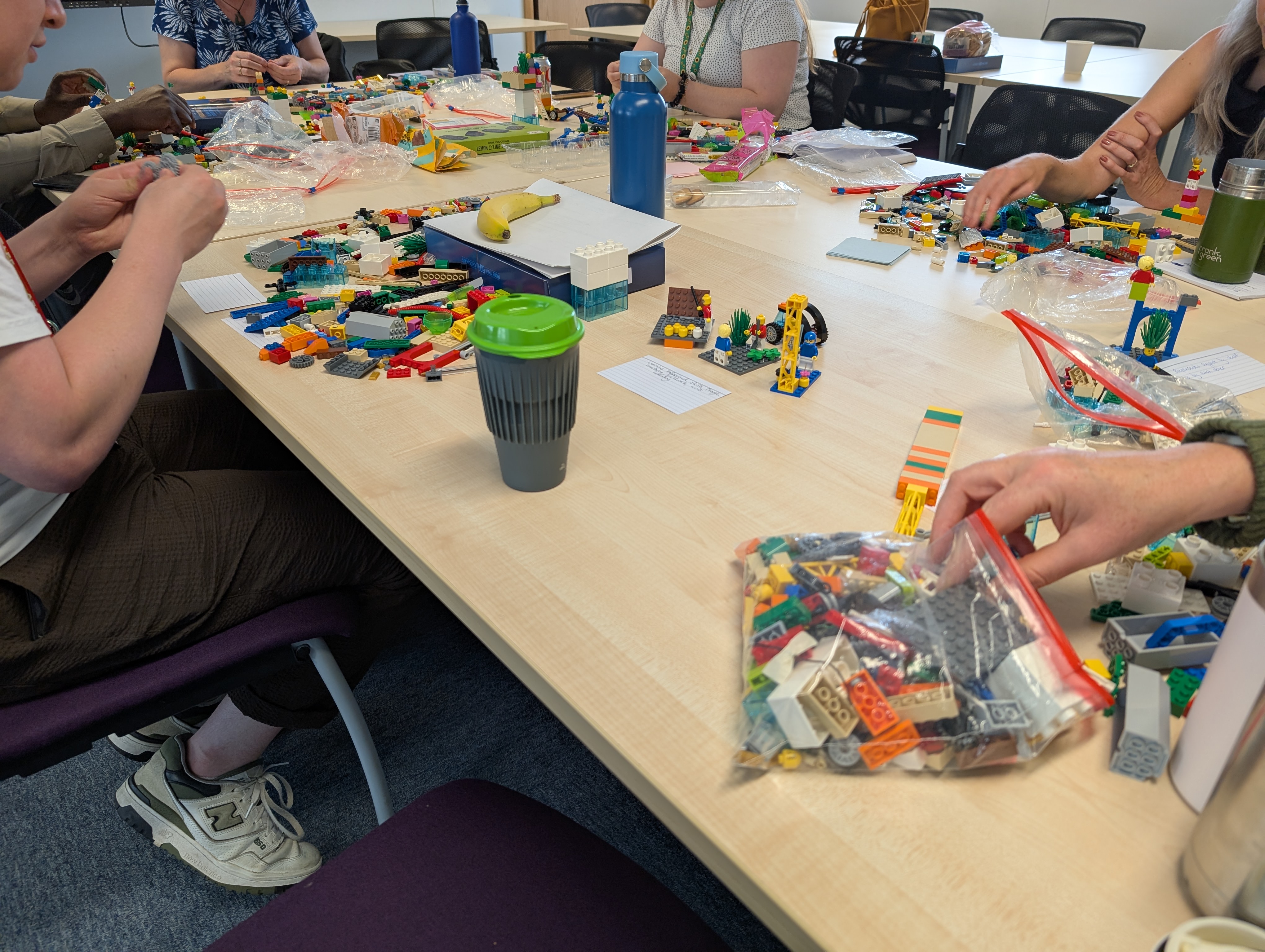
A table filled with Lego and models and surrounded by people
Making models with York St John’s Geography staff.

I’m looking forward to October this year where I will be returning to Southampton to once again deliver a Play you PhD workshop to the new cohort of Flood CDT students.


Project Prospero

Project Prospero is my hobby project where I am combining two pillars of geekdom into one nerdy-monster – a Warhammer-themed train set! The setting is the homeworld of the Thousand Sons Space Marine Legion, Prospero, as it is being pillaged by the Space Wolves Space Marine Legion. I am using models from the Legions Imperialis game and n-gauge tracks and trains. The centrepiece will be the giant pyramid of the Pyrae Cult, partially destroyed, using a Playmobil pyramid as its base.

This month I have been progressing the models and mocking up the layout to get some idea of scale. Because I don’t have space to leave out a layout, it will need to be fully modular. Check out a video I made from my mock up below:


About this Newsletter

I am Chris Skinner, a science communicator, STEM professional, and ADHDer. I am on a mission empowering people to unlock their full potential by transforming imagination into a powerful, actionable skill. This newsletter tracks my journey. I would like you to join me, so please subscribe. This newsletter is free and I do not offer a paid tier. If you would like to say thank you and/or help me in my mission please buy me a coffee using the link below.

Buy Chris a Coffee

Support FloodSkinner. Ko-fi.com/floodskinner
Click to support me.

Views expressed in this newsletter are mine and do not represent those of my employer. Content and links are provided for informational purposes and do not constitute endorsements. I am not responsible for the content of external sites, which may have changed since this newsletter was produced.

All my links

Building Blocks of Environmental Communications

Building Blocks of Environmental Communication

I’m not the sort of person who starts a project by doing loads of preparation and extensive planning. My neurodivergent brain much prefers to dive right in, try things out, and figure out what works along the way. I think this is quite common with ADHDers, making us well suited to things that require flexibility and rapid ingenuity but less suited to strategic thinking. It is a double edged sword for an academic. On the one-hand, the heuristic mindset and approach is a blessing for experimenting but can often leave you lacking the theoretical framework in which to place and define your work.

My science communication journey started in 2015 at the first Hull Science Festival. Back then I was running a hacked version of my model of the Humber Estuary that allowed people to change sea level in it. It was the idea of my then boss, Prof Tom Coulthard but it was my job to make and demonstrate it. In the 10+ years since, I have gained a lot of experience in science and environmental communication, trying out lots of ideas and exploring a shed load more. Surely, there’s plenty of knowledge stored in my head that would be useful to share with others?

This was my challenge when I was asked to give a two hour session on Environmental Communication to the Geography students at York St John University (see last month’s Imagination Engine to read more about my Visiting Fellowship there). The students will be undertaking research projects in Slovenia and as part of their coursework they will be creating communication materials to share that research, including posters, short-form videos, and social media posts. My session was to prepare them for this.

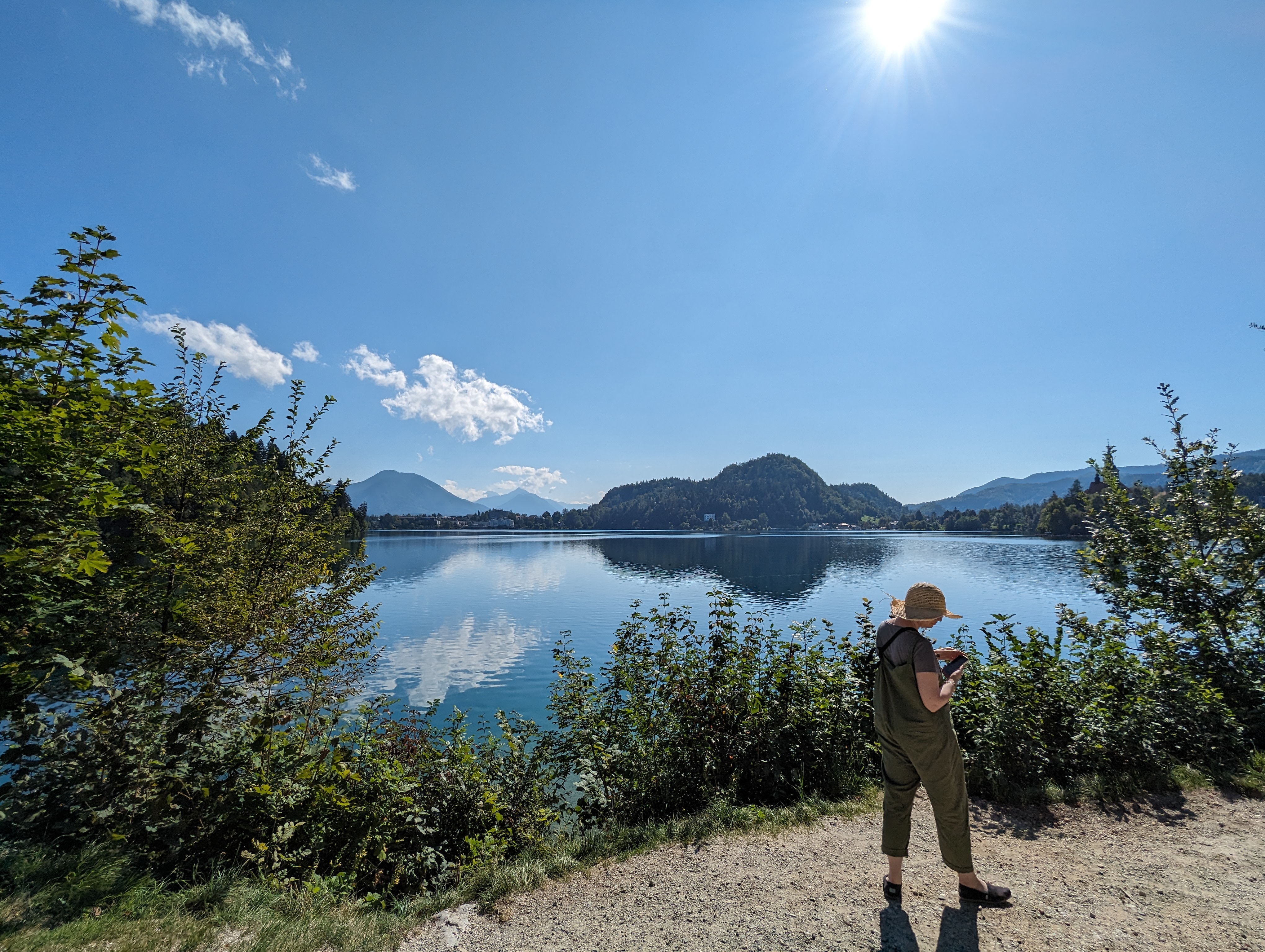
A photo of Lake Bled, Slovenia, under clear blue skies.
Lake Bled, Slovenia, just because it is pretty.

What I really appreciated from this experience was that it finally got me to sit down and pull my experiences together into a single narrative – a story told through powerpoint. The question I asked myself was ‘what is it that I do when I design an exhibit? What am I trying to achieve when I put a video together? I compiled together my building blocks for effective environmental communications:

  • Aim for impact – your communications want to change something, what is it, and how does it work towards it?
  • Embrace a behavioural model for change – work with the way people’s brains work, learn from psychologists.
  • Avoid robbing people of agency – empower people, don’t drown them in doom and gloom.
  • Emphasise positive actions – show examples of others doing good work so they won’t feel like Billy no mates.
  • Structure an engaging narrative – tell a story, don’t give a scientific report.
  • Share the ‘Hero’s Journey’ – all good stories have a hero who changes and grows, who it is?
  • Make it resonate with your audience – make your message relevant to the things your audience cares about.

When I reflect on the building blocks I shared, it was apparent that my approach is still that of a practitioner – not that there’s anything wrong with that. I find ideas and I apply them. It is still my ambition to put my work into relevant theoretical frameworks and critically reflect on the literature in the many fields I have drawn from, including psychology, museology, gaming, and scenography. Maybe one day I will study a Master’s degree in science communication to force me to do it!

If you’d like to learn more about my building blocks of environmental communication then Subscribe to my YouTube channel. I plan to turn the session into a series of resources that I will post there, possibly in the second half of 2025.

This article originally appeared in the April issue of Imagination Engines. To get my content earlier and sent directly to your email, subscribe using the box below.

Views are my own.

Inspiring Interactions: Sam Illingworth's Games, Science, and Poetry.

Inspiring Interactions: Sam Illingworth’s Games, Science, and Poetry

Ideas do not come out of nowhere. We are all influenced by the environment around us. We absorb information and experiences that shape our mindsets. The people we encounter will bring us new ways of seeing the world and inspire us. In this new item, which I hope to make a regular feature, I introduce you to someone who has been an inspiration to me and ask them a few questions about their thoughts on imagination. I’m going go to start with legendary science-poet, Professor Sam Illingworth.

Sam is a Professor in Academic Practice at Edinburgh Napier University. After completing a PhD in Atmospheric Physics at the University of Leicester, Sam instead chose to pursue a career in science communication. He is best known for his poetry, with his science poetry blog attracting over 100,000 readers a year.

A headshot of Sam.

He is dedicated to service in scicomm too. He is the Chief Executive Editor for Geoscience Communication and founder of science-art journal Consilience. He was a convener for the popular EGU science communication session, which was where I first met Sam after I presented my work with Humber in a Box.

Sam shares my love for games and has published many himself, including a climate change hack of Settlers of Catan and Carbon City Zero. He gave me a hugest of legs up in my career when he and Rolf Hut approached me about starting Games for Geoscience at EGU – it wouldn’t have happened without them.

I refer to Sam on how science communication research should happen: innovative, blurring boundaries, fun, yet thoroughly evidence-based. Every so often, I revisit his presentation from when he accepted the Katie and Maurice Krafft Award to remind me of these things.

Why is imagination important to the work you do?

Imagination is at the heart of everything I do – whether it is writing poetry, exploring how students interact with GenAI, or making games. For me, poetry is a way of stretching thought, a means of making connections between ideas and disciplines that might not otherwise meet. It is also a space for possibility, for imagining the world not just as it is but as it could be.

How do you keep your imagination sharp?

Writing poetry is one of the best ways I know to keep my imagination alive. The constraints of form – whether haiku, sonnet, or something more free form – force me to think differently, to approach ideas from new angles. I also find that collaborating across disciplines, whether with artists, scientists, or educators, pushes me to engage with new perspectives and ways of thinking.

What are you currently working on you would like to shout about?

Two projects I am particularly excited about at the moment:

  • Student x GenAI ( https://www.studentxgenai.co.uk/) explores how students are using generative AI, giving them a platform to share their experiences and perspectives. It is an ongoing, collaborative project funded by the Leverhulme Trust that raises some fascinating questions about creativity, authorship, and learning in an AI-shaped world.
  • Rooted in Crisis ( https://rootedincrisis.com/) is an incredible project at the intersection of science, art, and environmental storytelling. It uses games and narrative to explore climate change, and we should hopefully go live on Kickstarter later this year. We also have some new artwork to share very soon!

What would you write a science-poem about?

This post originally appeared in the Imagination Engines newsletter. To read this content a few weeks earlier, subscribe to the newsletter below.

Exploring Slovenia: A hydrology lecture experience

Exploring Slovenia: A Hydrology Lecture Experience

Slovenia, and its capital, Ljubljana, are beautiful. Just stunning. I just want to get that out of the way straight off! Just look at this panorama of Lake Bled to give you some idea.

I travelled there because I was invited to lecture on communicating hydrology as part of the HydRoData summer school at the University of Ljubljana. The summer school was jointly organised by the university and the UNESCO Chair on Water-related Disaster Risk Reduction.

Students on the course learnt valuable skills on collecting, managing, and processing hydrological data, including fieldwork and coding using R. My lecture fell in the middle of the week-long programme, on September 6th.

The run-in to the lecture was not ideal. I lost most of August to an awful bout of Covid (definitely not a cold!). I don’t fly so was travelling by rail and, whilst travelling out, our return leg via Milan got cancelled due a landslide blocking all routes between Italy and France. We had to quickly book a new route via Munich*.

However, I put a lot of work into my lecture and I am proud of the content I shared with the students. Titled “Hydrology. Sci-comm. Games”, I took the students through the importance of being able to effectively communicate hydrology. I drew on my backgrounds in both research and operational hydrology to discuss specific issues around that research-practice nexus.

Me presenting at the HydRoData summer school. Picture by Nasrin Attal.

I shared some tips on constructing effective storytelling and how they can use their own passions to help engage people with their research and projects. I structured the lecture around the six key attributes, or qualities, I believe society needs from hydrologists**. These are:

  • Knowledgeable
  • Technical
  • Practical
  • Playful
  • Sharing
  • Collaborative

You will be hearing a lot more from regarding these six qualities as I plan to create a set of resources around them. I’m sure they’ll feature on my Floodology channel in the near-future too.

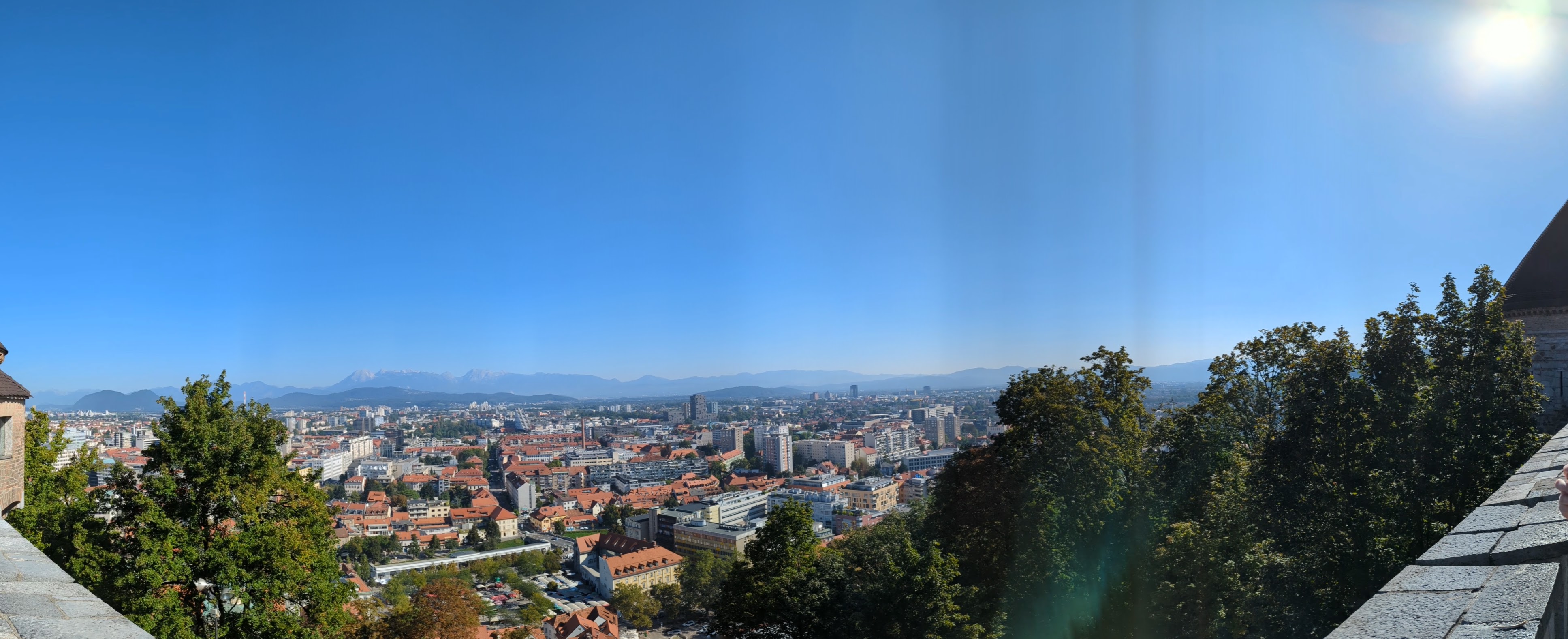
If you’d like me to share this lecture with your students or group, please do get in touch. In the meantime, here is some my awful photography that does not do Slovenia justice.

Chris

*This too was disrupted when a broken powerline closed all of Munich station. We ended up waiting nearly 6 hours for a FlixBus in a bleak car park outside Salzburg…

**Or any scientist really.