Tag Archives: storytelling

Imagination Engines. Book I've Read. The Science of Storytelling by Will Storr

The Science of Storytelling by Will Storr

This is not a new book, having been published in 2019, so I am probably not the first person to tell you this book is great, but… this book is great! The author, Will Storr, takes a scientific approach to storytelling. By this, I mean he has extensively researched what the research literature is telling us about what makes a good, compelling story, drawing on diverse fields but especially psychology. It started as a successful course for aspiring writers but thankfully Storr has made all this learning more easily accessible through The Science of Storytelling.

Its origins as a course are evident throughout the book. It is clear, it is engaging, it is packed with examples that illustrate the points, and it is exceptionally practical and useful. I initially listened to the audiobook, read by Storr himself, and found it entertaining in a way I have not found any other non-fiction book – his knowledge, his passion, and his belief in the message he’s communicating comes through in abundance and just makes you want to keep listening. I especially enjoyed his renditions of the many quotes from literary works throughout.

The true testament to the practicality of The Science of Storytelling is that once I had finished the audiobook I went straight out and bought a physical copy. My intention is to re-read it and make a whole load of notes. Of particular use is the Appendix, titled ‘The Sacred Flaw’, which is a step-by-step method for writing a novel – an ambition I have harboured since my early teens.

What I did not expect was for this book to help me improve my understanding of the nature of models. Talking about understanding characters and their motivations, Storr draws on the Theory of the Mind, which is our ability to understand how people perceive the world in different ways. Storr describes how we all create our own models of reality, which are not truth but controlled hallucinations. The best stories emerge from characters being faced with the wrongness of their model – the lie of it – and are forced to change as its usefulness has diminished. For a clear and extreme example of this happening to a character, think of the Truman Show. How can we ever build a perfect model of reality when even our own perceptions and understanding of that real world are themselves an imperfect model?

The Science of Storytelling is essential reading if you write fiction or harbour any ambition to write fiction. However, even if you do not write fiction but are involved in any form of science communication, I implore you to read this book. You will not regret it and it will help you craft compelling narratives and stories to engage and enthuse people with science and research. It sits well within a growing body of work that draws on fields like psychology and behavioural insights to make communication and storytelling more effective, such as How to Save the World by Katie Patrick.

Finally, if you are modeller read this book. It will help you appreciate the cognitive biases we all have and how these shape our perceptions of reality. In all good stories change happens, the resolution is achieved, when someone is able to escape from their own personal model land. This is a useful metaphor for escaping from our numerical model lands too.

This post was originally published as part of the Imagination Engines newsletter. To get my content earlier and straight to your email subscribe using the box below:

Views expressed in this newsletter are mine and do not represent those of my employer. Content and links are provided for informational purposes and do not constitute endorsements. I am not responsible for the content of external sites, which may have changed since this newsletter was produced.

A bunch of new research

A bunch of new research

I have a whole bunch of new papers recently published to tell you about. I can’t take (all) the credit though as they have been led by amazing colleagues. Huge shout out especially to Josh Wolstenholme who has been working hard to publish various bits of his PhD research.

Hydro-geomorphological modelling of leaky wooden dam efficacy from reach to catchment scale with CAESAR-Lisflood 1.9jGeoscientific Model Development.

The first paper in this update led by Josh covers the modelling work performed for his PhD. He used an enhancement of CAESAR-Lisflood I wrote that allows users to represent leaky woody dames in the model, including those with flow gaps underneath. This provides an ideal tool to simulate the long-term changes natural flood management can cause in rivers. Josh’s research demonstrates the feasibility of this including verification against field observations.

Localised geomorphic response to channel-spanning leaky wooden damsEGUSphere Pre-print (under review for Earth Surface Dynamics).

This is the second paper Josh has produced from his PhD research, currently under review but you can access the pre-print. Whilst the paper above covers his modelling work, this one covers his fieldwork. This includes some enjoyable, yet very cold, trips to Dalby Forest, North Yorkshire, and the installation of trail cams. The field work observed changes to the river before and after natural flood management interventions had been undertaken.

Flood hazard amplification by intra-event sediment transportResearchSquare Pre-print (under review for Nature Earth & Environment).

I cannot tell you how happy I am to see this paper out! Five years ago this was going to my big paper, the one with significant findings rather than some niche model sensitivity tests. But every time I made progress something in the model popped up to frustrate me. After I left Hull in 2021 I let it sit. Last year, Josh picked it up again and brought fresh eyes and energy to it. He has done a brilliant job and made it his own.

The way we assess flood risk assumes rivers do not change shape during floods. In the majority of cases this is a reasonable assumption, however, the modelling work here shows that it is not always the case. Large amounts of sediment can be transported downstream and deposited, increasing flood inundations and volumes during later stages of the same event.

Using 360° immersive storytelling to engage communities with flood riskGeoscience Communication

This paper, led by Katie Parsons, describes the work we did co-creating educational materials to support the Help Callum and Help Sali 360 videos. The videos came about when I worked with Alison Lloyd-Williams to use my immersive storytelling research to tell the real-life stories of flood-affected children that were shared through Alison’s research. Katie brought her education expertise to work with children, young people, and teachers to create resources to use the videos in the classroom.

I have been so privileged to get to collaborate with amazing and wonderful researchers like Josh and Katie. It’s also great to see them work together on the HedgeHunter’s project too. I had nothing to do with this but it is really cool work:

Automated identification of hedgerows and hedgerow gaps using deep learningRemote Sensing in Ecology and Conservation.

Back in 2020, just before the lockdown, Katie took part in my NERC-funded Earth Arcade Academy project with a project called INSECURE and it grew massively since (nothing to do with me!). Katie used creative methods to foster intergenerational engagement in communities at risk of coastal erosion. Even though my contribution was tiny and remote, it is such a great project I am going to pretend I had a small hand in it!:

Crumbling cliffs and intergenerational cohesivity: A new climate praxis model for engaged community action on accelerated coastal changeEGUSphere Pre-print (under review for Geoscience Communciation)

Both Josh and Katie are now at Loughborough University and working on new projects together. I cannot wait to see what they will produce.

This article was originally posted in the Imagination Engines newsletter. To receive this content in your email weeks earlier, subscribe using the box below.

Views expressed are my own.

Exploring Slovenia: A hydrology lecture experience

Exploring Slovenia: A Hydrology Lecture Experience

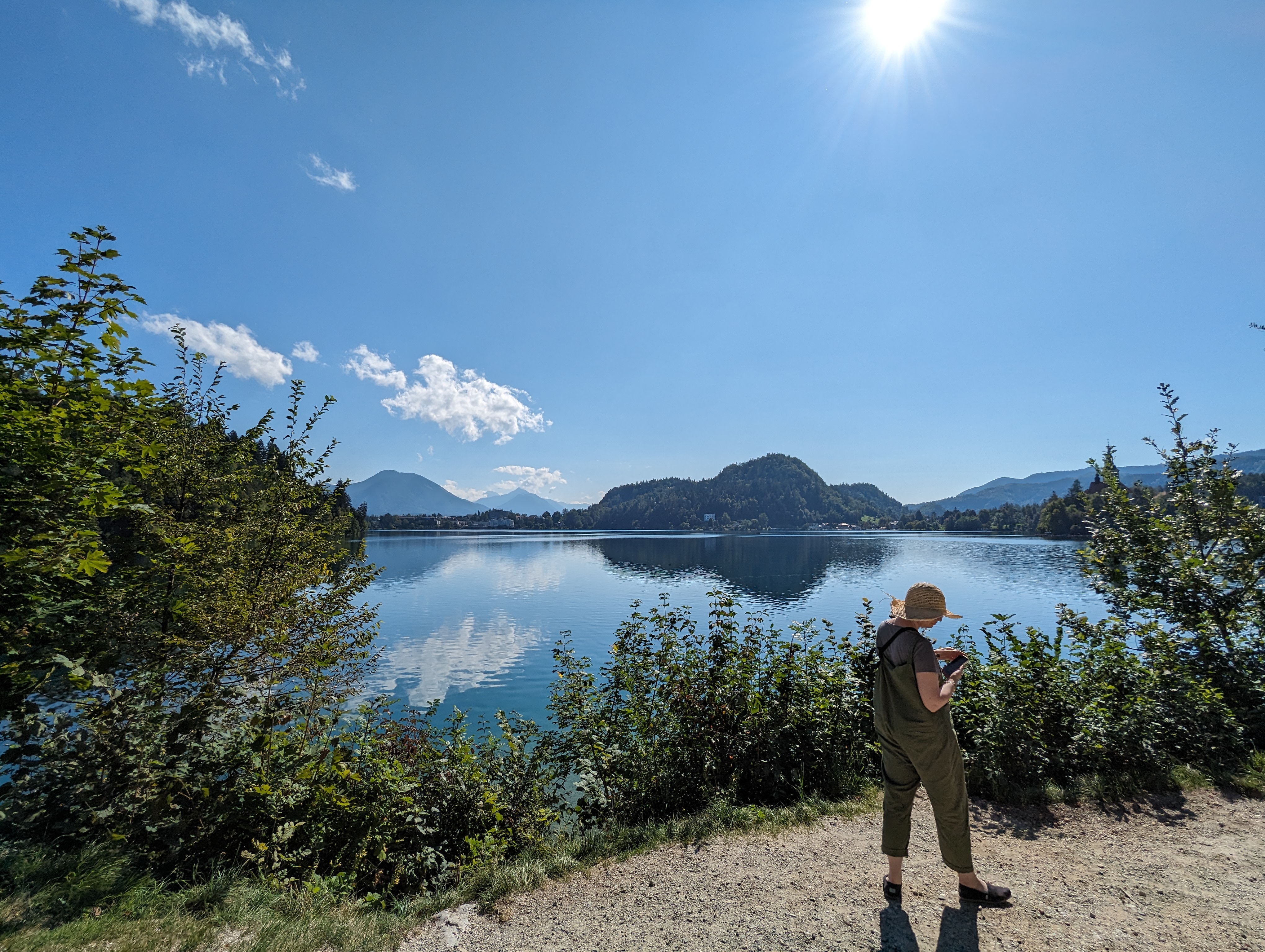
Slovenia, and its capital, Ljubljana, are beautiful. Just stunning. I just want to get that out of the way straight off! Just look at this panorama of Lake Bled to give you some idea.

I travelled there because I was invited to lecture on communicating hydrology as part of the HydRoData summer school at the University of Ljubljana. The summer school was jointly organised by the university and the UNESCO Chair on Water-related Disaster Risk Reduction.

Students on the course learnt valuable skills on collecting, managing, and processing hydrological data, including fieldwork and coding using R. My lecture fell in the middle of the week-long programme, on September 6th.

The run-in to the lecture was not ideal. I lost most of August to an awful bout of Covid (definitely not a cold!). I don’t fly so was travelling by rail and, whilst travelling out, our return leg via Milan got cancelled due a landslide blocking all routes between Italy and France. We had to quickly book a new route via Munich*.

However, I put a lot of work into my lecture and I am proud of the content I shared with the students. Titled “Hydrology. Sci-comm. Games”, I took the students through the importance of being able to effectively communicate hydrology. I drew on my backgrounds in both research and operational hydrology to discuss specific issues around that research-practice nexus.

Me presenting at the HydRoData summer school. Picture by Nasrin Attal.

I shared some tips on constructing effective storytelling and how they can use their own passions to help engage people with their research and projects. I structured the lecture around the six key attributes, or qualities, I believe society needs from hydrologists**. These are:

  • Knowledgeable
  • Technical
  • Practical
  • Playful
  • Sharing
  • Collaborative

You will be hearing a lot more from regarding these six qualities as I plan to create a set of resources around them. I’m sure they’ll feature on my Floodology channel in the near-future too.

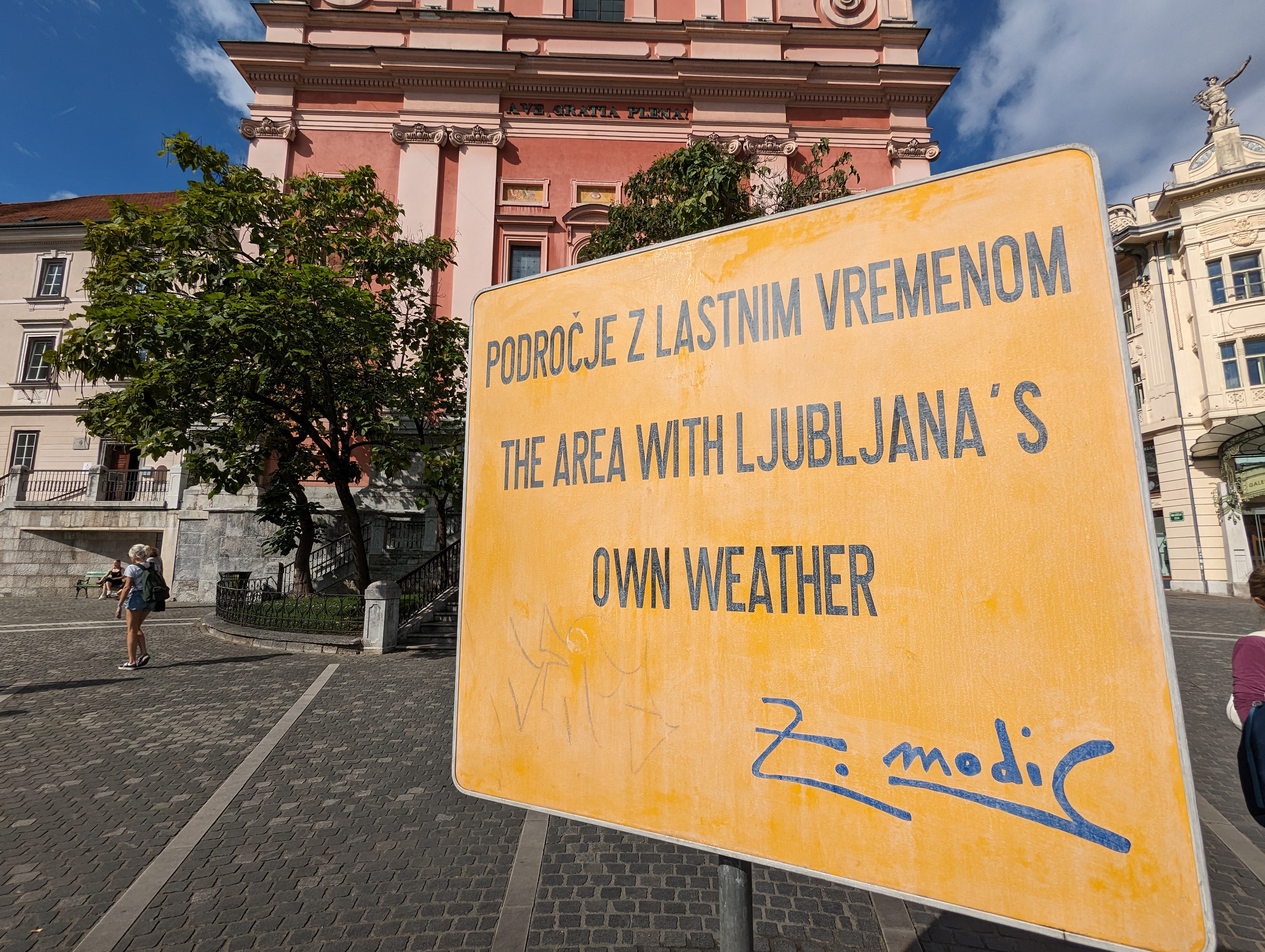
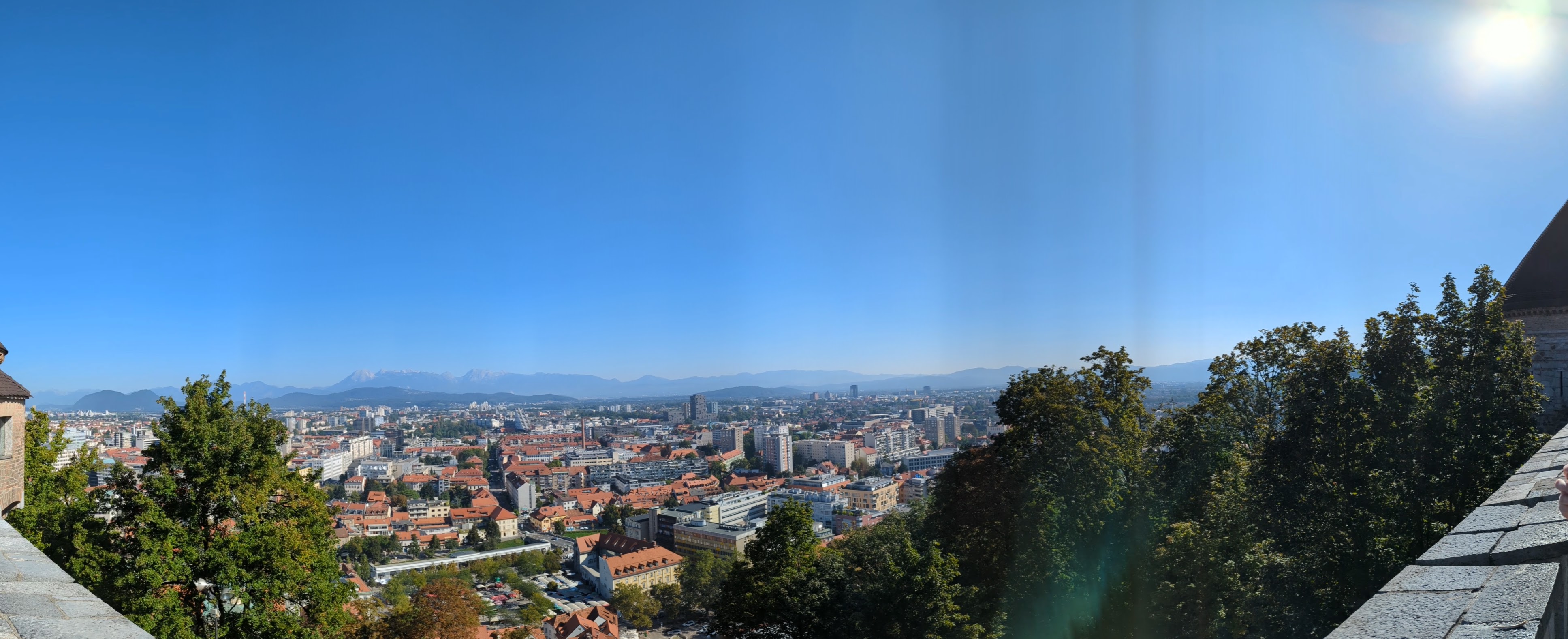
If you’d like me to share this lecture with your students or group, please do get in touch. In the meantime, here is some my awful photography that does not do Slovenia justice.

Chris

*This too was disrupted when a broken powerline closed all of Munich station. We ended up waiting nearly 6 hours for a FlixBus in a bleak car park outside Salzburg…

**Or any scientist really.